In 1880, George Eastman founded what would become the Eastman Kodak Company, a world-spanning organization that revolutionized photography.
The Kodak, introduced in 1888, was one of the most important innovations in photography. Designed with the amateur photographer in mind, the Kodak was the first “point-and-shoot” camera that began the trend of capturing everyday life on film. The camera was sold with the advertising slogan, “You press the button, we do the rest.”
Within a year, the company released an improved number one and number two models which created circular negatives.
The Kodak number three model was the first to produce rectangular negatives. Snapshot photography and photo finishing services, simplified the production of image capture and print out, a practice that was previously labour intensive and expensive became more accessible to consumers.
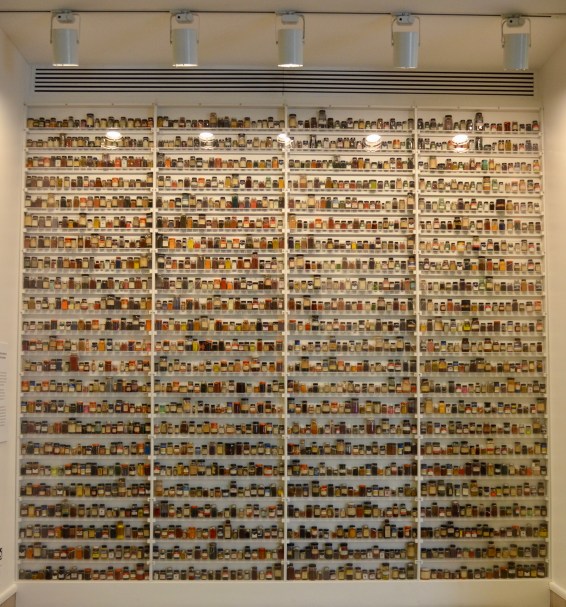
The George Eastman museum, the world’s oldest photography museum and one of the leading international film archives, was founded in 1947. It has a set of over 3,000 dye bottles collected by the Technicolour Motion Picture Corporation during the heyday of the classical Hollywood era. The corporation’s researchers painstakingly worked to create a sophisticated dye-transfer printing process, using many different combinations of dyes and dye solutions available from a number of international chemical companies.

This was the world’s first professional digital camera to use a complementary metal-oxide semiconductor sensor. Previous digital cameras used analog charge-coupled device sensors requiring additional circuitry to convert the analog signal to digital.

