Sweet as … Gisborne

New Zealand speak: Sweet as

Translation: Thank you, it’s all good, no worries, you’re welcome and that’s cool!

Recognized as one of the ‘fruit bowls’ of New Zealand, Gisborne’s climate and fertile soils create a perfect environment in which to produce an abundance of fruits and vegetables including citrus, kiwi fruit, sweet corn and grapes!

Our first wine tasting was at the privately owned Matawhero vineyard. The region enjoys a good spring rainfall and a long dry summer and using this combination, wines from the Matawhero brand are not irrigated at all. They rely solely on rainfall and the quality of the soil to produce their grapes.
When the sun rises on the first day of a new year, Gisborne is the first city in the world to see it!

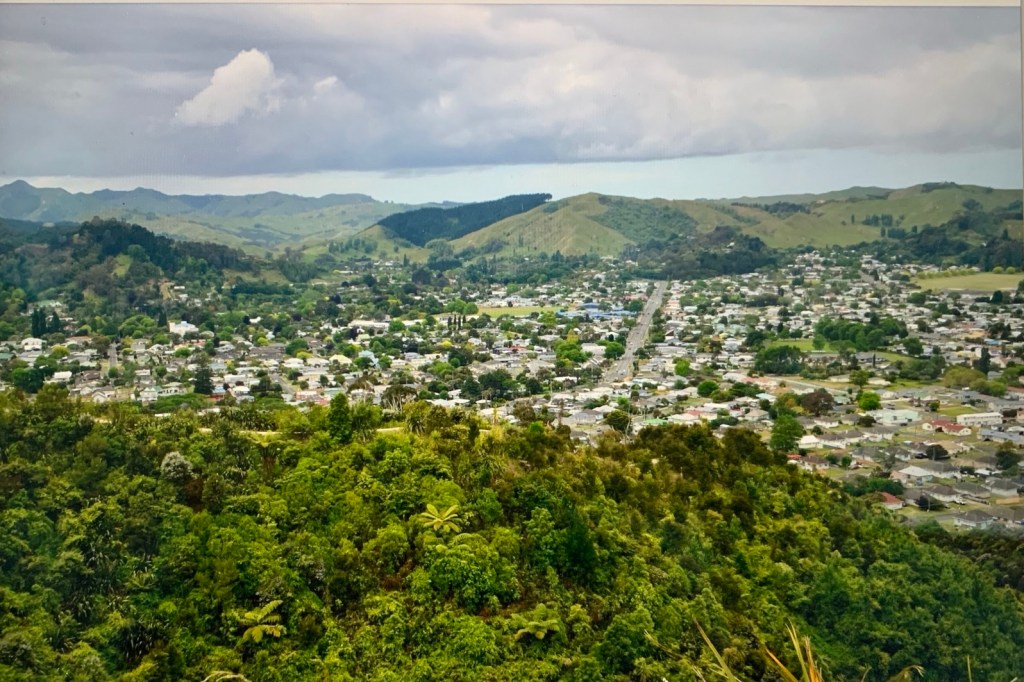
And, to date, it has been my favourite town to visit. For me, it encapsulates the essence of everything we have seen in this beautiful country. It is as green as green as far as the eye can see. Towns are nestled in valleys surrounded by rolling hills and grazed by fat sheep.

Standing above Gisborne. Small world moment … for Brits familiar with Woodford Green, the couple who took my photo live by Bancrofts School! They walk past my former home at 389 to attend the doctor’s surgery!

Keeping Traditions Alive

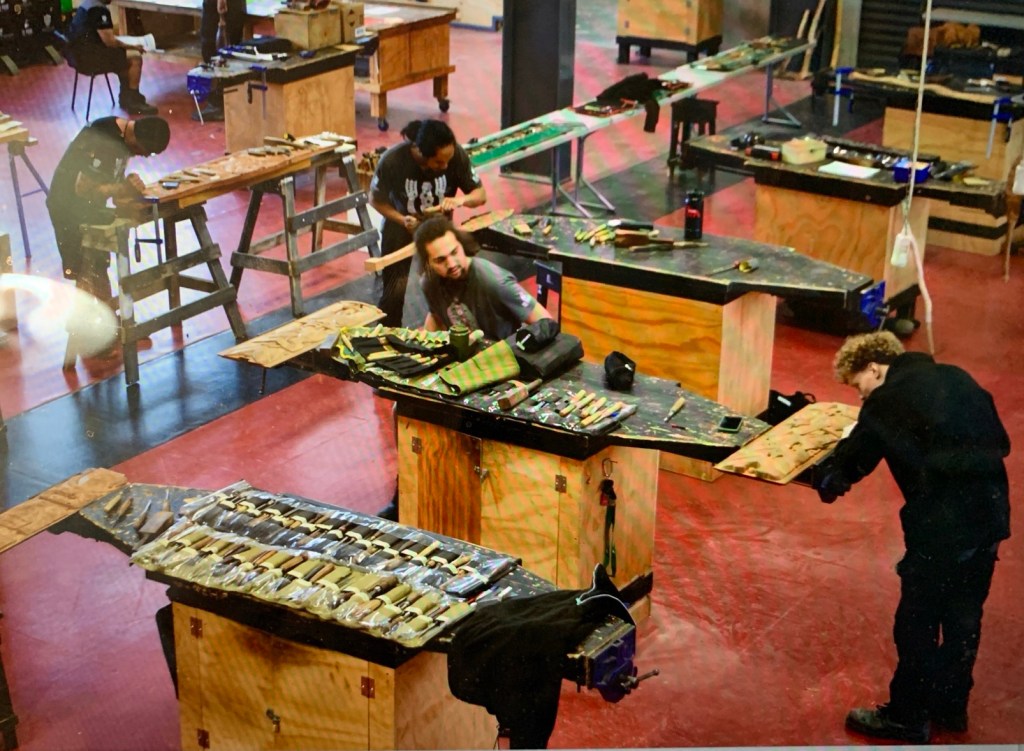
Te Puia, where we visited yesterday, is also home to the New Zealand Maori Arts and Crafts Institute.

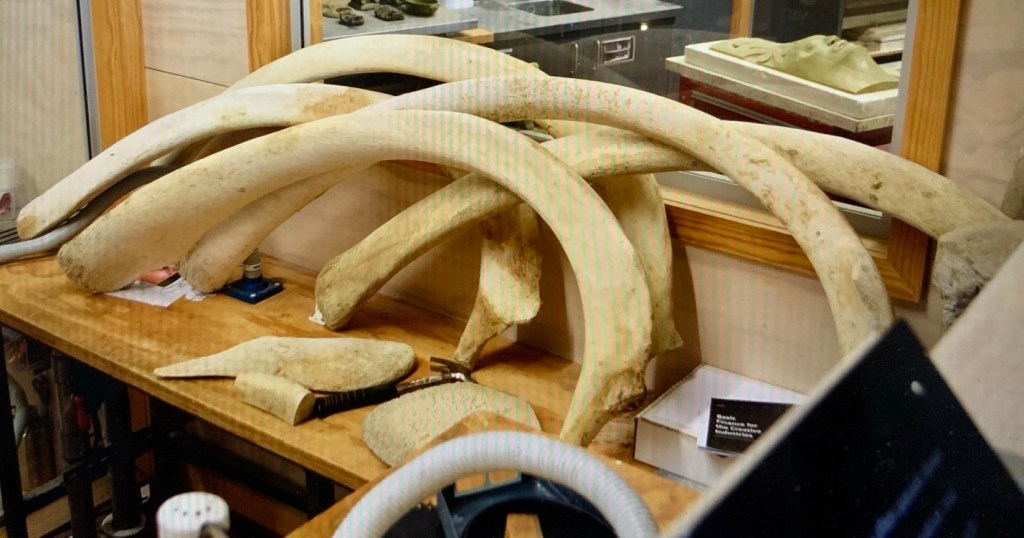
The mission of the Institute is to teach students the traditional methods of carving wood and whale bone using the tools their ancestors used.

It is a three-year programme taught by Maori masters. When sufficiently competent, students are encouraged to apply their skills using modern tools and machinery to work on commissioned pieces or produce works for sale in the shop.
Any Whale carcass that washes ashore anywhere in New Zealand is automatically owned by the Maori People who will harvest bones for use at the Institute, pictured above.
There is also a weaving programme where, again, students learn how to weave using traditional skills and materials available to their forefathers. It is a two-year programme led by a Maori weaving master, pictured above.

While at the Institute, we were treated to a display of Maori dancing:

Oigh, geyser!

We remain on the north island of New Zealand but have moved to Tauranga where we spent a fun day at the Te Puia reserve thermal valley.

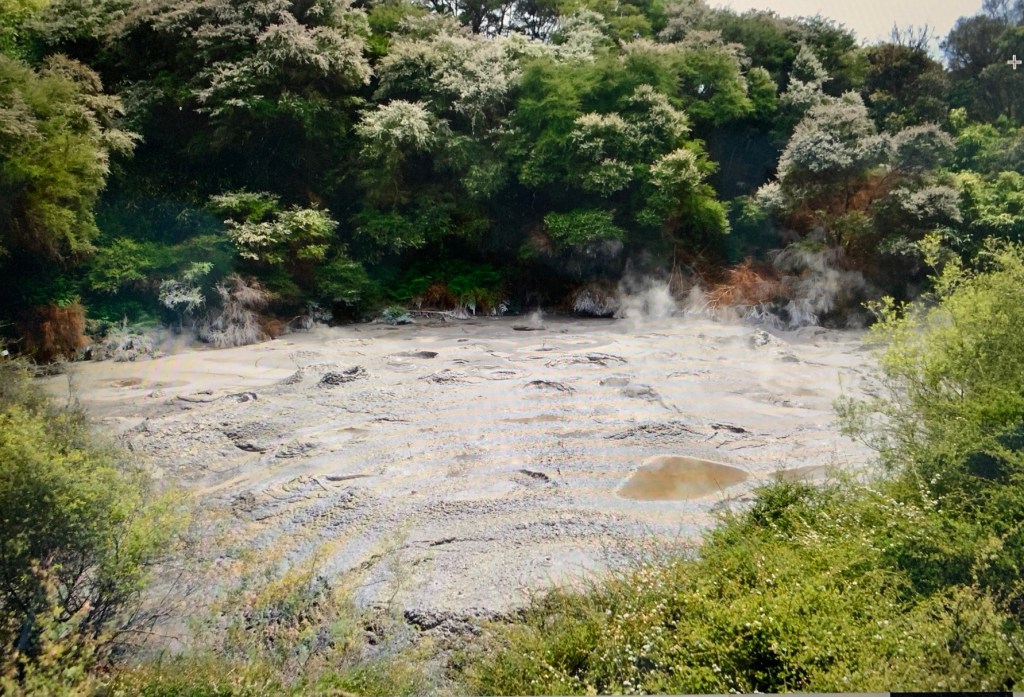
It’s fascinating to see the range of thermal activity going on in the valley and quite a sensory experience. Steam creeps out of fine cracks in the rocks everywhere, and it winds around stubby shrubs perched perilously on ledges. Even in some of the boiling hot pools there appears to be some type of plants or algae growing.

Maori traditionally used thermal mud to treat cuts and burns. The fine acidic mud contains many different minerals and it was found to help the skin heal and rejuvenate. It was also used to treat arthritis and rheumatism and to cleanse skin.
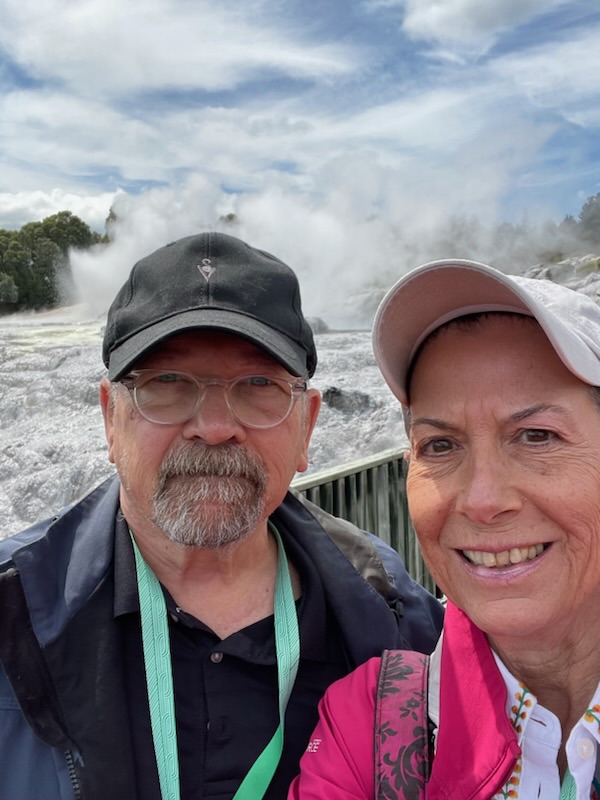
The Pohutu Geyser is the largest in the southern hemisphere and is among the most active, erupting up to 20 times a day at heights of over 90 feet (30 meters)

With all of this there was the ever present smell of sulphur wafting up the nostrils!

Eye level Auckland!

Mike and I enjoyed a lovely walking tour of Auckland which, in some ways, reminds me of San Francisco but with less steep hills yet providing a great work out!

Our tour guide, a native of Auckland, describes the city as a work in progress. The city council is trying to install an underground train network and Brits know how messy that process is! The city wants to become pedestrianized, much to the dismay of retail owners. Sneaky Auckland City Council is slowly widening the pavements and eventually drivers will realize that a two-lane road is now one way! Can you imagine this being done anywhere else?

Down at eye level, the city is charming. There is unique street art.
Lovely parks.
Alleyways packed with more coffee shops than you can shake a stick at, dedicated children’s book shops, the complete rainbow of restaurants, trendy pubs and bars and the usual who’s who of retail outlets alongside locally owned boutiques.

The City of Sails

We are now in Auckland, north island, New Zealand. With a population of some two million people, it is the country’s largest city.

The best views of the city are to be seen from the Sky Tower offering amazing 360 degree viewing decks with the highest one sitting at 722 feet (220 metres).

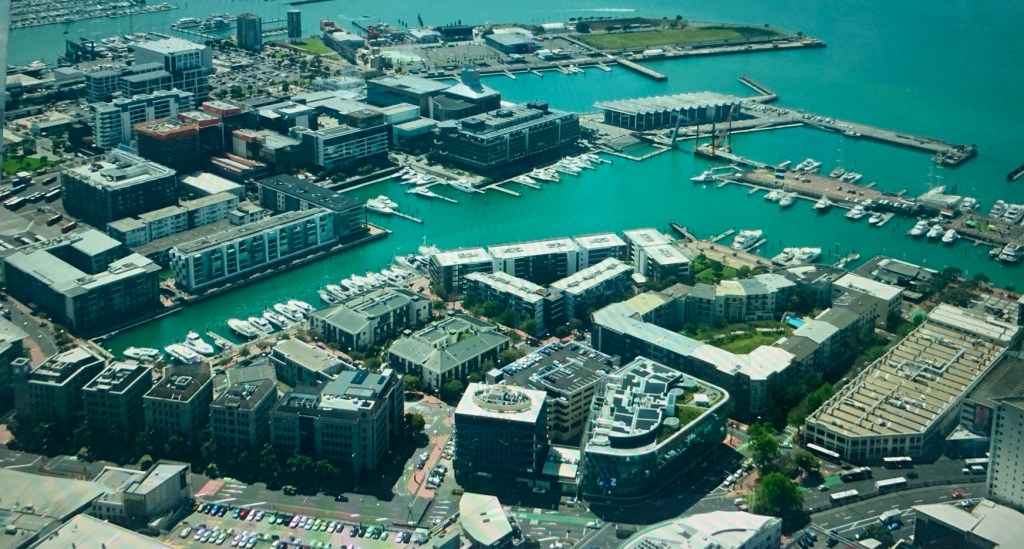
Westhaven Marina is located a short walk from the city centre and is the largest marina in New Zealand. The bridge behind it is the Auckland Harbour Bridge, an eight-lane motorway over the Waitemata Harbour. There are more boats per person in Auckland than in any other place in the world giving it the nickname of “The City of Sails”.
Viaduct Harbour Marina is located in the heart of Auckland’s inner city waterfront precinct and is home to 70 berths.
The Auckland War Memorial museum is one of New Zealand’s most important museums and war memorials. Its neoclassical building constructed in the 1920s and 1950s stands on Observatory Hill, the remains of a dormant volcano.

Land ahoy!

After 3 1/2 days at sea, our ship has finally arrived in New Zealand where our first port of call is the Bay of Islands on the North Island.

The Bay is home to 144 islands, ranging from rocky outcrops to large inhabited islands with private farms. A couple of the islands are privately owned.

The Bay of Islands was given its name when Captain James Cook stopped here on his round the world journey in 1769. Anchoring his ship at Robertson Island, pictured above, Captain Cook was rowed ashore and made contact with the local Maori People with whom he began trading.
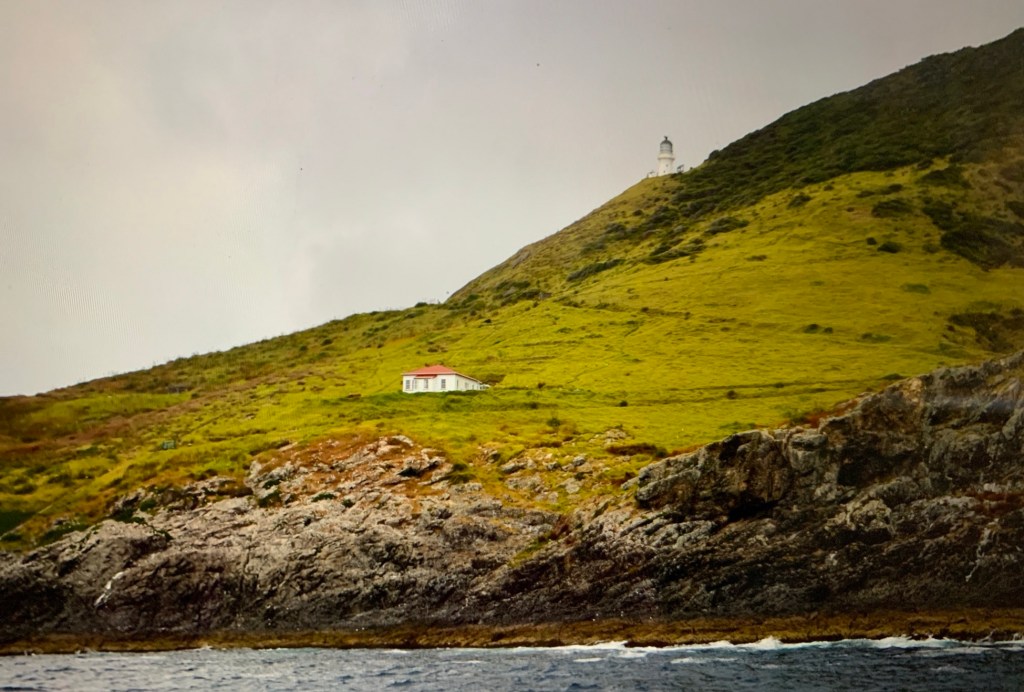
Cape Brett’s lighthouse was built on the Coromandel Peninsula, barged up the coast and winched into place. Lighthouse keepers lived here from 1910 until 1978, when a new automated light went into service.
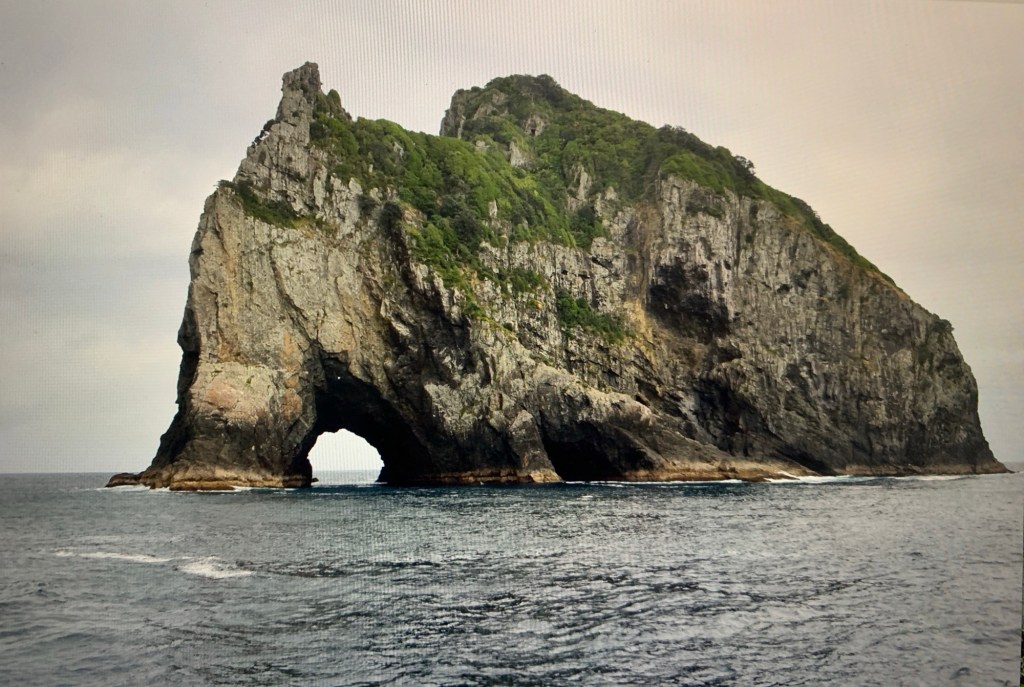
At the end of the Cape is Motukokako which Captain Cook named Piercy Island. It is commonly known as the ‘Hole in the Rock’ due to its 60 feet (18 metres) passage running through the island. Our tour captain steered our boat through the passage!

Peckish …

Here’s what’s available on board!

The Atlantide restaurant is open for breakfast, lunch or dinner. This is an a la carte experience and is the main restaurant of the ship.

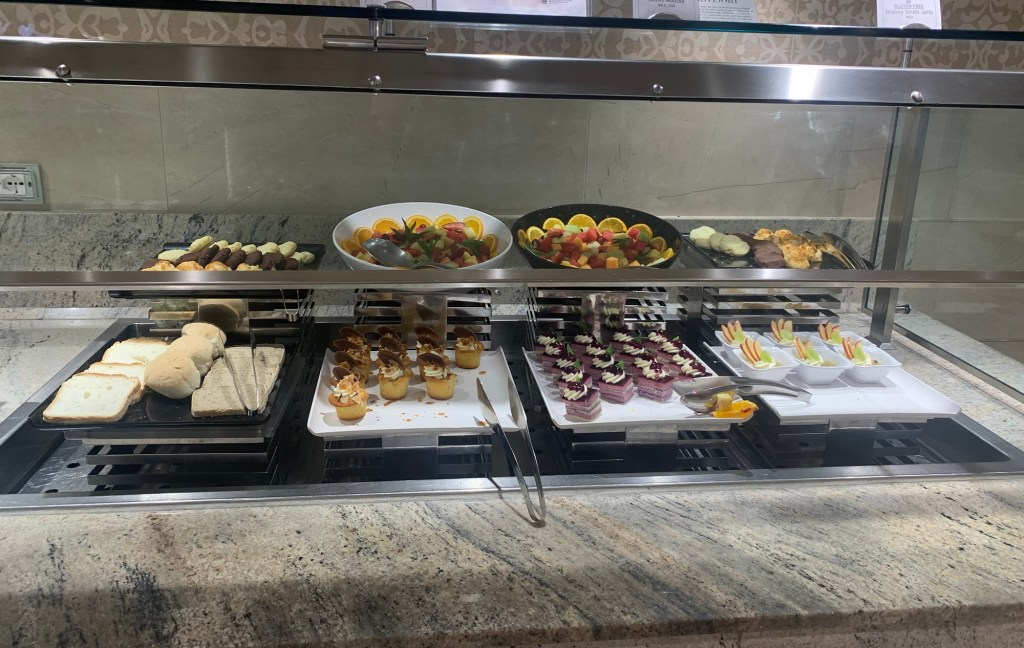
La Terrazza offering a buffet breakfast and lunch and an al la carte Italian menu for dinner.

Indochine open for lunch or dinner and offering fusion food such as Indian, Thai and Korean.

The Grill, al fresco dining on the pool deck offering a buffet lunch and a “Hot Rocks” experience for dinner where guests cook steaks on the rocks brought to the table.

Kaiseki offers a Japanese experience for lunch or dinner. We dined here on our second night and it was truly spectacular. Guests pay a $40 per person supplement.

La Dame open for dinner only and offering gourmet French cuisine with paired wines for each course. Guests meet the full cost of the experience.

Silver Note offering guests a jazz club experience with Tapas, music and dancing.

Still peckish … The Arts Cafe offers light snacks from 6 am to 11 pm; Spaccanapoli an al fresco pizza restaurant open from 11 am to 10 pm; or, 24-hour room service which is included in a the cruise price!

Sushi bar in La Terrazza.
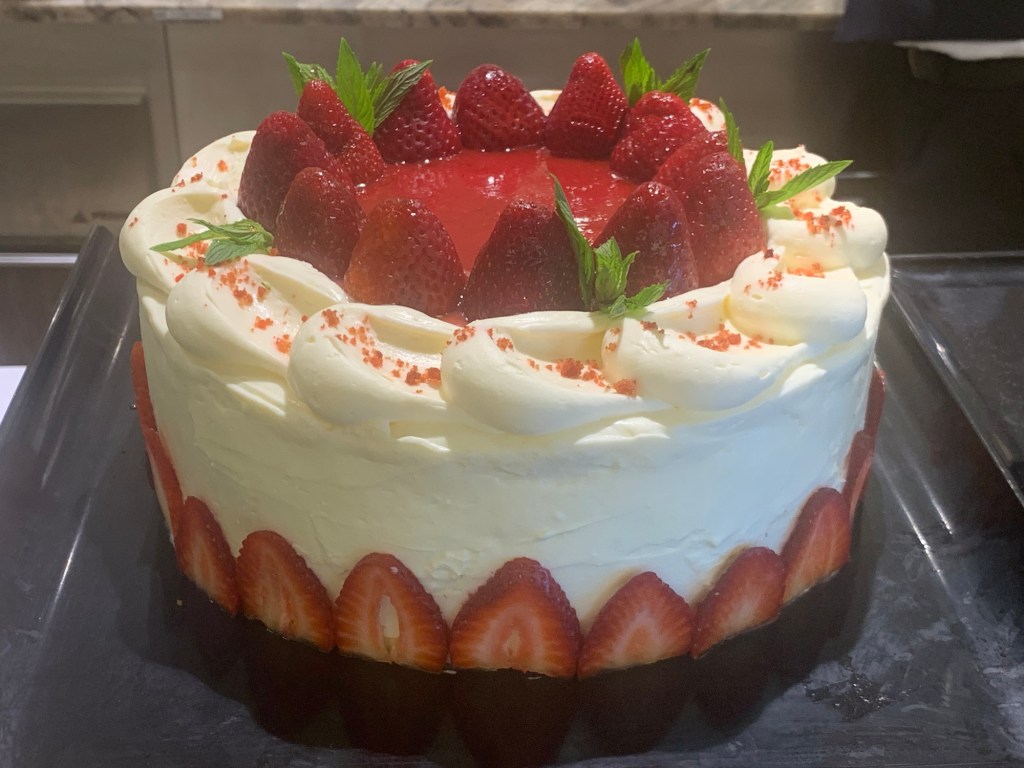
Low calorie strawberry cake at La Terrazza!
Gluten free bar in La Terrazza.

Welcome Aboard!

Mike and I are now onboard our cruise ship “The Silver Muse” and, at the time of writing, we are in the Tasman Sea en route to the Bay of Islands on the North Island of New Zealand.

Silversea cruises offer an all-inclusive experience for their guests with routes to all seven continents.

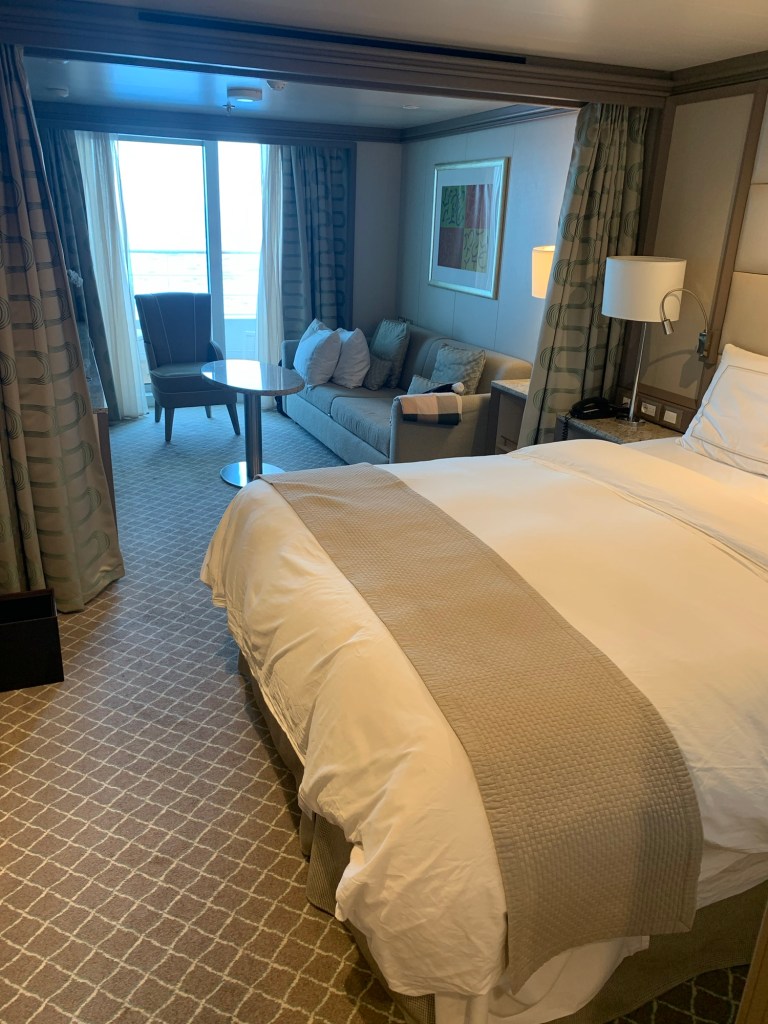
Before showing you around our suite, let me give you some statistics of our ship; it has a passenger capacity of some 596, a crew of 411 and 298 suites each with a veranda and a personal butler!

We are in a Classic Veranda suite. There is a bathroom with walk-in shower, toilet, bath and Bulgari toiletries!
A walk-in closet with a safe.
A bedroom with heavy curtains that can separate the the lounge area.
There is a television behind the mirrors in both the lounge and bedroom with two separate controls to enable us to watch different TV stations at the same time!

Fun facts (and other things!)

Brisbane street names were chosen from British royalty with streets running in a north easterly direction named after queens – Anne, Elizabeth and Mary. Streets running in a north westerly direction are named after kings – William, George and Albert.

If you want to give your credit cards a serious work out then head to Queen or Edward streets in the heart of the city. Home to over 500 brands and six major shopping centres, you’ll find the complete alphabet of high-end retail therapy shops from Burberry and Chanel to Dior, Fendi and Gucci!

Too high end? Brits will be relieved to know that long after Woolworths and The Body Shop disappeared from our high streets they are both alive and well here down under!

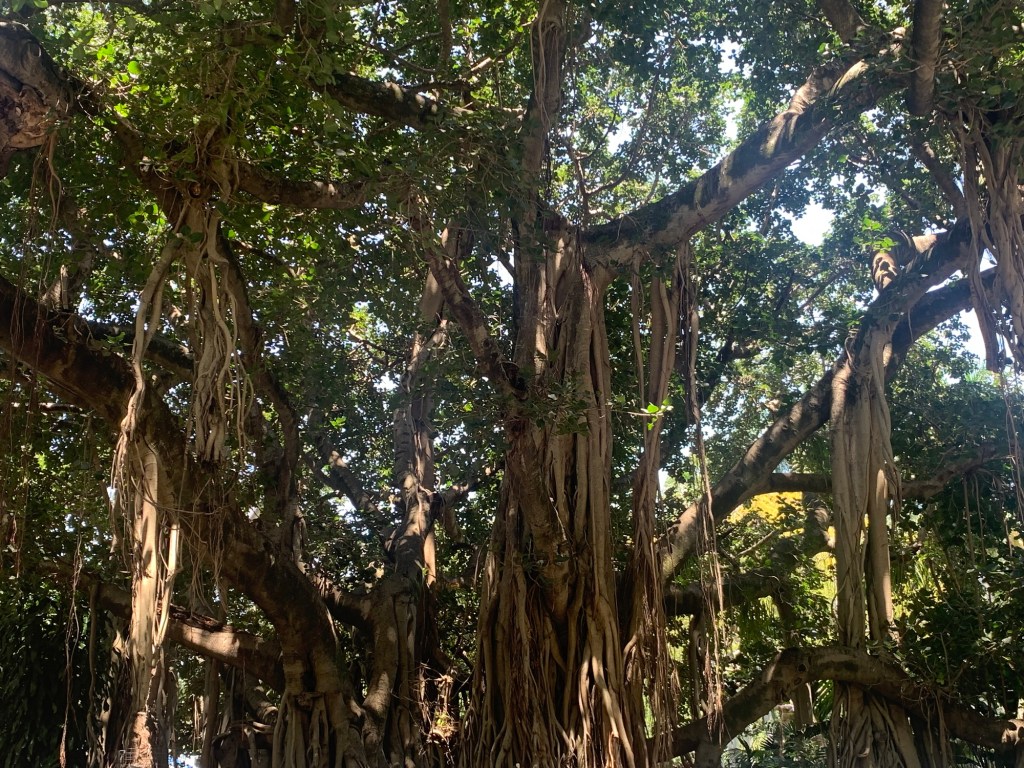
Despite impressive skyscrapers, leafy suburbs and green spaces thrive everywhere including this magnificent Banyan tree.
Finally from Brisbane, and not something I usually blog about! Above is a photo of the control panel from the toilet in our hotel room. Take a look at option #3 … say no more!

Brisbane and World War II

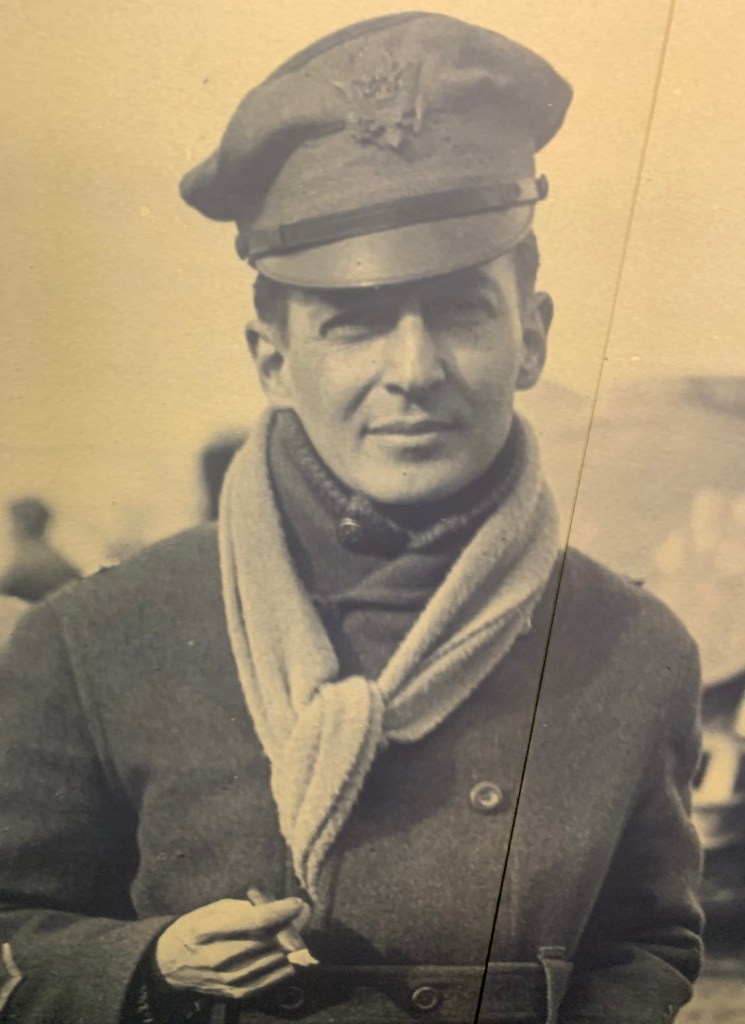
After a series of successful attacks by Japanese forces, including the raid on Pearl Harbour in December 1941 and the fall of Hong Kong and Singapore, the city of Brisbane became the headquarters for General Douglas MacArthur, Supreme Allied Commander for the South West Pacific Area.

In the US as in Britain, strategists focussed first on the war against Hitler, fought out in Europe and Africa. MacArthur had to take on Washington in order to get resources to defend Australia and turn back the Japanese advance. 

Under MacArthur’s leadership, Brisbane became a valuable staging area for a counter offensive led by American, Australian and British forces. Over the coming war years, the city’s population exploded from 350,000 to some two million troops who would pass through the region.

Born in 1880, MacArthur graduated from West Point Military
Academy in 1903. By the end of World War I, MacArthur had
become the US Army’s youngest Divisional Commander and
a military hero decorated for bravery in many battles.