Royal Cradles

The royal barges were built to serve the Kings’ duties; they have been used as warships during the time of war, but have been adapted for today’s needs which are royal ceremonies and other important occasions.

The most impressive boat is the King’s personal barge. Originally built in 1911 and measuring over 150-feet in length, the boat is cut from a single, narrow tree trunk enabling it to travel rapidly even when going upstream. The boat’s prow is ornately carved with a Suphanahong or mythical swan and is covered with intricate gilt carvings and colourful pieces of glass. The crew will consist of 50 oarsmen who paddle in time to the rhythmic beat of a drummer.
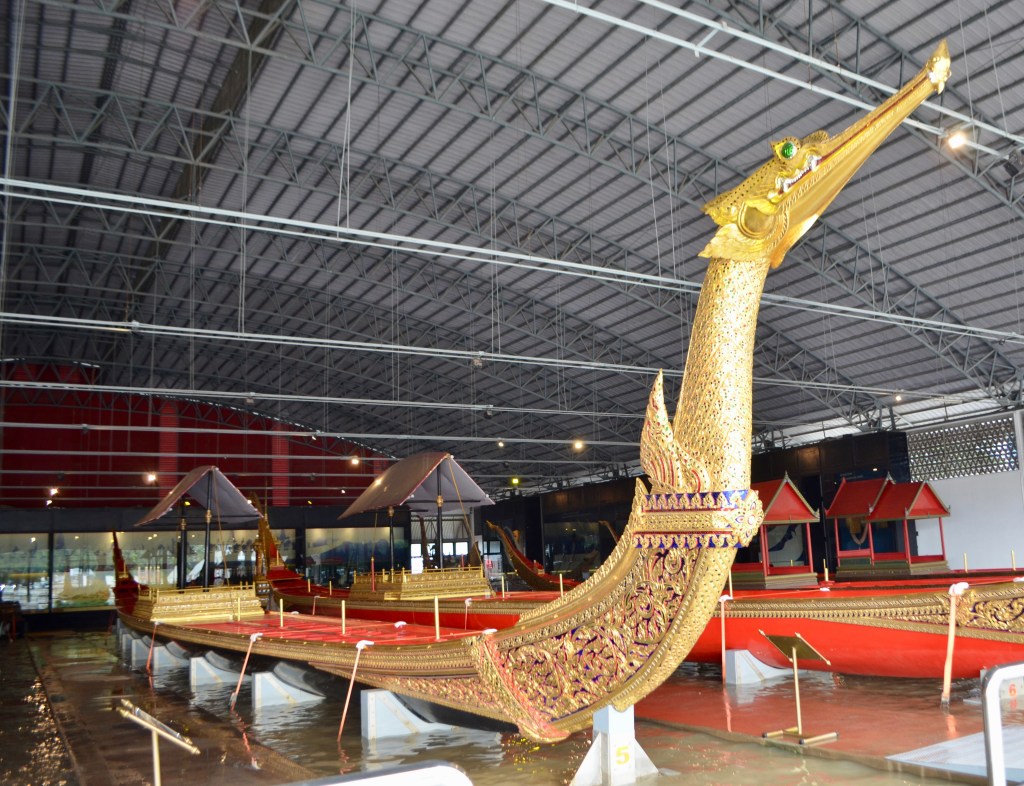
Each boat is a masterpiece of marine and traditional craftsmanship and sits in a royal cradle that is strapped down to prevent damage as the river level rises and falls with the constant water traffic.

Bobbing Along

In the past, daily commerce in Thailand was conducted mostly along rivers and canals (or khlongs as they are known in Thai). Bangkok’s water network was busy and served as the mainstay of everyday life giving Bangkok the name of “Venice of the East” by early European visitors.

Today, the Damnoen Saduak floating market, 80 miles west Bangkok, is primarily a tourist attraction. It is well supported locally and allows visitors the opportunity to experience the culture of riverside shopping which was like this for over 100 years.

Coconuts are grown across Thailand and one popular use for them is to scoop out the flesh, make ice cream from it, and then put it back into the shell and serve with an orchid flower on top!

The Damnoen Saduak floating market had its heyday in the early 1970s when the river was full of farmers selling their wares.

The Thai Silk King

After serving as an American military officer in World War II, Jim Thompson settled in Bangkok, Thailand. 

He was captivated by the country and its culture, particularly the art of hand-woven silk with its remarkable range of colours and textures. 

At that time, however, the craft of silk weaving was in steep decline, threatened by machine-made fabrics and the advent of synthetic yarns. Yet, he believed Thai silk would appeal to textile lovers in America and Europe, whose patronage could support local weavers and silk farmers in an era when economic opportunities were limited in a developing country such as Thailand.

Thompson dedicated his life to organizing a network of artisans, helping to upgrade their looms, introducing new techniques and enabling Thai weavers to create silks that would dazzle the world.

By 1950 he had founded The Thai Silk Company, majority-owned by Thais, aimed in part as sustaining the traditional livelihoods, culture and dignity of local weavers and silk farmers. Today, the company employees over 3,000 people.

In 1967 Thompson disappeared while walking alone in the Cameron Highlands of Malaysia. He was never been seen again.

Let’s Eat

If there is one thing Bangkokians are not short of it’s food! There are restaurants, street vendors and gourmet-level food courts everywhere.

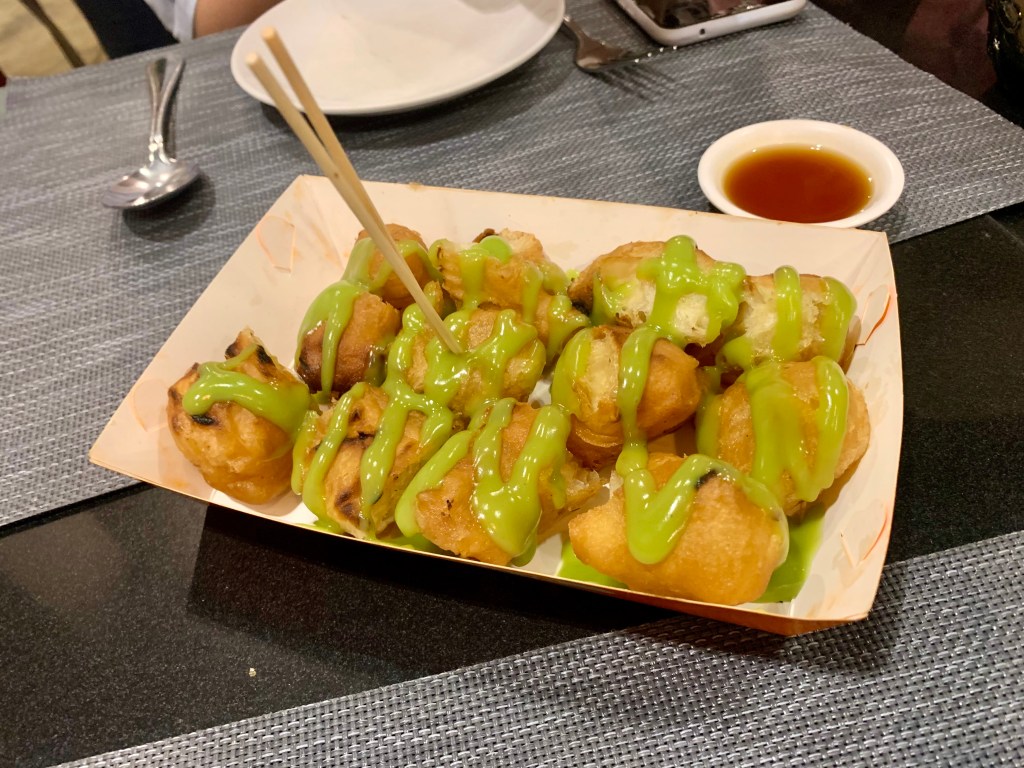
Pa Tong Ko – crisp and airy Thai donuts served with a coconut custard. These are oven-baked and not deep fried, yum!

Tang Yuan – sesame dumplings filled with a sweet, black sesame paste (it doesn’t sound too appetizing but was delicious).

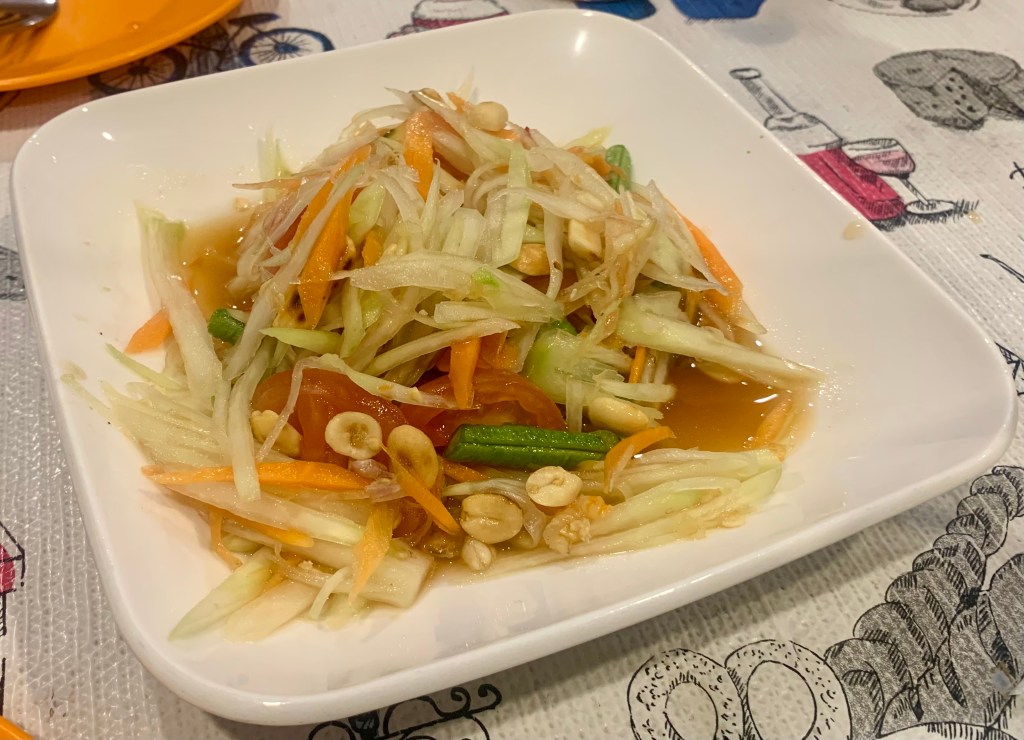
Som Tam – green papaya salad. A Thai favourite served as a side dish with starters or main courses. It is a very aromatic salad with just a hint of chili.

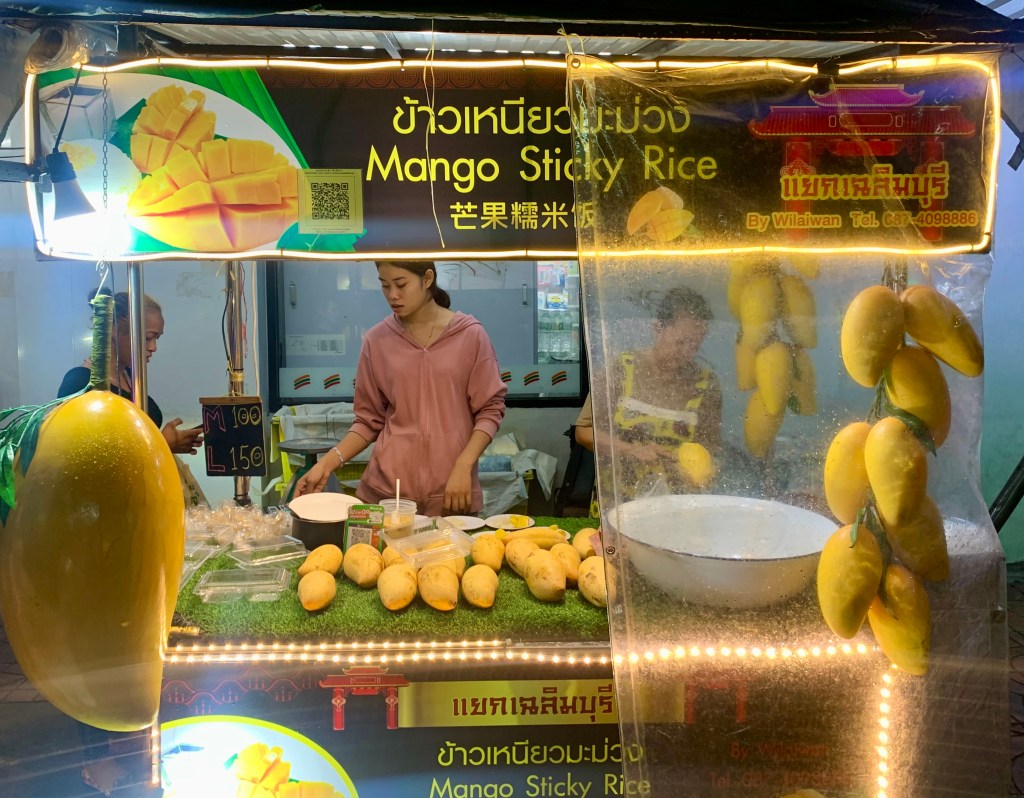
Khao Niao Mamuang – Mango sticky rice. This is a traditional Thai dessert that typically consists of sticky rice cooked with coconut milk and served with fresh sliced mangoes on top and chopped soy beans for crunch. My favourite so far as it was so refreshing and light!

Mae Klong Railway Market

Some fifty miles southwest of the centre of Bangkok is a sleepy town that is home to a popular local market selling fruits and vegetables, seafood and dried meats and other miscellaneous goods.

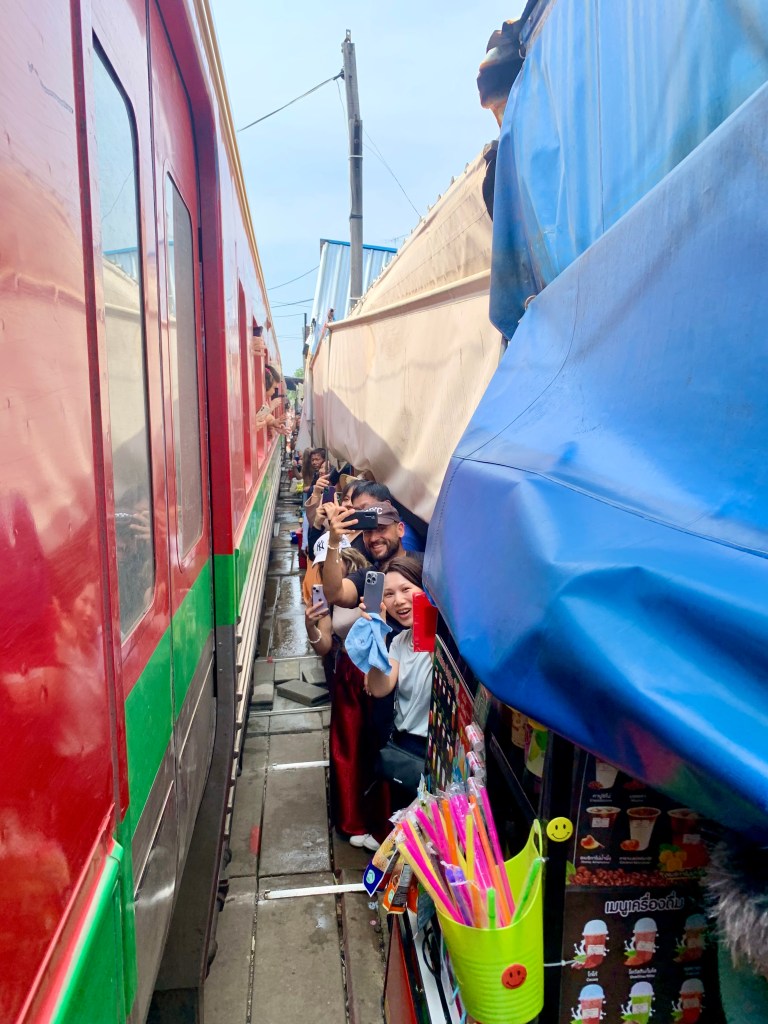
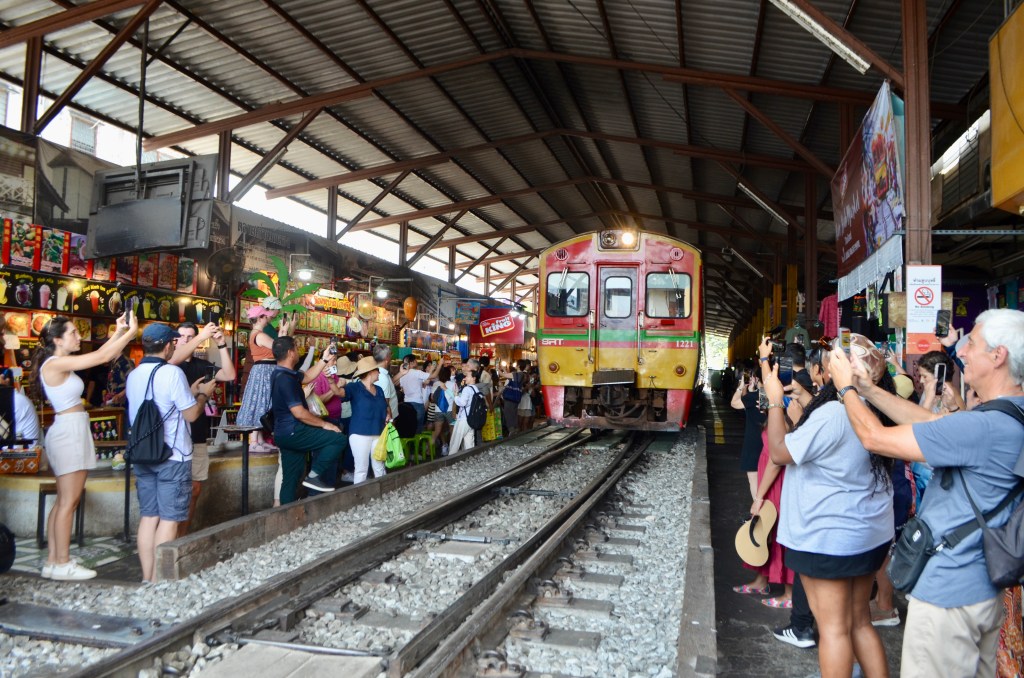
What’s unusual about the market is that the vendor’s stalls run parallel to, and physically on, a 300-feet stretch of active railway track! 

Some eight times a day, the signal of the arriving train rings and chaos erupts: vendors rush to close their sun-protective umbrellas and canvases and clear their goods off the tracks that may obstruct the incoming train. Hundreds of tourists and locals line the tracks taking selfies and just experiencing the sheer madness of the occasion. 

The train passes, the vendors rush out to open their umbrellas and replace their goods on the track until the next train blows its whistle and it all starts again!

Follow the Buddhas

Welcome to Thailand!

We are now beginning our exploration of Bangkok, the capital of the country which has a population of over 10 million people!

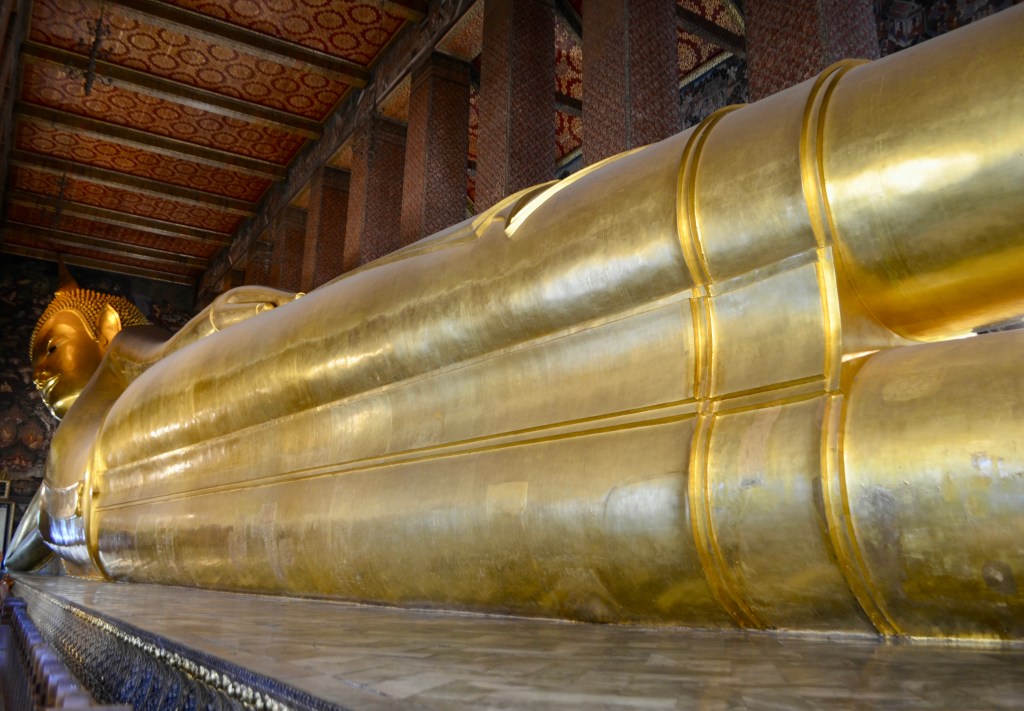
With over 90% of the country following the Buddhist religion, it is not surprising that Bangkok is home to several hundred temples. The most famous of which is known as Wat Pho, home of the Reclining Buddha and comprising of four chapels that collectively showcase some 400 Buddha images.

The Reclining Buddha measures over 150-feet long and 160-feet tall, is covered in gold-leaf and dates back to 1832. Its significance is that it depicts the buddha just before he passed into the afterlife, lying on his side with a calm and content expression. 

Me with our wonderful Tuk, Tuk driver whose life’s mission was to take us to as many Buddha Temples as he could in one day! In accordance with the Buddhist religion, visitors are required to cover their shoulders and knees and remove their shoes before entering a temple.

The Jewel

Can you imagine choosing to spend a day at London’s Luton airport or New York’s La Guardia, enjoying the attractions, fine-dining and children’s activities? I guess not!

Well, that’s exactly what Singaporeans do at their very unique and award-winning Changi Airport.

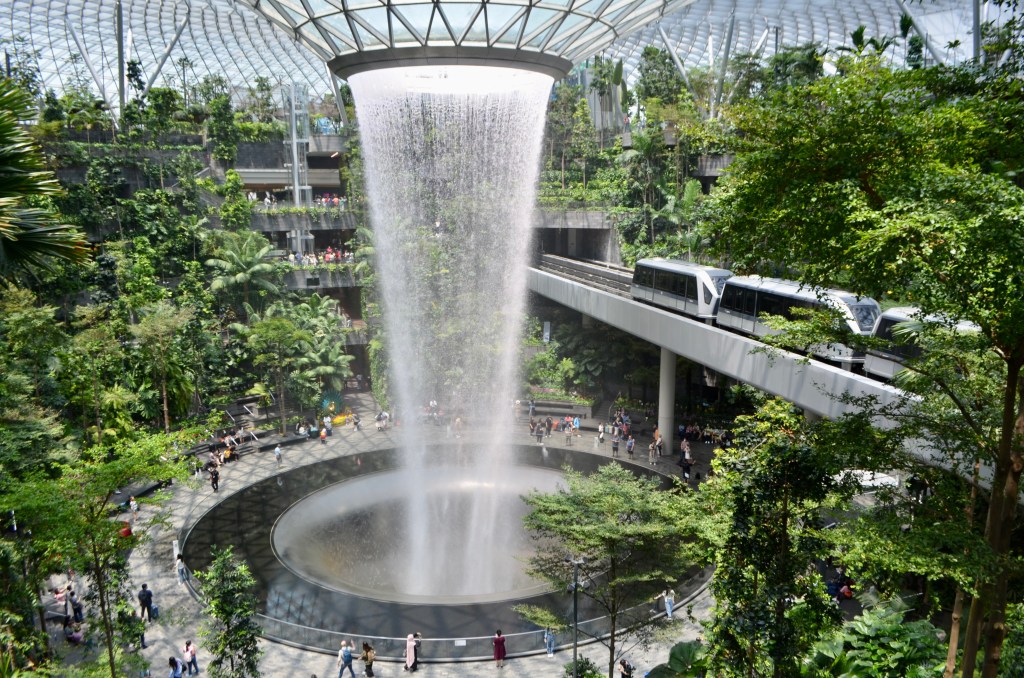
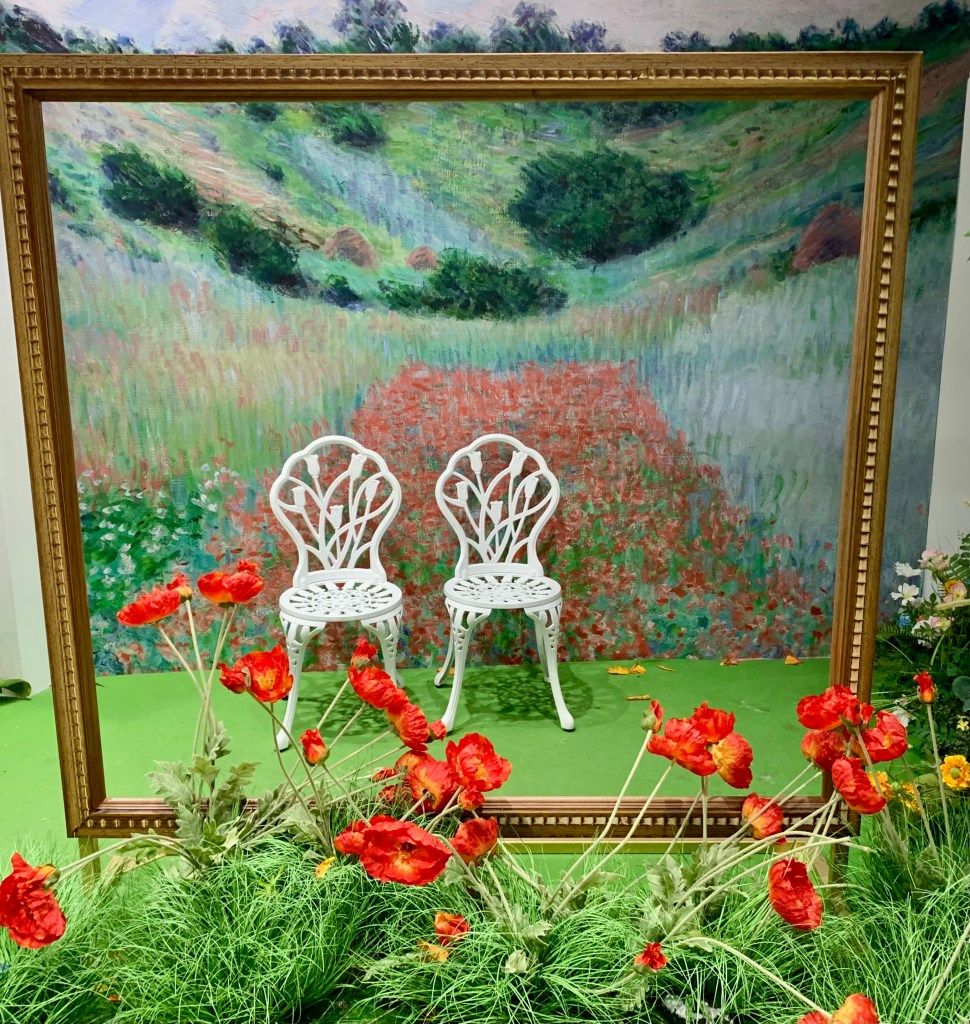
Housed in a dedicated terminal outside security, and known as “The Jewel,” there are jaw-dropping attractions such as the world’s tallest indoor waterfall; a tropical forest; an immersive Monet-themed art experience curated with the Museum of Fine Arts, Boston; a cooking school; more restaurants than you could throw a stick at; the first permanent Pokemon Centre in Asia outside Japan and, on and on it goes. It is a truly amazing experience.

Standing over 130-feet tall, water cascades down from a dome-shaped roof known as “The Rain Vortex.” 

Images of the waterfall are cleverly portrayed on the entrance to the departure gates and are a selfie-mecca!

Monet’s backdrop of “Poppy Field in a Hollow near Giverny” waiting for some airport wanderers to become part of his artwork!

A Rose Tint

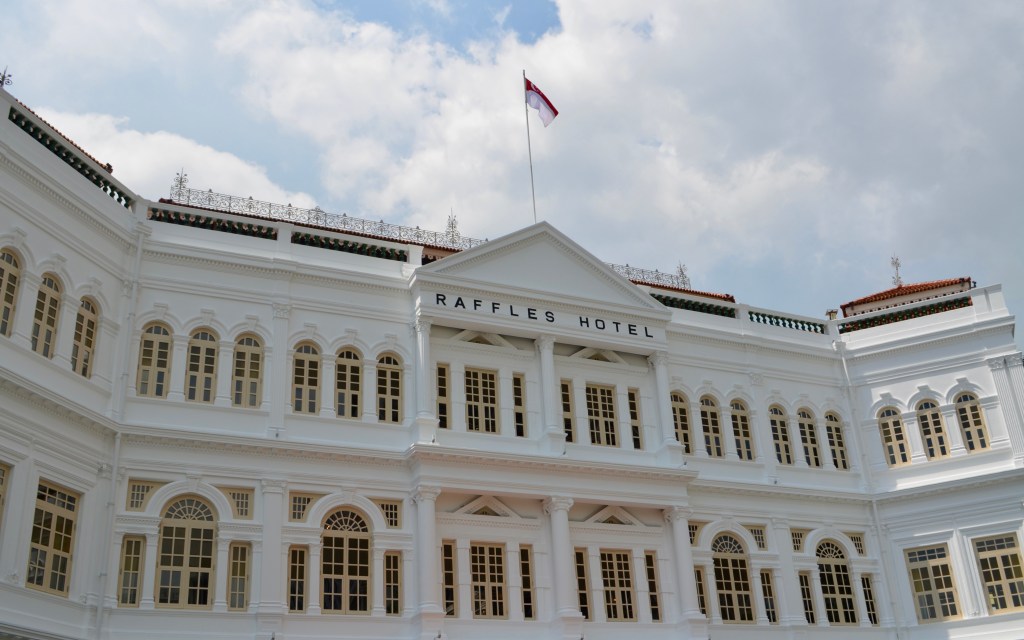
Back in the day, etiquette dictated that ladies could not consume alcohol in public and so teas and fruit juices were their beverage of choice. Ever thoughtful Raffles Hotel bartender, Ngiam Tong Boon, saw a niche in the market and decided to create a cocktail especially for ladies that looked like a fruit juice but was actually infused with gin and liqueurs! 

The clever bartender used the pink hues of grenadine and cherry liqueur to give his creation a feminine flair while masking the clear alcohol content and by including pineapple and lime juices and Benedictine led people to think that women were drinking a fruit juice! Needless to say, the cocktail was an instant hit and led people to think that it was a socially acceptable drink from women!

With that, the Singapore Sling was born at the Raffles Hotel in 1915. 

One hundred year on and the Singapore Sling continues to be a favourite among guests at Raffles Hotel!

Eight Days in 1942

On the night of February 8th 1942, Japanese forces began their invasion of Singapore. The solders were ruthless, brutal and fearless and the attack happened with a speed and savagery that took the incumbent British-led forces completely by surprise. Encouraged not to take prisoners, simply to execute those in their path, the Japanese swept through Singapore with the force of a tsunami.

Eight days later, the hard-fought campaign for the island was over. The British had suffered their worst defeat of all time and surrendered to the Japanese. What followed was the island’s cruel occupation until the end of World War II. In 1946, Singapore became a British Crown Colony remaining so until 1959 when the country held its first general election.

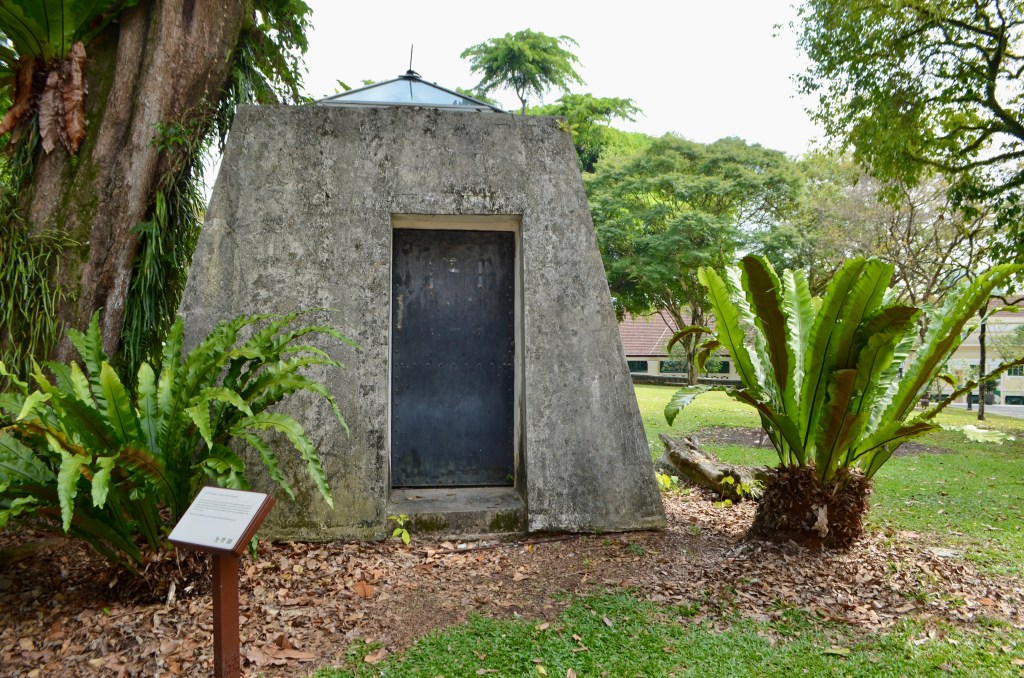
A bomb-proof underground bunker was built at Fort Canning Hill in 1936 to house the headquarters of British and Commonwealth forces in the event of war. Known today as the Battlebox, it is located 30-feet below ground and equipped with 29 rooms. It was in the bunker that the decision was made to surrender to the Japanese. Above is the escape shaft from the bunker.

Hawker Chan!

In the 1980s, due to overcrowding and congestion, Singapore’s government authorities began moving street-food vendors into new buildings with facilities to help improve hygiene and cleanliness. Known as hawker centres, they are effectively large food courts with stalls around the perimeter serving a wide variety of affordably priced food. 

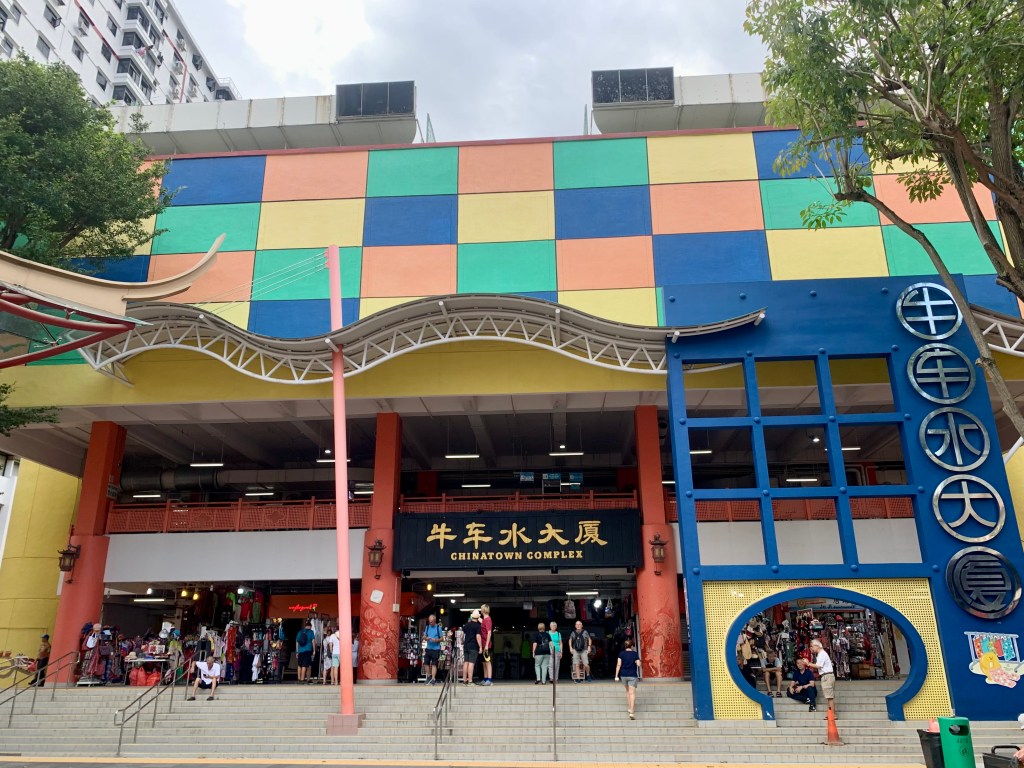
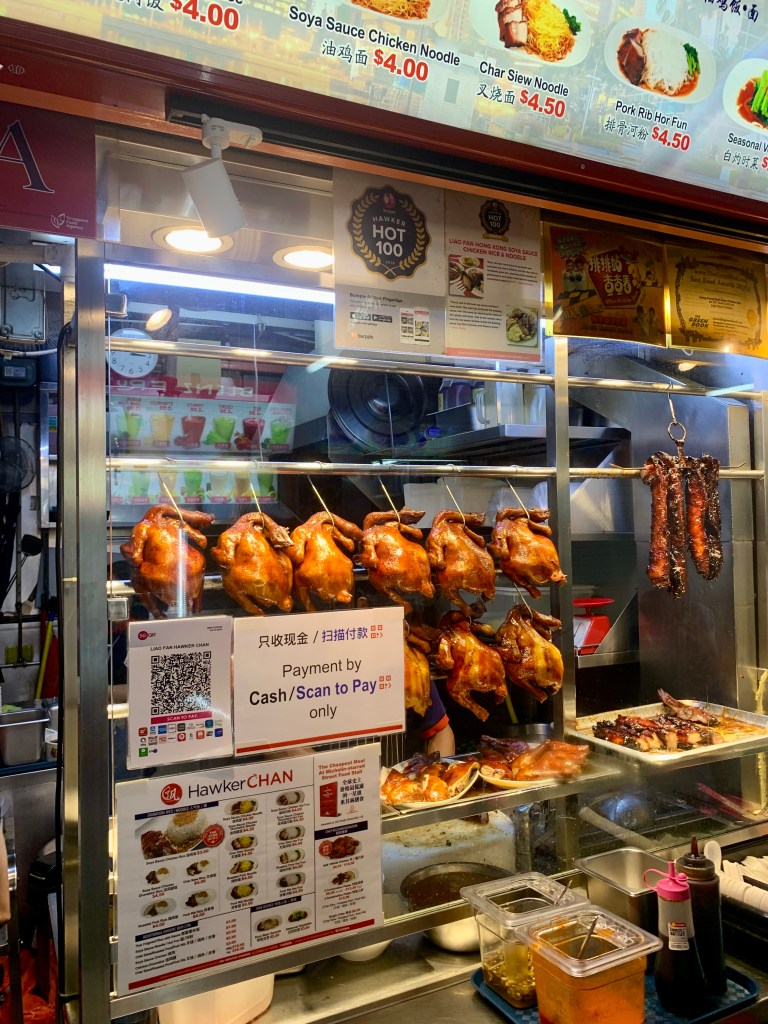
The Chinatown Complex Food Centre is one of the city’s oldest of its kind housing over 200 vendors specializing in everything from roasted duck to claypot rice and all else in between! The building has a wonderfully scruffy ambience and we were able to find its most notable vendor – Hawker Chan, formerly known as Hong Kong Soya Sauce Chicken Rice and Noodle – likely the world’s cheapest Michelin-starred restaurant!

Chinatown Complex Food Centre.
Michelin-starred Hawker Chan.