Watermelons in New Mexico!

Today we left our snowy RV park in Colorado and headed through magnificent scenery to Albuquerque. Known as the most populated city in the US state of New Mexico, it has over half a million people with the metropolitan area spiking to nearly one million souls! It was strange for us to become part of a big city’s Friday night traffic jam as everyone heads home for the weekend!

Albuquerque lies in the Albuquerque Basin, a portion of the Rio Grande Rift. The Sandia Mountains are the predominant geographic feature visible from the city. “Sandia” is Spanish for watermelon, and it is believed to be a reference to the brilliant colouration of the mountains at sunset: bright pink – melon flesh – and green – melon rind! The pink is due to large exposures of granodiorite cliffs (similar to granite) and the green is due to large swaths of conifer forests.

Every October, the city is home to the International Balloon Fiesta, sponsored by Canon, the camera makers. The event is a true spectacle as 600 hot air balloon enthusiasts take to the skies at sunrise in what is believed to be one of the most photographed events in the world that includes many exciting photographic competitions for the amateur! We have checked out the event but there is only limited space for motor homes and you need to book one year in advance to get a space! Another one for the bucket list!

121655786

Something borrowed, something blue – until such times as I can share my own pictures!
Exploring Aztec Ruins

Near today’s city of Aztec in New Mexico, early farmers took advantage of the Animas river’s year-round water. Ancestral Pueblo people had long-lived in the Four Corners Region (consisting of the southwestern corner of Colorado, southeastern corner of Utah, northeastern corner of Arizona and northwestern corner of New Mexico), and sometime late in the 1000s, a group began building a large complex near the river.

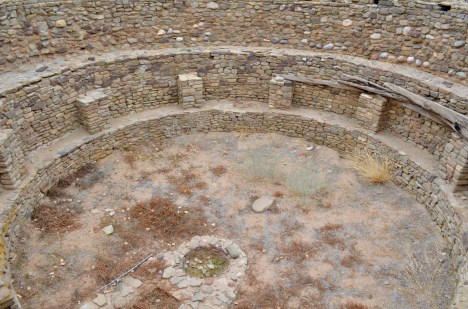
When construction ceased two hundred years later, the community consisted of great houses, small residential pueblos and Kivas (round builds). The formal layout of the settlement and the orientation and visual relationships among the buildings indicate a grand design.

fullsizeoutput_26d3

Archeologists believe Kivas were public buildings that may have brought together different clans for ceremonies and other functions. In 1916, Earl Morris headed the first dig at Aztec. He spent the next seven years excavating and stabilizing much of the site which had been derelict since the people left in the late 1200s. 

fullsizeoutput_26cf

The largest of the houses had at least 500 rooms that rose three stories high. Excavation revealed original roofs with centuries-old wood and vast deposits of well-preserved artifacts.

DSC_0119

Some of the wonders of the buildings are the impressive architecture, fine masonry and high-quality building materials, all of which you can see in this wall. The strong centre of the wall is constructed using rough stones and a lot of mud mortar. This technique allowed them to build taller walls with a fine shaped sandstone on the outside which gave the wall a beautiful finish. The people of Aztec incorporated lines of green stone within some walls, the meaning of which is unknown to archeologists.


French Legend!

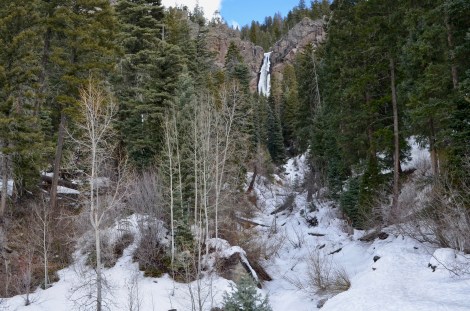
Treasure Falls is a waterfall in the San Juan Mountains, northeast of Pagosa Springs in Colorado. Above the falls sits Treasure Mountain.

The falls are named after a local legend about “a treasure of gold” buried in the mountain the falls plunge from.

Legend has it that a party of Frenchmen entered the San Juan Mountains somewhere around the Wolf Creek Pass in 1750. They set about panning for gold and were super successful amassing a fortune. They were repeatedly attacked and cached-in their gold near Treasure Falls. Only a handful of the original party survived and returned to French territory.

DSC_0086

Mike and I found ourselves restricted to viewing Treasure Falls from the car park as neither of us had imagined seeing so much snow in the area and the only safe way of completing the 300-feet hike to a foot bridge to view the falls, really needed snow boots! I was wearing trainers and Mike something equally useless!

DSC_0088

DSC_0094

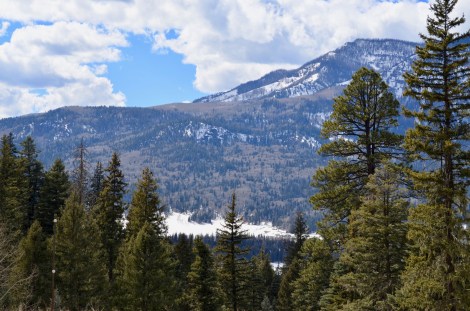
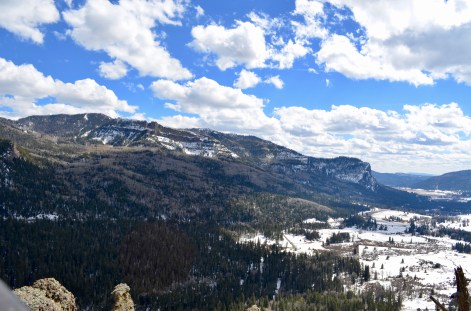
Wolf Creek Pass is a mountain pass on the Continental Divide, in the San Juan Mountains of Colorado. The views are spectacular!


Happy Sixth!

Miss Poppy-dog is six today!

To all members of Poppy’s fan-club, thank you for your gifts, good wishes and happy tails!

As today is Poppy’s day, we humans will do whatever she wants! Likely an extra lay-in bed as she’s rather a bed-head at heart; some seriously long walks with additional squirrel chasing; an afternoon nap with her Daddy; and, ribeye steak for tea! Steak is one of her favourite things to eat alongside sausages, ham and Domino’s all meat pizza! The pizza listing has nothing to do with the blogger, but when I was in London earlier this year, her Daddy put Domino’s delivery service on speed dial and it seems that he and Miss Poppy sat and watched TV and ate pizza together!

Happy Birthday Poppy!

DSC_0162

Daddy’s girl!

Being adorable and watching for squirrels through the motor home window!

IMG_0525

Poppy and Derek the Dragon!

Healing Waters

We spent the day in Pagosa Springs, a delightful town some 35 miles north of the New Mexico border, nestled at an elevation of 7,000 feet above sea level on the western slope of the Continental Divide.

This combination of high desert plateau and the dramatic Rocky Mountains to the north and east, creates an unusually mild climate, especially in summer months, when compared with much of the surrounding Southwest. Pagosa Springs is blessed with some 300 sunny days each year, as well as enjoying four distinct seasons.

Located in the upper San Juan Basin, the town is surrounded by the three-million-acre San Juan National Forest, and is adjacent to the largest wilderness area in the state of Colorado, the Weminuche Wilderness which covers over 750 million square acres!

The town is named for the sulfur springs located here, including the world’s deepest geothermal hot spring. This “Mother Spring” feeds the pools hosted by three local hot spring locations. The water from the “Mother Spring” is approximately 144 degrees Fahrenheit (62 degrees Centigrade) and the mineral-rich waters are celebrated for their therapeutic powers.

Visitors from all over the world come to Pagosa Springs to enjoy its hot baths. Some come to cure ailments, others simply to relax in the mineral-rich waters.

fullsizeoutput_2675

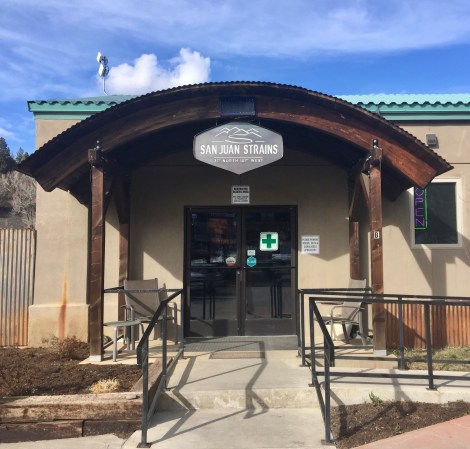
The Healing Waters of Pagosa Springs are not the only relaxing agent in town! The state of Colorado has legalized Marijuana and the town has three dispensaries – San Juan Strains being one!

There’s gold in them hills!

Greetings from Durango, located in southwest Colorado, at the foot of the San Juan Mountains, where we are keen to check out the area as a possible “short-list” candidate to call home sometime in the future.

Gold fever struck the area in 1860 as hundreds of miners camped out hoping to make their fortunes from gold, and silver, in the mountains surrounding the town.

The town of Durango was founded some twenty years later by the Denver and Rio Grande Railroad Company along the banks of the Animas River to serve the San Juan mining district. Within a year, the city’s population had sky-rocketed to nearly 2,500 with people arriving from everywhere to work in the smelters and mines, and on the railroad.

Today, the town’s population is in excess of 18,000. For the outdoor enthusiast, Durango has something for everyone: breathtaking scenery with both the San Juan National Forest and Mesa Verde National Parks within easy reach; biking and hiking trails galore, plus river rafting and fishing. When winter snow falls, Durango soon becomes a ski paradise with Ski Magazine calling it one of “America’s Top 10 Ski Towns” featuring slopes for every skill level.

There is also a charming downtown area that is a Nationally Registered Historic District and home to boutique hotels, restaurants, craft brew-pubs, art galleries and shops.

DSC_0092

The backdrop of one of Miss Poppy’s walks today in the San Juan National Forest while we were checking out properties and land for sale! 

Happy Mother’s Day!

It is Mother’s Day in the UK, and so I would like to dedicate today’s blog to my Mum. Happy Mother’s Day, Mum!

SCAN0169

Mum around nine years of age!

From Left: Mum aged around 16 years; Mum working – standing in Trafalgar Square, London!

C0047

Mum at our wedding in 2008.

Here we are in Eastbourne, East Sussex last year.

Island in the Sky

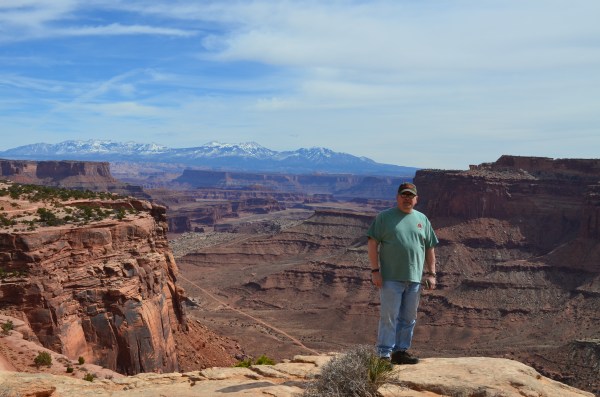
The Canyonlands National Park near Moab, Utah is so vast that it is divided into four districts, each separated by the Green and Colorado rivers and with no roads in the park that directly link the distinct areas.

We opted to further explore the Island in the Sky district, where we were yesterday as we barely scratched the surface of what there is to see.

Without doubt, this is the perfect time of year to visit the park as the season really kicks off next week. The daytime temperatures have been a glorious 60 degrees Fahrenheit (15 1/2 degrees Centigrade) which is perfect for exploring; the schools are not on holiday, so the park is comparatively empty; and, one can easily park and get to see the sights and take photographs without having to deal with hordes of other people!

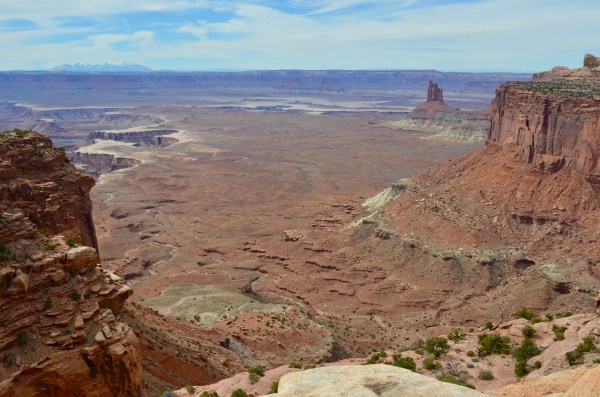
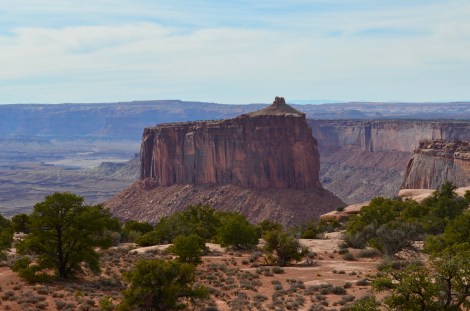
I am not going to bore you further with more geological history of the landscape, but share with you three photographs that I took today that, I believe, visually portray what a great park this is to visit, and this is only one of the sections. We’ll be back!

DSC_0080

Darling, take one more step backwards!

fullsizeoutput_25c9

This was not an official stop! We were driving by and had to take-in the view!

fullsizeoutput_25d2

Looking through Mesa Arch with La Sal Mountains in the background.

Violent meteorite!

We are in Canyonlands National Park today, a whopping 337,000-acre preserve of colourful canyons, mesas and buttes some thirty miles from where we are staying in Moab, Utah.

As with all the other parks we have recently visited, this one has magical scenery that seems to defy the laws of nature, and it is hard to comprehend that water and gravity have been the prime architects of this land, sculpting layers of rock into the rugged landscape seen today.

Our first port of call is Upheaval Dome, the formation of which remains a mystery to this day. However, recent findings support one theory put forward by the scientists.

About 200 million years ago, a meteor hurtled towards the earth. The meteor hit the ground with so much force, that it vaporized on impact. The force of the impact fractured the rock, creating a large crater more than two miles wide. Over time, the rock layers rebounded inward and upward to fill the void, and in due course erosion has exposed the tilted, broken core as a remnant of a meteor impact.

fullsizeoutput_2592

Upheaval Dome in Canyonlands National Park, Moab, Utah.

fullsizeoutput_258c

Mike and I trying not to fall over the unprotected rim of the crater!

fullsizeoutput_2595

A breathtaking butte in Canyonlands National Park!

Mustang Sally!

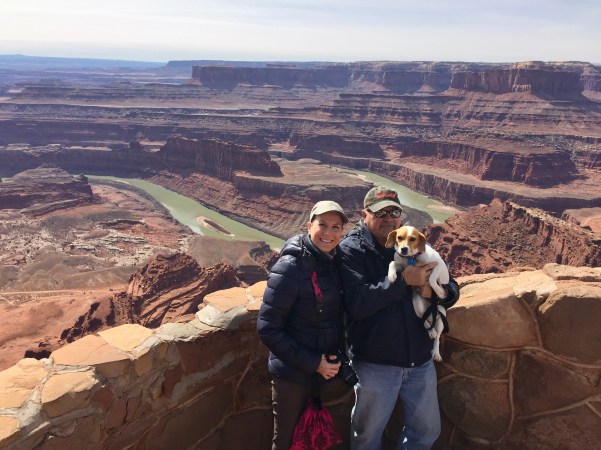
We spend our day at Dead Horse Point State Park, and, unlike its terrible name, we enjoy yet more magnificent scenery!

Starting from snowmelt over 9,000 feet above sea level in the Rock Mountains of Colorado, the Colorado River flows over level terrain taking on a winding and ever-changing course referred to as meandering. Uplift of the Colorado Plateau nearly 10 million years ago sped up the flow of the river and triggered rapid downward erosion of the river channel. Eventually the river had down-cut to a depth that would not allow a change of course known as an entrenched meander.

As water seeps into the rocks, it dissolves the cementing minerals that bind the sand grains, allowing them to be carried away. The sand grains then enter the flow of the Colorado River and turn the water into an abrasive solution like liquid sandpaper. The fast current of the gritty river carves through the rock, deepening the canyon. Today, the river is 2,000 feet below from where we are standing.

fullsizeoutput_2556

The Colorado River below us. According to legend, Dead Horse Point State Park is named for a ghost horse which can be seen imprinted, in white, on the rocks behind, and to the left of my shoulder. 

fullsizeoutput_2559

The bright blues on the desert floor are solar evaporation ponds for a potash mine. Potash is a potassium chloride, a salt deposited from ancient seas that was buried by other sediments. Water is pumped into the formation to dissolve the salt. The salt water is then deposited into shallow, vinyl-lined ponds where a blue dye is added to speed up evaporation. Once the dry salt is harvested, a local refinery transforms it into plant fertilizer!