Unusual beginnings …

About two hours into the first day of this road trip, and our plans were interrupted by a police man-hunt following a fatal shooting in Cleveland, Texas!

The police closed the highway we were traveling on as they sought the suspect. Helicopters flew overhead, police were everywhere, lorries, motor homes and oversized vehicles sat on the side of the road waiting for the highway to re-open.

Deciding to cut our losses, we re-traced the first two hours of our journey and picked-up Interstate-10 which would take us to our final destination – Ponchatoula in Louisiana. It was now the middle of the afternoon, rush-hour traffic was on the increase and we added some three extra hours to our day, arriving at the campsite at 10 p.m. at night with everyone tired and ragged around the edges!

This is the first time I have ever blogged about such a subject and fingers crossed it will be the last! At the end of the day, two people were dead, including the shooter, and three were wounded and in hospital.

Ending on a happier note, last May we introduced you to our latest kitty member of the family, Miss Cricket. Below, to the left is what she looked like last May. To the right is what she looks like today, all grown up, full of play and quite a lot of attitude!


On the road … May 31st, 2019!

Hi Everyone,

Thanks so much for your patience as Mike and I have languished at home since our last road trip trying to make up our minds on where to go and when!

Finally, we have landed our next two road trips. The first one starting at the end of May and taking-in Florida, Georgia and Tennessee, three states that are of interest to us for a possible retirement home sometime down the road. We shall see.

I look forward to sharing our adventures with you and to having you along for the ride.

See you on the 31st!

The Blogging Brit

The End of the Road …

… for this road trip, anyway!

We arrived home on Sunday and have spent the past two days emptying and cleaning the motor home and today returned it to storage.

It was a great trip, our longest to date, spending 50 days away! We traveled over 5,400 miles, taking-in the sights and experiences in over 10 states. And, wow, have we seen and done a lot of things!

Everyone is pleased to be home especially Miss Poppy-dog who is free to chase her squirrels on a whim and without being held back by a lead or her owners!

Thanks for being a part of our journey and I look forward to sharing with you our next adventure which, I think, won’t be much before the middle of March next year.

I’ll update the website March 1st, 2019 when, hopefully, we will have worked out our schedule for next year.

Until then, Happy Holidays, Happy Christmas, Happy New Year and health and happiness to you and yours.

Amanda

Stanton Hall

In 1857, Irish immigrant and cotton merchant Frederick Stanton began construction of a replica of his ancestral home in Ireland: a palatial Greek Revival-style mansion in the heart of downtown Natchez in Mississippi.

Stanton named his home “Belfast” and it occupied an entire two-acre city block and cost over $83,000 before it was even furnished.

The inside of the home is as opulent as the outside. Marble mantel pieces were imported from New York, ornate gas-fired chandeliers were purchased from Philadelphia and immense mirrors were imported from France.

Sadly, the home was completed only months before Stanton’s death in 1859 and was occupied by Union troops during the Civil War. The family remained in residence until 1894, at which point the building was transformed into the Stanton College for Young Ladies and re-christened Stanton Hall.

fullsizeoutput_2cc8

Stanton Hall is a two-storey brick structure, plastered and painted white. Its front entrance features a Greek temple portico, with four fluted Corinthian columns and delicate cast iron railings.

 fullsizeoutput_2cc9

In 1938, the Pilgrimage Garden Club purchased and restored Stanton Hall to its former splendor. It was officially designated a National Historic Landmark in 1974 and is now furnished much as Stanton originally intended. Photographs are not permitted inside the house!

Emerald Mound

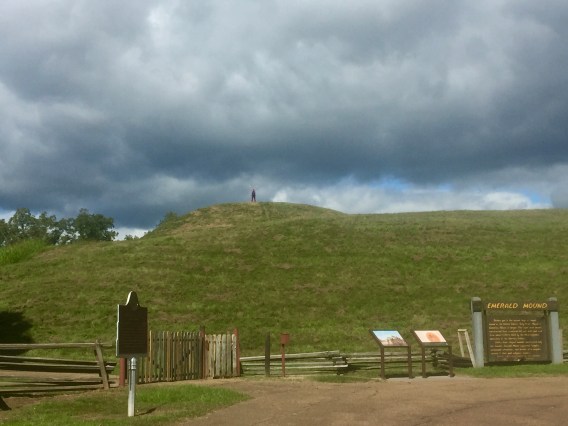
Built along the ancient paths that became known as the Natchez Trace (a roadway), Emerald Mound is the second largest temple mound in the US, the largest being Monks Mound in Cahokia, Illinois.

This eight-acre mound, constructed from a natural hill, was built and used from about 1300 to 1600 by the Mississippians, ancestors of the Natchez Indians.

Unlike dome-shaped mounds constructed only for burials, Emerald Mound supported temples, ceremonial structures, and burials of a complex society’s civic and religious leaders.

Archaeological tests in 1949 indicate that this platform mound was constructed in several stages. Beginning with the natural hilltop, Natchez Indians gradually transformed the hill into a flat-topped pyramid. First leveling off the hill, they later added thousands of tonnes of earth from near the base.

Using primitive tools of wood, stone and bone, the Natchez Indians loaded the dirt into baskets or skins which they carried on their backs or heads.

fullsizeoutput_2cc5

This is a 30-foot secondary mound on which once stood a temple containing sacred Indian images. On important occasions the mound was the scene of elaborate civic processions, ceremonial dances and solemn religious rituals where worshipers sought favour of their gods.

Amanda Abbott on top of Emerald Mound, Natchez, Mississippi.

The speck on top of the mound is me, the blogger! Although I am standing on the 30-foot secondary mound, pictured above, this view gives a much better idea of the scale of the mound! 

Nutt’s Folly

Haller Nutt was a successful planter and plantation owner with sites in Mississippi and Louisiana which grew crops of cotton and sugar cane. He owned over 40,000 acres of land and 800 slaves.

In 1840, Nutt marries Julia Augusta Williams in Natchez, Mississippi and over the next 23 years they go on to have 11 children, not all of whom make it to adulthood.

The Nutts decide to build a home for their blossoming family and in 1860 work starts on a six-story, 30,000 square feet mansion designed by Samuel Sloan of Philadelphia.

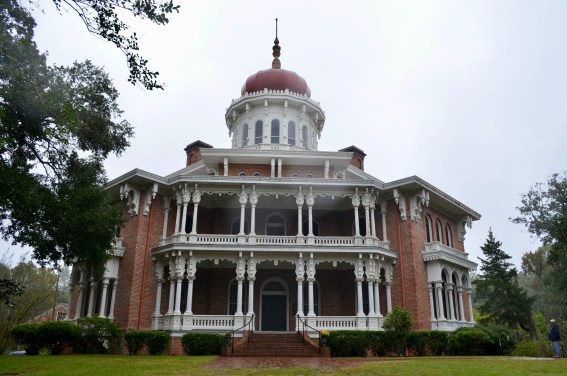
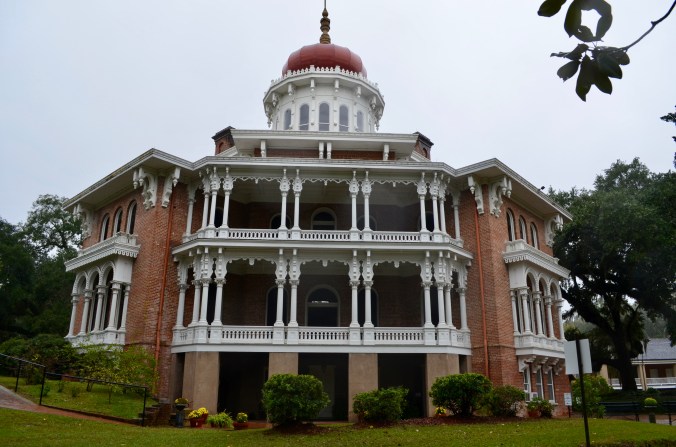
Called Longwood, the house is the largest and most elaborate of the octagon houses built in the US, as well as being one of the finest surviving examples of what’s known as an Oriental Revival style residence that was popular in mid-19thcentury America.

Eighteen months into construction and the exterior of the Oriental Villa is largely complete when rising tensions over the Civil War halts work as the workmen return home to the North. The home’s interior is left unfinished except for the basement of the home and has remained in this state ever since.

fullsizeoutput_2cc3

Longwood is the largest octagonal house in America and is listed as a National Historic Landmark. Pictured above is the front of the house.

fullsizeoutput_2cc4 

Longwood was the last burst of southern opulence before the Civil War brought the cotton barons’ dominance to an end. Longwood survived decades of neglect and near abandonment to become one of the most popular attractions in Natchez! Pictured above is a view of the house from another angle.

Red Bay

Red Bay, Alabama is home to Tiffin Motor Homes, the manufacturer of our rig. It is where our motor home was built and where one comes for maintenance if it is a problem unique to Tiffin or if you don’t have access to a good local supplier, which we do, but as we are en route home, we thought we’d give it a try.

The way it works in Red Bay is that maintenance is undertaken on a first come, first serve basis, unless it is a specific problem when an appointment is made.

We arrive on Saturday afternoon to find the Tiffin RV campground is totally full (some 90+ sites) and all-around town there are motor homes parked everywhere! We are sent to another campsite and find 15 more Tiffin motor homes parked.

Apparently it is Tiffin’s busiest time of year as full-timers want to get stuff fixed before they head to warmer climates for the winter; and, there are a lot of Floridian license plates with folks sitting in Alabama after Hurricane Michael hits their home state.

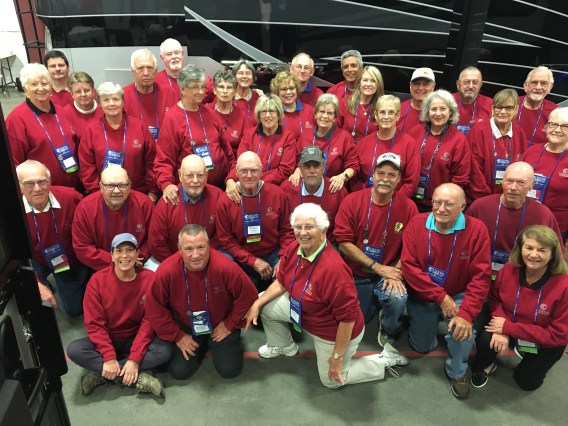
While in town, we popped in to see the organizers of the rally we attended earlier this month in Essex Junction, Vermont. They kindly provided us with a couple of photographs of all the volunteers which I’m happy to be able to share with you.

Trolley volunteers

Here’s Mike and I en-route to our mandatory rally briefing alongside our fellow volunteers!

Essex Junction Tiffin Rally volunteers including Mike and I.

Here we are, the Essex Junction volunteers!

Stand by Your Man …

In 1963, Virginia Wynette Pugh attended beauty college in Tupelo, Mississippi where she learned to be a hairdresser. She renewed her cosmetology license every year for the rest of her life!

To earn extra money, Pugh began to sing of an evening while working as a hairdresser during the day. In 1966 she moved to Nashville, Tennessee to try and land a recording contract. There, she auditioned for the producer Billy Sherrill who signed her to Epic Records and changed her name to Tammy Wynette.

Her first single, “Apartment No. 9”, was released in December 1966, and just missed the top 40 on the Country charts. It was followed by “Your Good Girl’s Gonna Go Bad”, which became a big hit and launched a string of top-ten hits.

During 1968 and 1969, Wynette had hits including “D.I.V.O.R.C.E.” and “Stand by Your Man”, which was written in the Epic by Sherrill and Wynette and was released at a time when the women’s-rights movement was beginning to stir in the US. The message in the song was that a woman should stay with her man, despite his faults and shortcomings. It stirred up controversy and was criticized initially, and it became a lightning rod for feminists. Nevertheless, the song became very successful and Wynette won her second Grammy award for Best Female Country Vocal Performance for it.

fullsizeoutput_2c87

Wynette sang for five US Presidents including Reagan.

fullsizeoutput_2cac

Although Wynette was born near Tremont, Mississippi she always called Red Bay, Alabama home. The town of Red Bay named a highway after its famed adopted daughter!

The King!

Elvis’ meteoric rise to fame was fueled by his natural music talent as well as his photogenic appearance and magnetic personality, all amazing gifts that lifted him onto stage and screen and crowned him King.

He scored his first number one single recording in 1956 with “Heartbreak Hotel” and went on to chart 17 more top hits. He has been inducted into the Rock and Roll Hall of Fame, the Country Music Hall of Fame and the Gospel Music Hall of Fame.

Even his signature state apparel had star appeal. For his 1973 “Aloha from Hawaii” concert, Elvis wore an eagle-themed jumpsuit to symbolize America to his global audience. This was the first concert by a single entertainer to be broadcast live by satellite to millions worldwide.

The dynamic combination of talent, charisma and luck propelled a poor young boy from East Tupelo, Mississippi to musical royalty as the King of Rock and Roll.

1956-september-26-tupelo

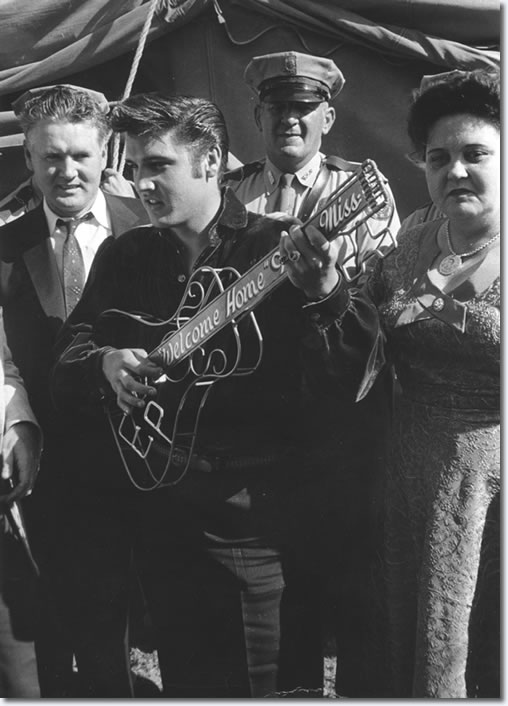
On September 26th, 1956 Elvis returns to Tupelo to perform two shows at the Mississippi-Alabama Fair and Dairy Show, pictured above. Elvis donates the proceeds of the concerts to the City of Tupelo which purchases his birthplace and develops a park for the children of the neighbourhood.

 1956-september-26-tupelo-5

Elvis’ parents, Vernon and Gladys Presley, pictured above join him as he returns to the town of his birth as a big star.

Humble Beginnings …


fullsizeoutput_2c43

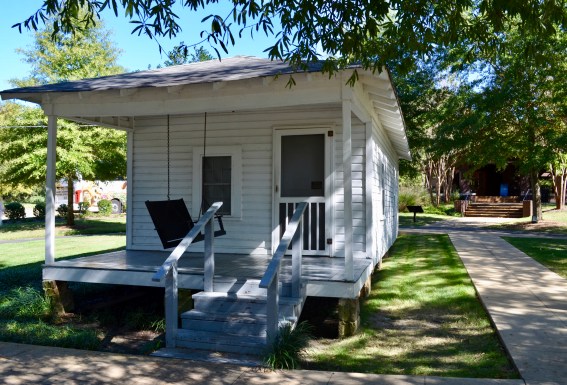
It was in this humble, two-room house, lit by a single light bulb in each room, that Elvis Aaron Presley was born in Tupelo, Mississippi on January 8th, 1935 to Vernon and Gladys Presley. Elvis was one of identical twin brothers born to the Presleys but sadly, his brother, Jessie Garon Presley, was stillborn. The property stands on its original location and has been fully restored.

Financially, times were hard for the Presleys, and they moved out of the house when Elvis was two-and-a-half years old. Vernon and Gladys worked at various jobs while in Tupelo and moved a few more times during their 13 years living in Mississippi.

For his 11th birthday, Elvis asks his parents for a rifle. Being a good Mum, Gladys took him to the local hardware store and persuaded him that a guitar would be a much better present. His pastor taught him how to play, and from then on Elvis was rarely seen without his guitar in hand.

fullsizeoutput_2c47

This is the actual building where the Presley family attended church services which was re-located to the Elvis Presley birthplace park in Tupelo. It was here that Elvis was first exposed to the rich, Southern gospel that became a staple of his musical repertoire. The plain, humble, wood-framed structure greatly contrasts with the lively and intense nature of the sermons and music that he was exposed to. Elvis never realized his dream of joining a gospel quartet, but he recorded many of the songs of his youth, the emotional and uplifting music of the church!