Black Echo

The Cu Chi tunnels, located some 30 miles from Ho Chi Minh City, Vietnam were dug just after World War II during Vietnam’s fight for liberation from French colonization. 

They became of significant importance during the Vietnam War when they were used as hiding spots and supply routes for the communist Vietcong soldiers to combat American forces in the south of Vietnam. 

Life in the tunnels was tough. Air, food and water were scarce and the tunnels were infested with venomous snakes and scorpions. Commonly, the fighters would spend the day in the tunnels resting and come out at night to scavenge for supplies and engage the enemy in battle. During periods of heavy bombing, the Vietcong would be forced to remain underground for days on end; sickness was rampant among those living in the tunnels, especially malaria.

Mike emerging from a tunnel where we had to bend double just to inch along the floor. American soldiers used the name Black Echo to describe the conditions within the 70-mile network of tunnels.
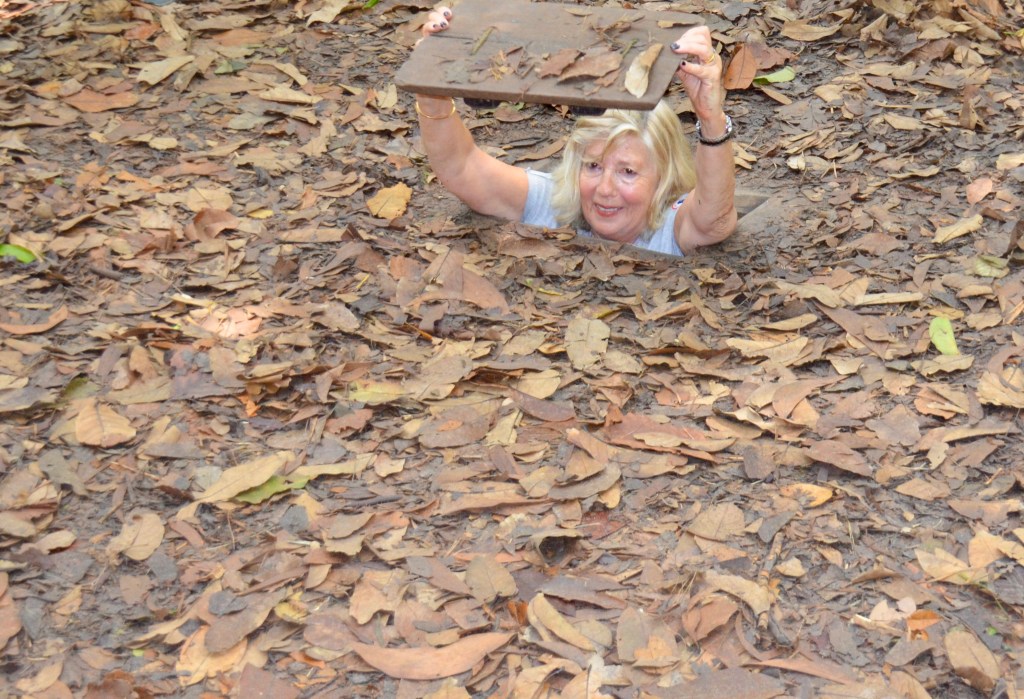
A fellow traveller testing out a trap door on the jungle floor which leads down into the tunnels. Closed and camouflaged, it is almost undetectable.

Operation Frequent Wind

The U.S. involvement in Vietnam began due to a combination of factors. Primarily there was domestic pressure to act against the spread of communism; and, Stalin and Mao’s offer to support the Viet Minh guerrillas fight against France’s colonial rule which changed the battlefield dynamic and geopolitical character from and independence struggle to part of the Cold War.

In 1969, at its peak, 550,000 American military personnel were based in Vietnam. The loss of life on both sides was staggering – over 50,000 American personnel; two-million Vietnamese civilians and one-million Vietnamese fighters never returned home.

The war featured in the terms of four American presidents, starting with Kennedy, Johnson,  and Nixon. It was U.S. President Gerald Ford who ordered all American military forces and civilian organizations to leave Vietnam under an evacuation code-named Operation Frequent Wind.

On April 30, 1975, the U.S. Ambassador to South Vietnam fled Saigon ending 25 years of the American direct intervention in the country.

Mike reviewing the U.S. military hardware at the war museum in Ho Chi Minh City.

Artisan Rice Paper!

Making rice paper seems like an easy task as just a few simple ingredients are involved – rice, water and salt. But, the level of culinary craftsmanship we witnessed only comes from having done something tens of thousands of times!

First, a slurry consisting of soaked, raw rice which has been ground with water, is spread very thinly onto an extremely hot plate. A bamboo lid covers the rice sheet which is steamed for some 45 seconds. 

Using a long, narrow stick the cooked rice sheet is lifted onto a wide, bamboo drying rack which resembles a stretcher and taken out into the sun to dry.

The woven pattern of the racks gives the rice papers their distinctive appearance, which factory-made ones mimic. The dried, finished rice papers are stacked up and taken to market to sell. They are sold for a premium because they are hand-made.

Good Morning, Vietnam!

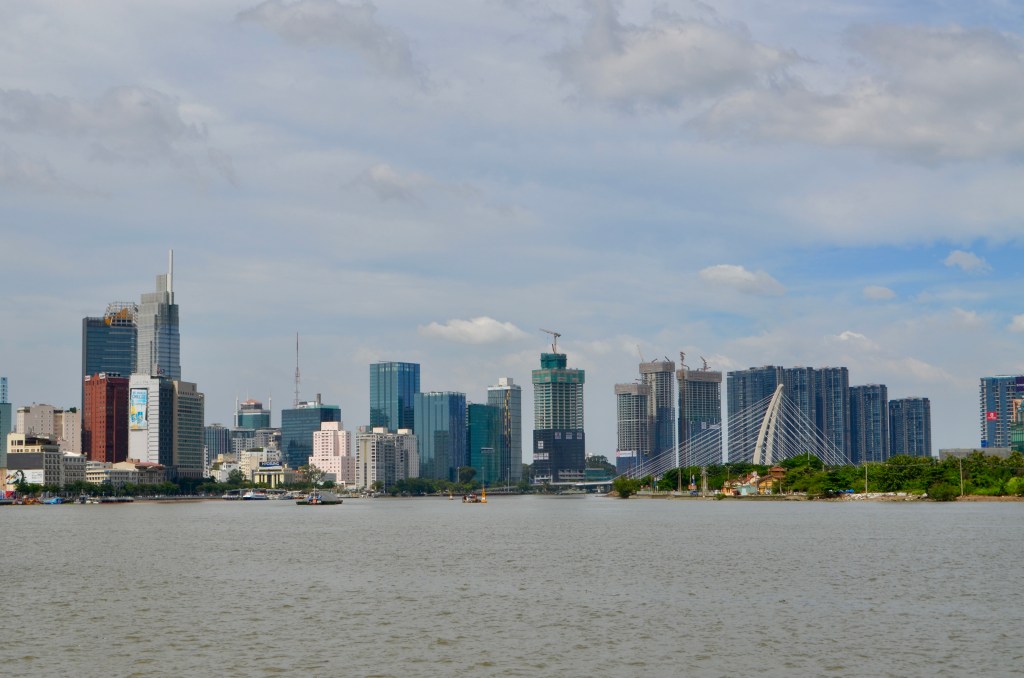
Ho Chi Minh City, formerly known as Saigon, is the most populous city in Vietnam, home to some 10 million people. 

Situated in the southeast region of the country, the city surrounds the Saigon River where taxi boats and motor canoes flit up and down.

A chaotic, enchanting swirl of sensory stimulation, Ho Chi Minh City is a place of incense-infused temples, colonial architecture, vibrant street life and historic landmarks which attract millions of international visitors each year. 

What is striking about this high-rise rooftop city, which is also the country’s largest textile and garment manufacturing hub, is that it is part of the Socialist Republic of Vietnam. 

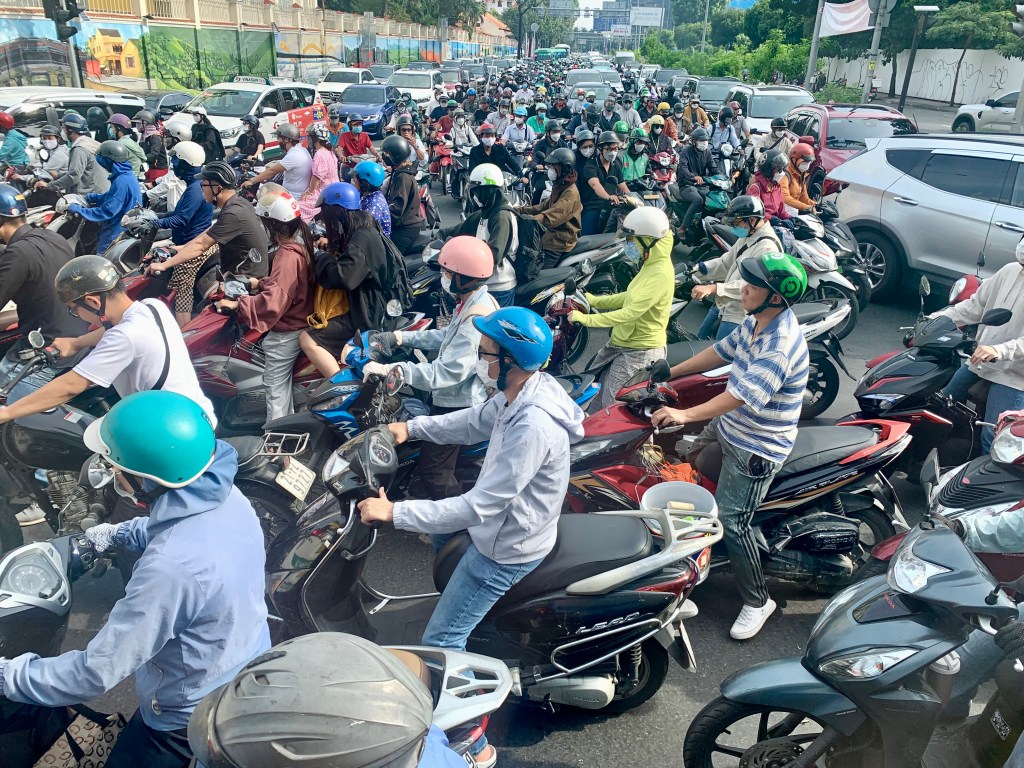
Vietnam has a population of some 100 million people and over 80 million scooters! Repeat – 80 million! And, everyone it seems is whizzing around Ho Chi Ming City on them. There are even ambulance scooters, go figure!

A room with a view

“The amenities of a larger ship with the charm of a boutique hotel” states the marketing brochure about the Silver Whisper cruise ship we are now onboard!

We have a lovely cabin with a small, private deck where we sit with coffee every morning enjoying the vastness of the water as far as the eye can see; drinks – both alcoholic and soft – are all inclusive and our mini-bar is stocked daily with our favourites of champagne, chardonnay and diet coke! Cabaret shows, comedians and bar pianists provide nightly entertainment and a perfectly equipped gym allows us to work off some calories!

With a guest capacity of some 400 and a crew of over 300, one is almost man-to-man marked! Sure is a tough call but Mike and I are doing our best!

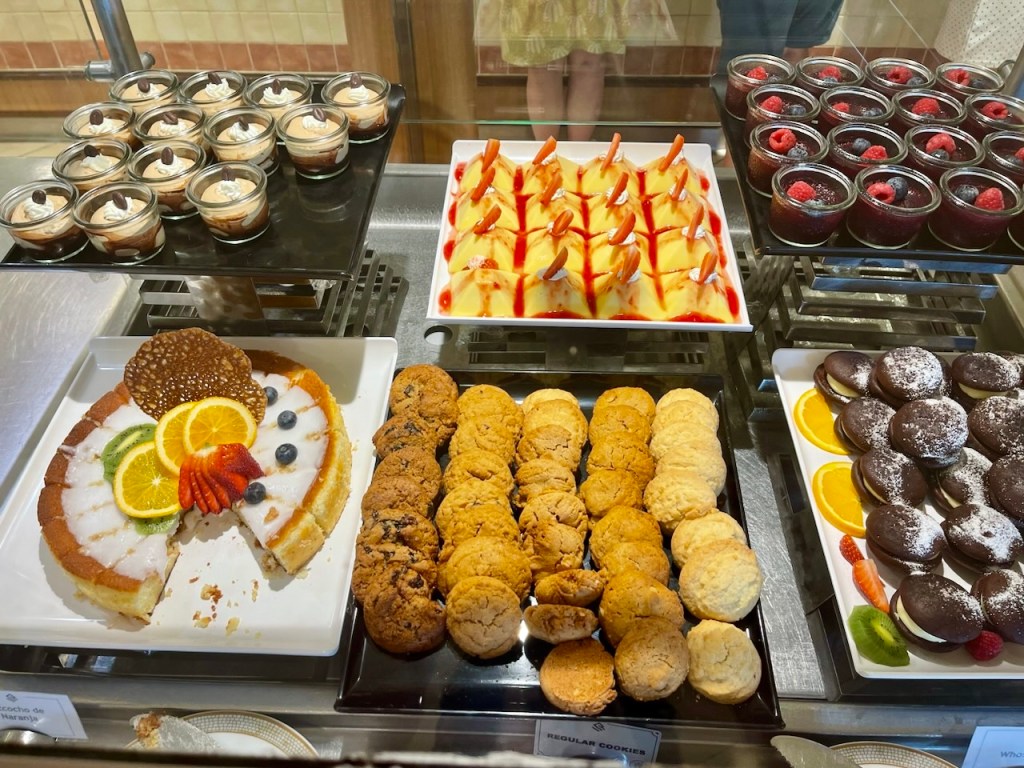
A choice of four restaurants none of which seemingly got the note about healthy or low-fat fare!

Let’s talk about sex, baby!

There are thought to be tens of thousands of sex workers operating in Pattaya, which has led to it being dubbed the sex capital of the world by various publications.

In the town’s red light district you can find it all; go-go bars, sex shows, sex workers and cabaret performers working long into the night for a crowd the majority of whom are Western males. 

It is also known for its substantial population of transgender women, commonly referred to as “ladyboys.” The prevalence of a significant transgender community in Thailand is largely attributed to Thai culture which has a long history of being exceptionally accepting and tolerant when it comes to gender diversity, setting it apart from many other societies.

As the sun sets, you’ll know when you’re in Pattaya’s red light district by the look on foreigners’ faces walking up and down the street with their jaws dropped open and scantily clad females hanging around the entrances to the various go-go bars and beer bars hoping to lure some punters their way!

Once a fishing village

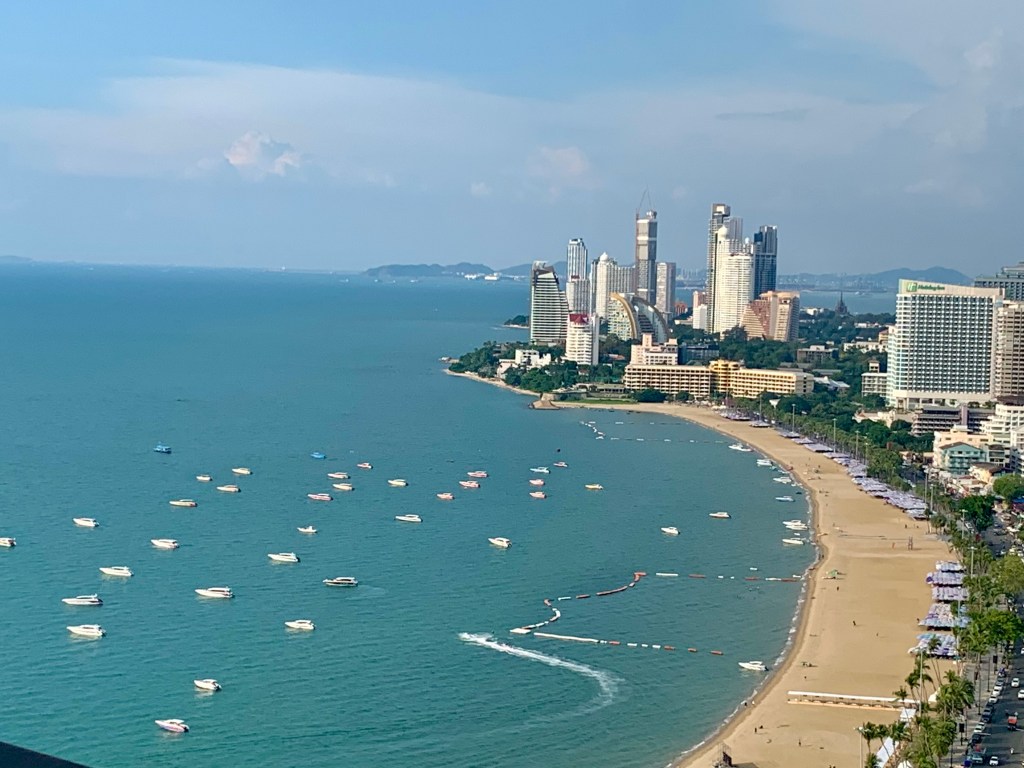
After a two-hour ride from Bangkok, we have arrived on Thailand’s eastern Gulf coast to a place called Pattaya. 

Pattaya is a tourist destination attracting folks from all over the world, but notably from Great Britain, Australia and Eastern Europe, because the weather is hot all-year-around and the cost of living is very cheap. The sandy beaches are lined with resort hotels and high-rise apartment blocks and the water is clear and warm.

Once a fishing village, Pattaya began to experience tourism during the Vietnam War when American GIs started arriving on rest and relaxation leave. Indeed, Mike was last here in 1974 when he was in the Navy and the American military was using the U-Tapao Royal Thai navy airfield nearby as a base to bomb Vietnam.

Royal Cradles

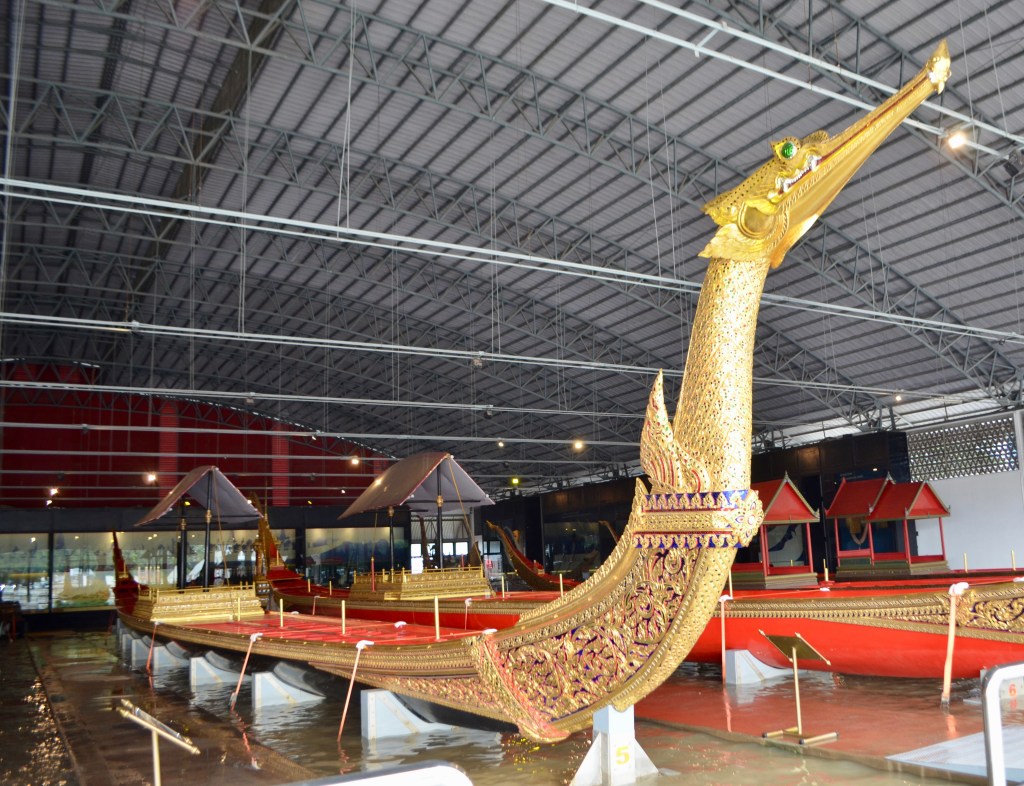
The royal barges were built to serve the Kings’ duties; they have been used as warships during the time of war, but have been adapted for today’s needs which are royal ceremonies and other important occasions.

The most impressive boat is the King’s personal barge. Originally built in 1911 and measuring over 150-feet in length, the boat is cut from a single, narrow tree trunk enabling it to travel rapidly even when going upstream. The boat’s prow is ornately carved with a Suphanahong or mythical swan and is covered with intricate gilt carvings and colourful pieces of glass. The crew will consist of 50 oarsmen who paddle in time to the rhythmic beat of a drummer.

Each boat is a masterpiece of marine and traditional craftsmanship and sits in a royal cradle that is strapped down to prevent damage as the river level rises and falls with the constant water traffic.

Bobbing Along

In the past, daily commerce in Thailand was conducted mostly along rivers and canals (or khlongs as they are known in Thai). Bangkok’s water network was busy and served as the mainstay of everyday life giving Bangkok the name of “Venice of the East” by early European visitors.

Today, the Damnoen Saduak floating market, 80 miles west Bangkok, is primarily a tourist attraction. It is well supported locally and allows visitors the opportunity to experience the culture of riverside shopping which was like this for over 100 years.

Coconuts are grown across Thailand and one popular use for them is to scoop out the flesh, make ice cream from it, and then put it back into the shell and serve with an orchid flower on top!

The Damnoen Saduak floating market had its heyday in the early 1970s when the river was full of farmers selling their wares.

The Thai Silk King

After serving as an American military officer in World War II, Jim Thompson settled in Bangkok, Thailand. 

He was captivated by the country and its culture, particularly the art of hand-woven silk with its remarkable range of colours and textures. 

At that time, however, the craft of silk weaving was in steep decline, threatened by machine-made fabrics and the advent of synthetic yarns. Yet, he believed Thai silk would appeal to textile lovers in America and Europe, whose patronage could support local weavers and silk farmers in an era when economic opportunities were limited in a developing country such as Thailand.

Thompson dedicated his life to organizing a network of artisans, helping to upgrade their looms, introducing new techniques and enabling Thai weavers to create silks that would dazzle the world.

By 1950 he had founded The Thai Silk Company, majority-owned by Thais, aimed in part as sustaining the traditional livelihoods, culture and dignity of local weavers and silk farmers. Today, the company employees over 3,000 people.

In 1967 Thompson disappeared while walking alone in the Cameron Highlands of Malaysia. He was never been seen again.