The Krywanio Family!

All good things come to an end and this is the final blog for our current adventure! Thank you for being part of this journey and I look forward to having you along for our next adventure!

We are in Adelaide to re-connect with the Krywanio-clan and what a wonderful time we had with this amazing family.

Oldest & youngest brothers – Chuck and Mike.
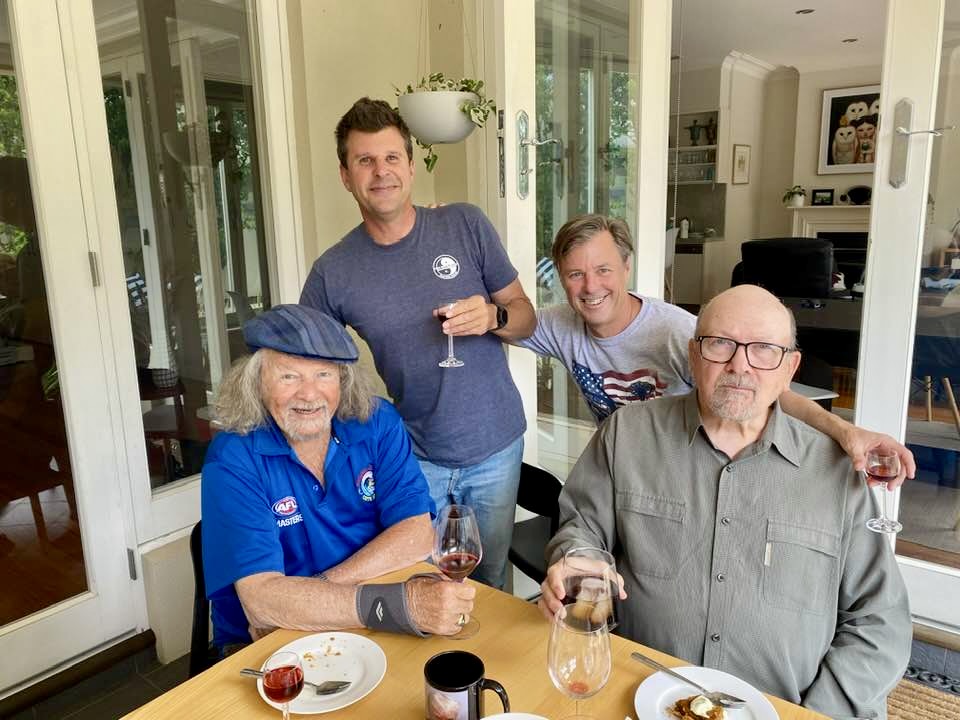
Front row, from left, Chuck & Mike Krywanio. Back row, from left, Brian & David Krywanio.

Tough View! This is what Chuck and Hawrie have to put up with every day of the week!

Hawrie, Mo-Mo and Me enjoying the sunshine!

Over and out.
Well Hello, Adelaide!

Greetings from the Krywanio klan stronghold in Adelaide, Australia.

We are enjoying the wonderful hospitality and company of Michael’s nephews – David and his wife Shannon and Brian.

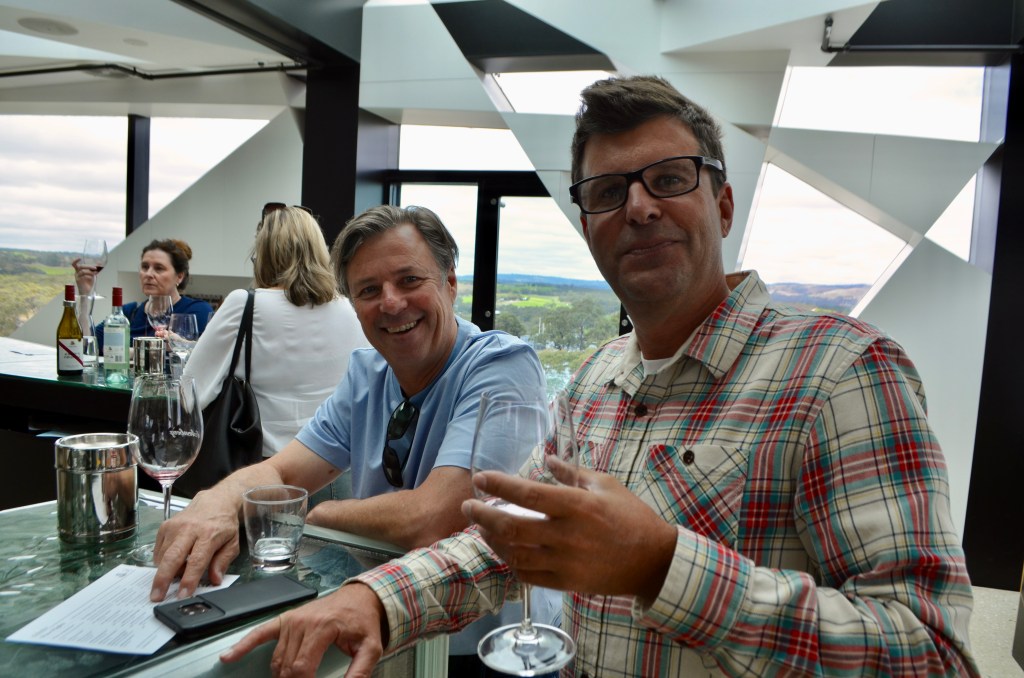
First stop, The Cube for a little culture attending a Salvador Dali art exhibition followed by wine tasting. And, then off to lunch at the Star of Greece restaurant in Port Willunga, South Australia. Above, from left, David and Brian Krywanio.

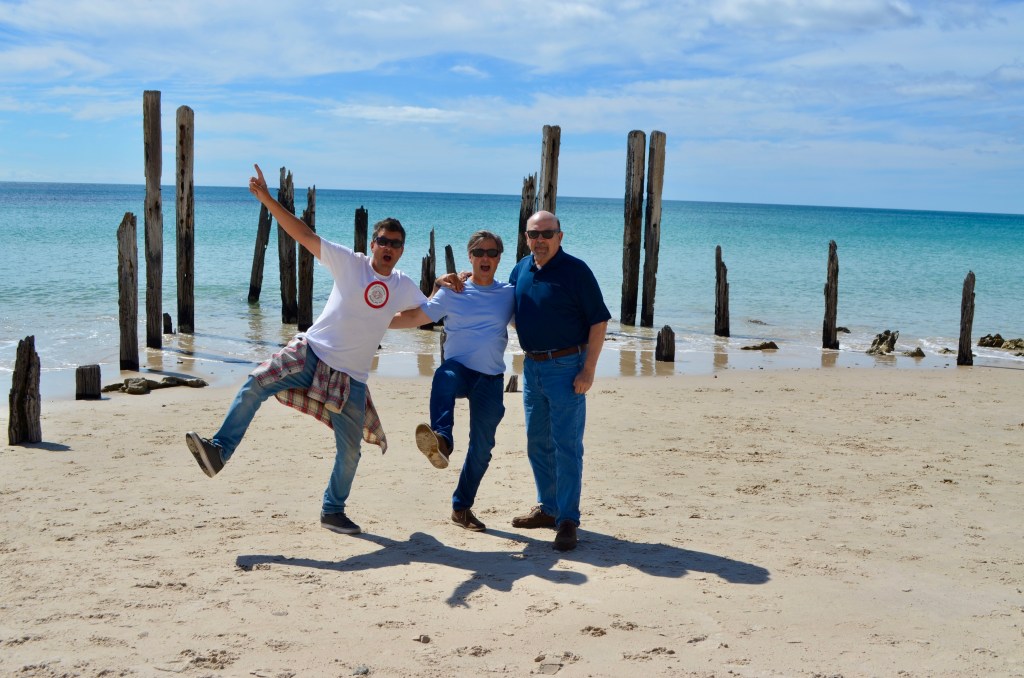
Boasting magnificent views of the sea and beach and the venue of David and Shannon’s wedding last year, we enjoyed stonking food and wine! Above, from left, Brian, David and Mike Krywanio.

Above, from left, Mike, Amanda, Brian and Shannon Krywanio.

Farewell to The Lion City!

We have now disembarked from our ship and are enjoying the last day in Singapore before heading down under!

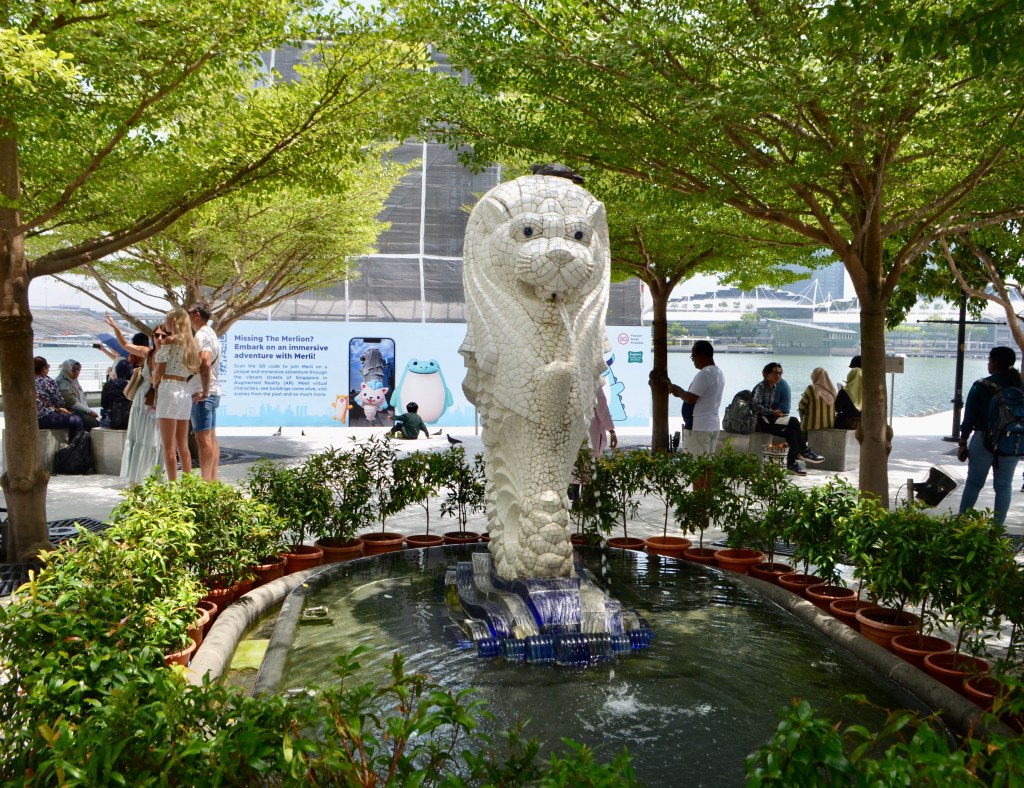
The country’s national icon is that of a mythical Merlion. The fish-like body symbolizes Singapore’s origins as a fishing village and its head represents the city’s original name of Singapura (lion city in Sanskrit).

I had to make do with photographing Baby Merlion (including a pesky pigeon on its head that would not move!) as the full-sized version which stands 28-feet tall and weighs 70 tonnes is being renovated! 

En route to Adelaide, there is a Lego Merlion for sale in Singapore airport!

A View From The Top!

Sorry for not blogging yesterday but we experienced a travel malfunction! More on that in a few …!

Our ship has arrived in Singapore where we began our adventures a month ago! We had yet another glorious day exploring the culture and sights of this amazing country.

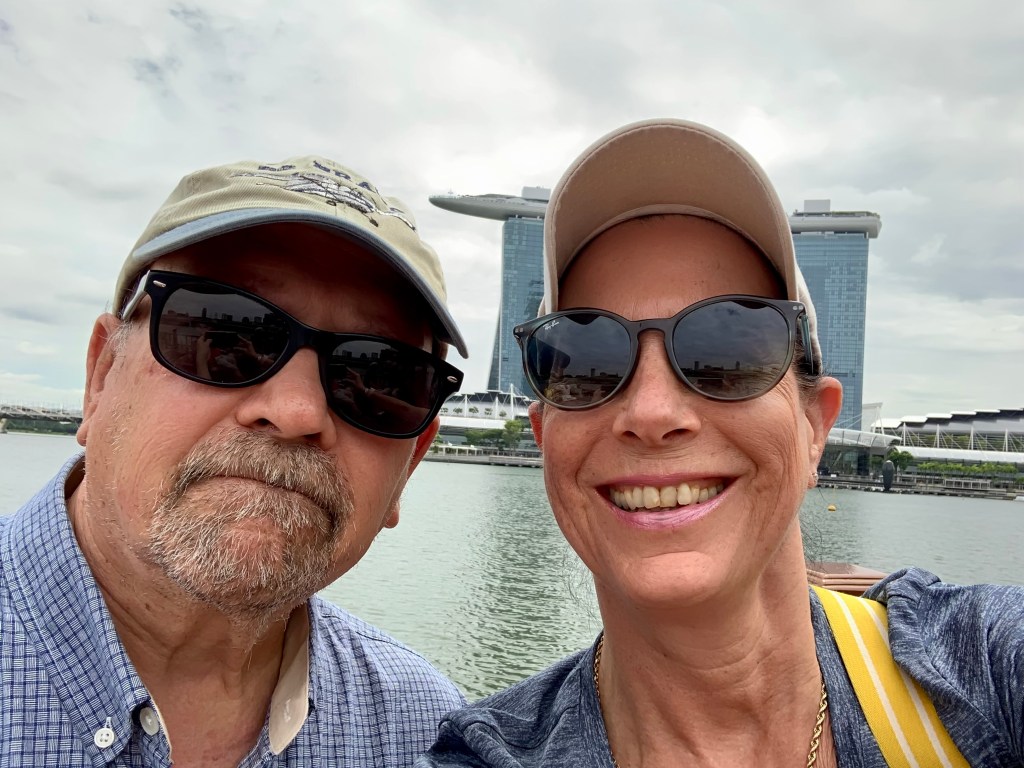
Mike and I enjoying a boat ride on the Singapore River.

Although we are doing well ticking the “must see and do” boxes, we were able to visit the Sky Park of the Marina Bay Sands Hotel. At a height of 650 feet from the ground, the views are spectacular!

The infinity pool of The Marina Bay Sands Hotel.

Singapore’s financial district.

The Mother of Vietnam!

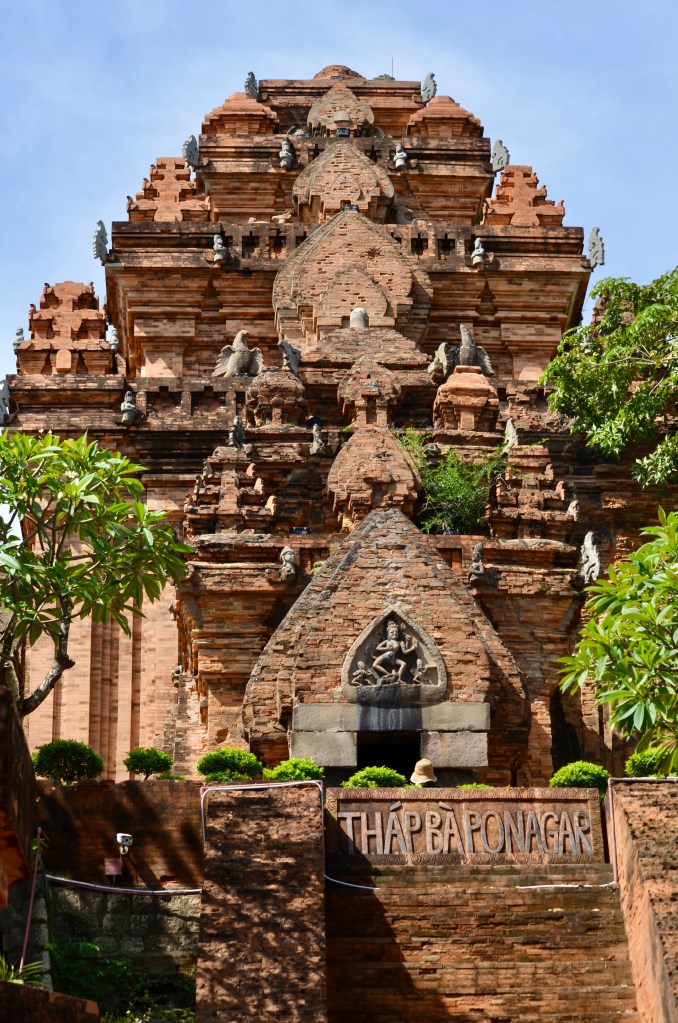
Our final tour in Nha Trang, took us to the Po Nagar Cham Towers which is a special architectural complex of great cultural and historical value.

A collection of Cham artifacts dating from the seventh to the 13th century can be found within the towers. The Cham Kingdom was thriving at this period and Hinduism was practiced. 

The word Po Nagar means “The Mother of Vietnam” in the Cham language.

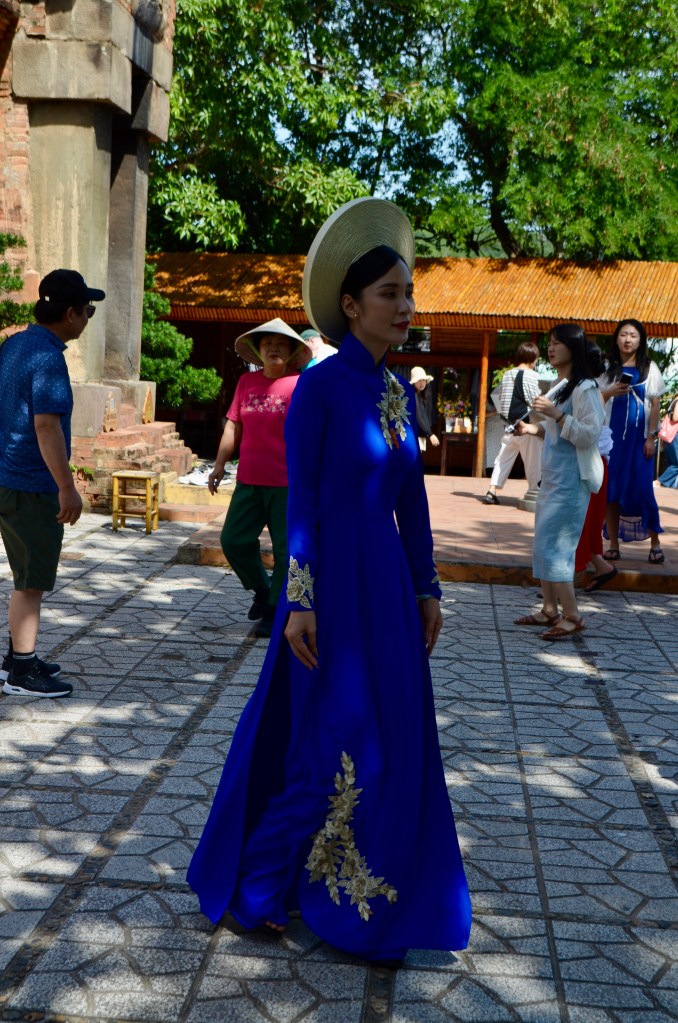
A tour guide in traditional Vietnamese dress.

A view of Nha Trang’s fishing village from the top of the Cham Towers.

Daily Life in Nha Trang, Vietnam

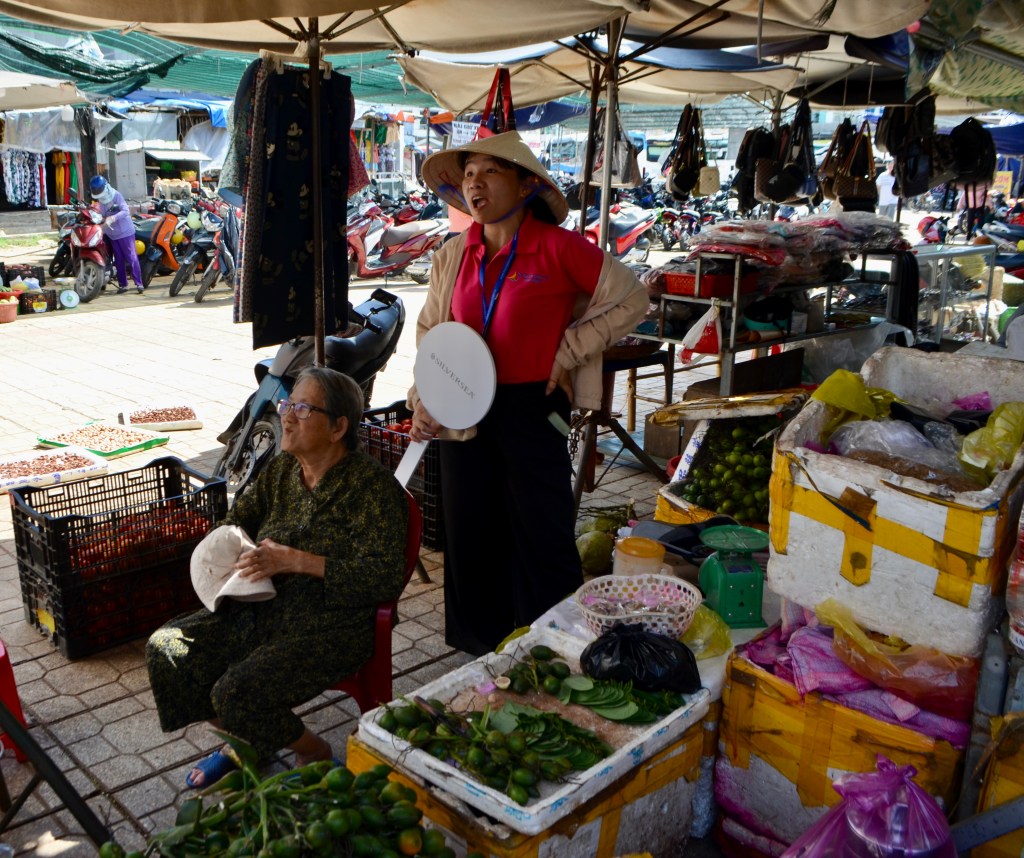
Coming alive around 4 a.m., Cho Dam market is the largest and best known in Nha Trang city. Local people usually start shopping around 6 a.m. before the heat kicks-in, buying their seafood and necessities of life from a wide range of stalls.

There is also an extensive section of the market dedicated to souvenirs and local gifts ready for savvy tourists to barter for the best price. Warning, nearly all the branded goods sold in the markets are fakes!

Our tour guide took us to where her Mum sells betel nuts and leaves. Once used as a stimulant and antiseptic, it is now believed that chewing betel leaves may cause oral cancer and can permanently stain teeth black!

Fresh fruit stall.

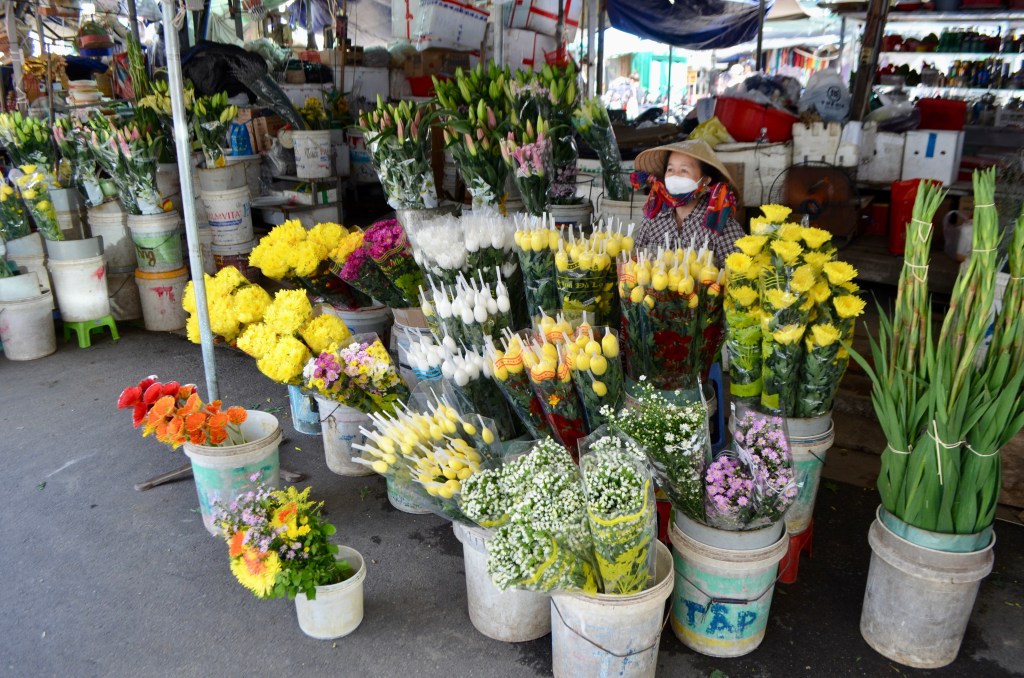
Flower stall.

Lotus Flower!

This is our final stop in Vietnam before our ship heads to Singapore.

Nha Trang is on the south-central coast of Vietnam. It is known for its beaches and scuba diving and has developed into a popular destination for international tourists, attracting large numbers of backpackers as well as more affluent travelers on the south-east Asia circuit. It is already very popular with Chinese and Korean tourists, and has, what many say, as one the world’s most beautiful bays.

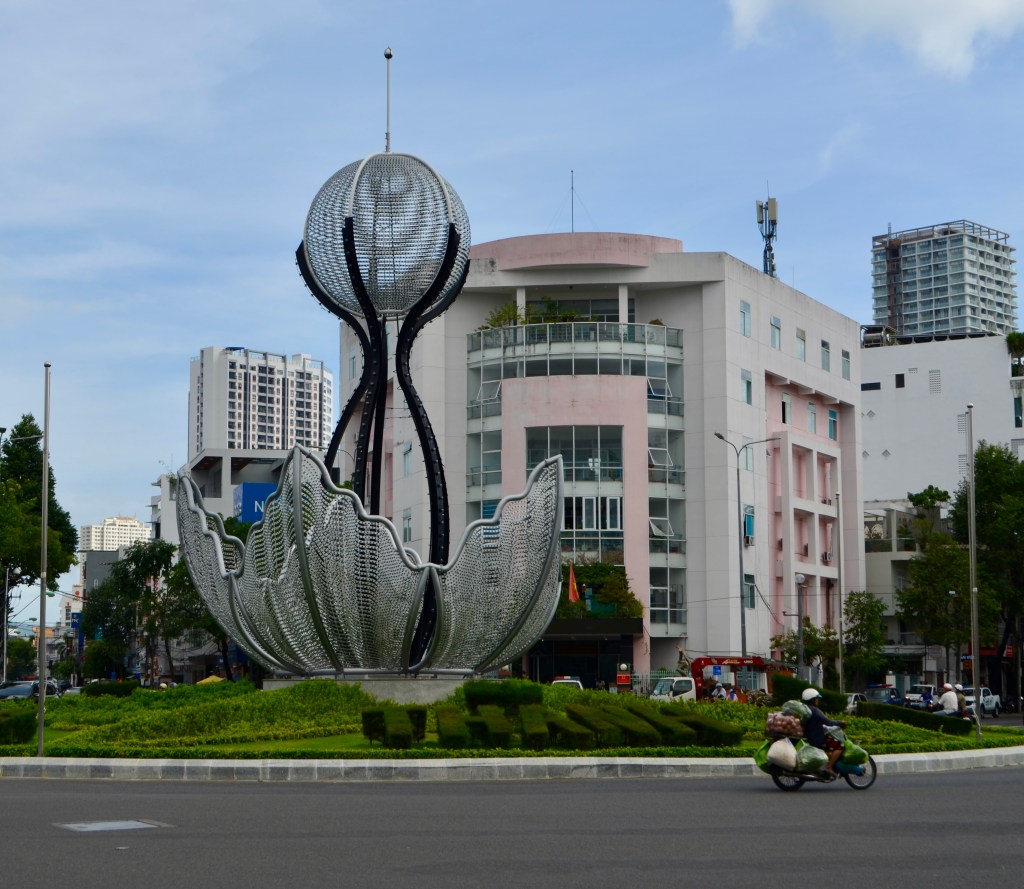
The Lotus flower is the national flower of Vietnam and represents purity, commitment and optimism for the future. Likely this metal depiction on a round-about helps the scooter drivers as they take their lives in their hands, daily!

Descending Dragon!

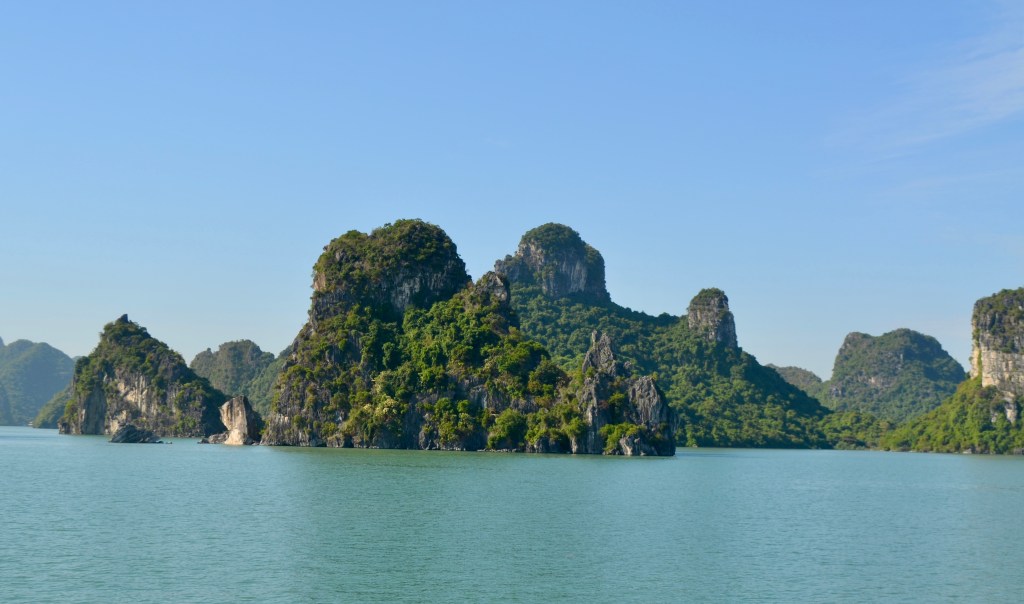
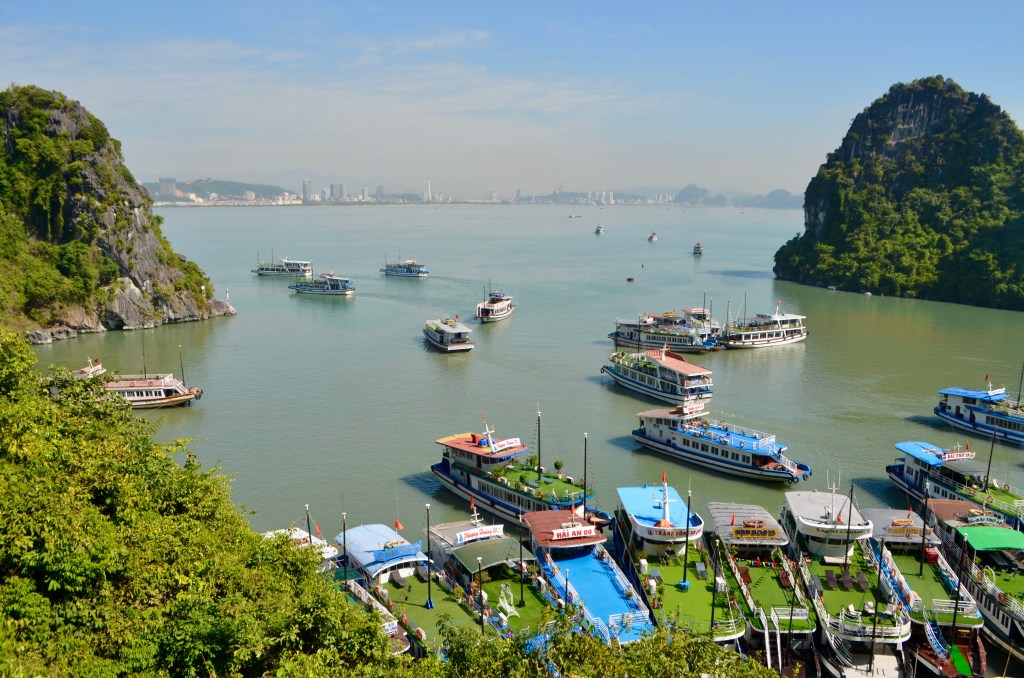
We are now in northern Vietnam in the Gulf of Tonkin at Ha Long bay which is a UNESCO World Heritage site and a popular tourist destination.

It is known for its emerald waters and hundreds of spectacular limestone islands rising from the sea which are topped by rainforests. It is breathtakingly beautiful! Because of their precipitous nature, most of the islands are uninhabited and unaffected by a human presence. 

Junk boat tours and sea kayak expeditions take visitors past islands named for their shapes, including Fighting Chickens and the Banana!

Body Sculpting!

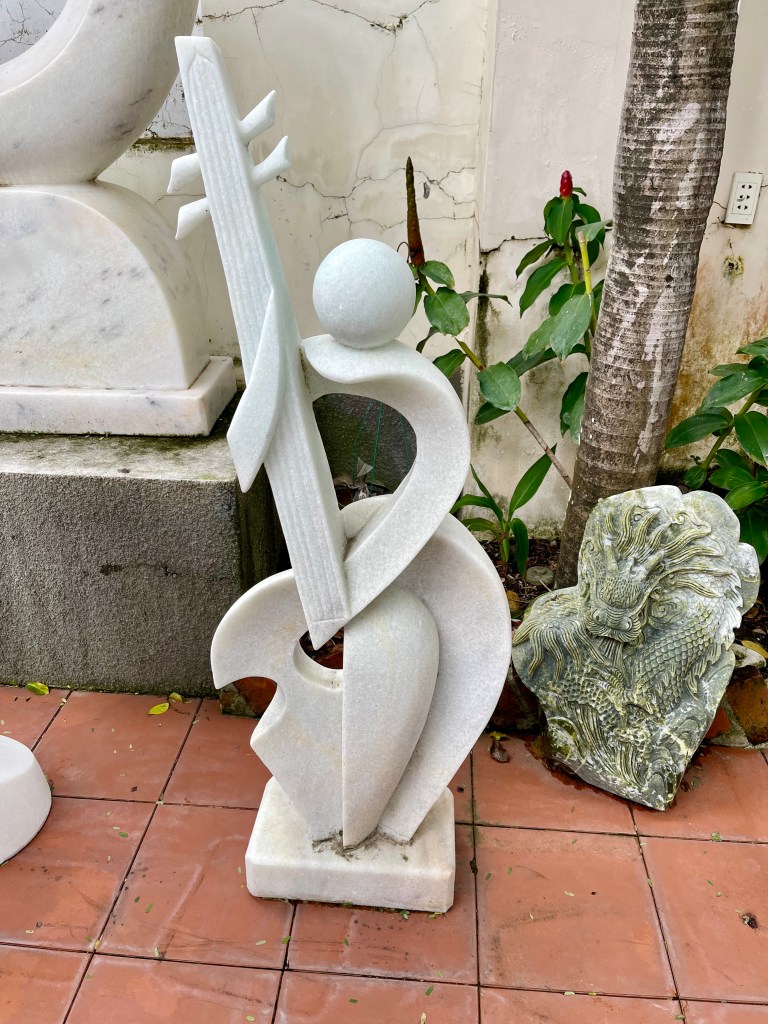
Apart from its great beaches and beautiful landscapes, Da Nang is home to a marble carving village located at the base of Marble Mountains. This craft village has a proud history of marble sculpting for more than 200 years.  

For several centuries, the marble was extracted directly from the mountains and used by local artisans. However, to preserve the scenic spot, the raw material is now brought in from other parts of the country and China.

The workmanship and detail of the statues is incredible and Mike and I are very keen on returning here to buy something for the new house once it is in construction.

It is said that rubbing the belly of the Laughing Buddha will bring you luck, happiness and prosperity. That might be true, but I’m not sure his statue will get past the architectural control committee!

We also saw a magnificent range of contemporary pieces that are more aligned to our taste.

What A Worm!

Our ship is now in Da Nang in central Vietnam. Here we spent a lovely day at The Old Town of Hoi An, a World Heritage site, learning how silk is made.

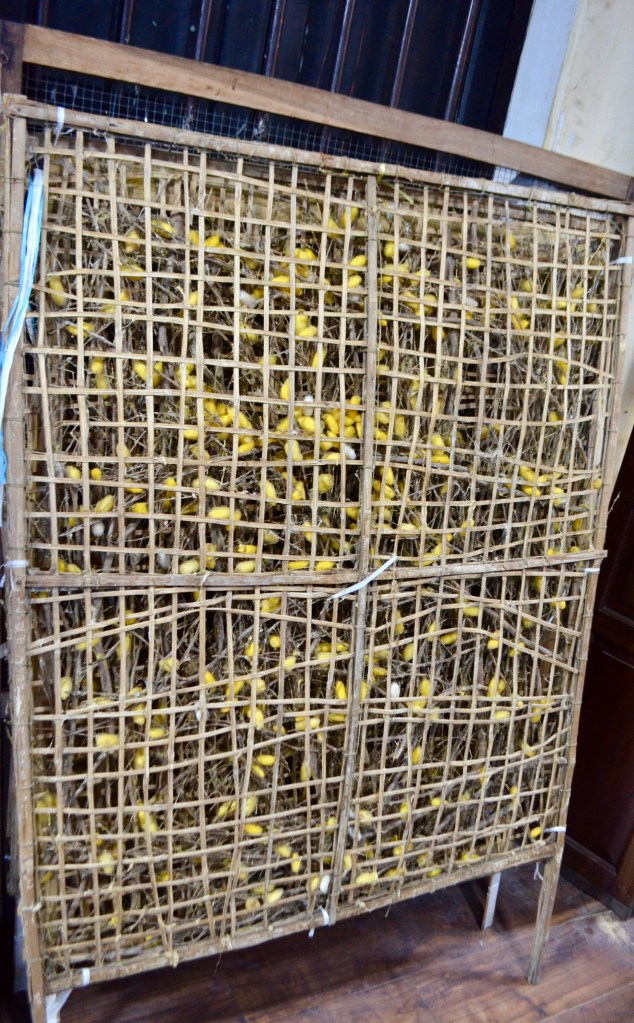
Known for their voracious appetites, silkworms feed only on leaves from the Mulberry tree. When they are 18 days old, the larger silkworms are moved to racks to give them sufficient room to keep growing. A further 18 days pass and the silkworms are fully grown and turn yellow.

They are then moved onto special bamboo racks to spin their cocoons.

Silkworms release a few rings of raw silk to cover their outsides and begin to form the shape of a cocoon. They work like this for 4 consecutive days wrapping around themselves forming cocoons. 

Silk thread is a liquid, viscous and transparent protein fibre which is secreted from the salivary glands of the silkworm. When it is exposed to the air, the liquid hardens and forms silk threads.

Where we were, they use the silk to create hand-embroidered pictures. We were not allowed to take any photos, but the pictures are breathtakingly beautiful and looked like works of art, which they are!