Time Flies …

Yet another one …


SCAN0823

Aged 5 with my brothers Stewart, to the left, and Ian, to the right. We are all wearing our Chigwell County Primary School uniforms.

SCAN0895

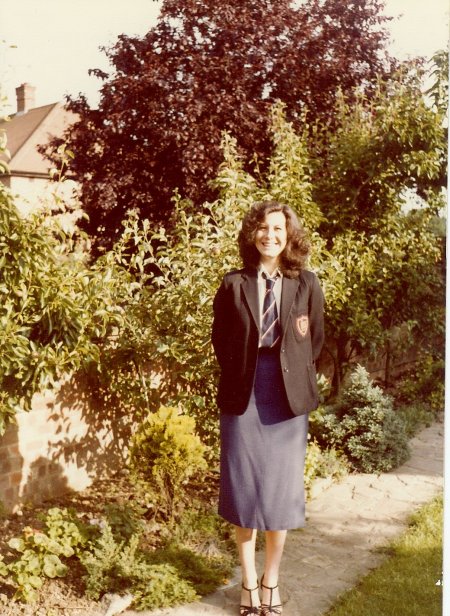
Aged 16 and looking somewhat shabby in my Loughton County High School for Girls uniform. From age 16-18 we were allowed to wear our own clothes. 

Amanda Hagerty.

I started working for BP in 1980 and my first real job was in the Engineering HR department. Somehow I got to visit the Forties oilfield in the North Sea with two of my colleagues.

Norma & Amanda Hagerty

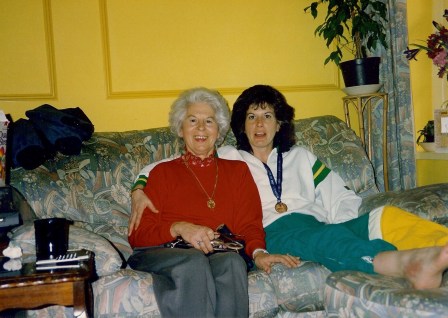
April 1992. The day after I ran the London marathon and trod on a discarded water bottle that messed up my foot. Pictured here with Mum. 


A Big Acorn …

Twenty-seven years after the fighting had ended, veterans from both sides joined together to promote the creation of a historical reserve on the ground where they had fought the Battles of Chickamauga and Chattanooga in Tennessee.

On August 1890, their efforts led Congress to establish the Chickamauga and Chattanooga National Military Park for the purpose of preserving and marking some of the most remarkable events and fighting in the war of the rebellion. It was the nation’s first such military park and served as a model for other historical areas.

Like other military parks Mike and I have visited, this one too is very well done. We hit the visitor centre and armed ourselves with a DVD for a self-driving audio tour. A map is provided and you simply hit the start button, listen to the audio, get out and explore what you’re hearing about, get back into the car and drive to the next stop.

fullsizeoutput_3733

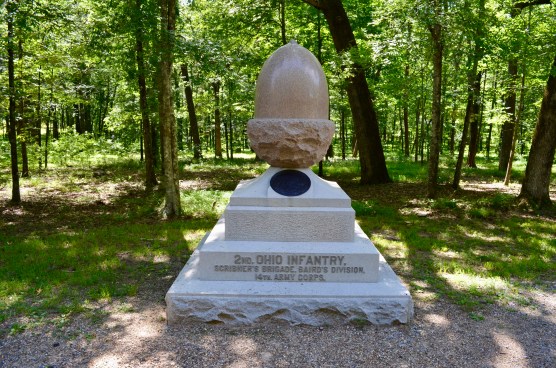
A neat memorial for the second Ohio Infantry, a big acorn!

fullsizeoutput_3735

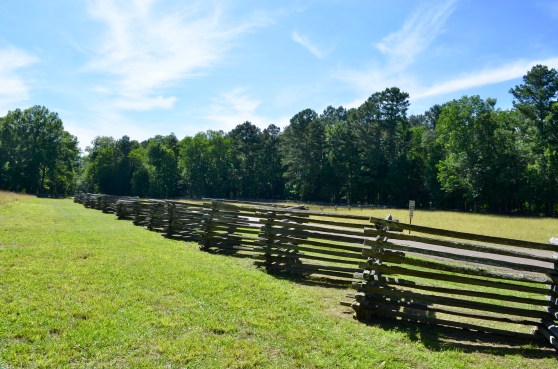
Already weary after the day’s fighting, the Union soldiers could not rest. Their axes rang out as they built breastworks of logs, rails and earth to defend against the attacks that would come in the morning, an example of which is pictured above. Cold and thirst plagued the Union army through the night. Their canteens ran dry, and Confederates blocked their access to Chickamauga Creek and other water sources. It was unusually chilly for a September night, but with the enemy so near, campfires were prohibited. 


Chattanooga Choo-Choo

Sorry for the late posting of this but we have terrible, terrible internet in this campsite!

By 1861, Chattanooga, Tennessee had become one of the South’s most important rail hubs. The lines that crossed here connected the Atlantic Ocean to the Tennessee River and the Mississippi River to East Tennessee and Virginia.

To support these railroads, Chattanooga entrepreneur Robert Cravens built the East Tennessee Iron Manufacturing Company to make railroad car wheels of the very best quality and freight cars of any description.

Confederate forces controlled the city’s vital railroads until November 1863, when the Union army occupied Chattanooga. The Union army renovated and expanded the network of tracks and sidings south of town and, from here, General William Sherman gathered supplies for his summer 1864 drive to capture Atlanta.

fullsizeoutput_36cb

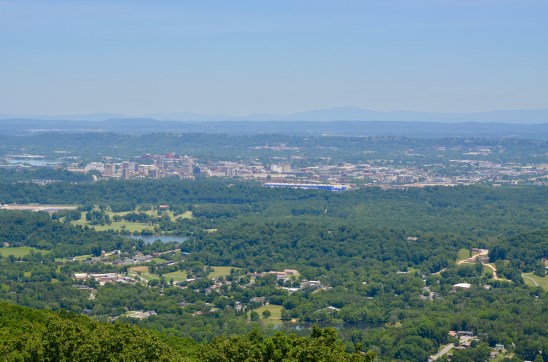
The City of Chattaoonooga in southeastern Tennessee along the Tennessee River bordering Georgia. With an estimated population of around 180,000, it is the fourth-largest city in Tennessee.

fullsizeoutput_36cd

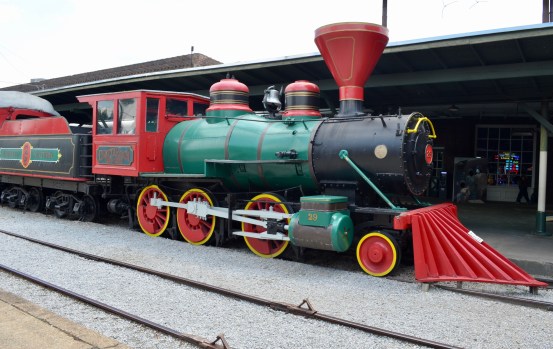
On March 5th, 1880 the first passenger training leaving Cincinnati for Chattanooga was nicknamed the Chattanooga Choo-Choo, pictured above. This historical occasion opened the first major link in public transportation from the north to the south. The “Choo-Choo” was operated by the Cincinnati Southern Railroad, America’s first municipal railway system. 

A spectacular feat of engineering …

The Raccoon Mountain pumped-storage plant near Chattanooga in Tennessee is a breathtaking site featuring panoramic views of the Tennessee River Gorge and a vast network of challenging biking and hiking trails through scenic woods teeming with wildlife.

At the same time, this 3,000-acre site hosts a huge power plant, producing more than 1,600 megawatts of electricity from a spectacular feat of engineering.

Construction of this $300 million plant began in 1970 and took nine years to complete. It started with the creation of a manmade reservoir on top of the mountain which can hold more than 12 billion gallons of water!

To generate electricity, water from the upper reservoir is channeled through an intake structure to a 35-foot-diameter concrete-lined passageway called a penstock, down 1,000 feet through the centre of the mountain to an underground power plant.

Deep inside the mountain are tunnels leading to a space the size of an American football field, which was carved entirely out of solid limestone. This space houses the plants’ four pump turbines, which use the force of flowing water to turn the generators that create electricity.

The turbines are able to be reversed and the same penstock is used to pump water back to the upper reservoir from the Tennessee River below. It takes some 28 hours to refill the upper reservoir.

fullsizeoutput_365d

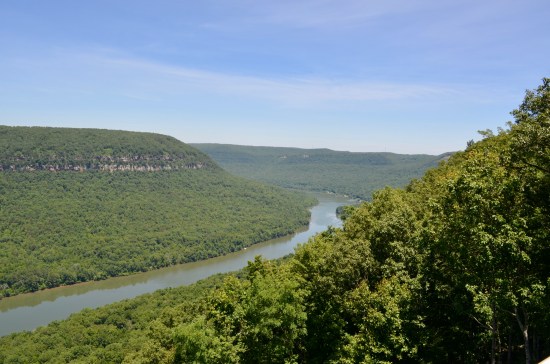
The Tennessee River Gorge as viewed from the top of Raccoon Mountain.

fullsizeoutput_3660

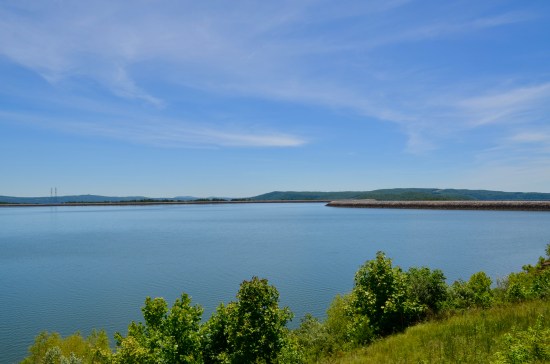
The upper reservoir which has a roadway all around it.

fullsizeoutput_365f

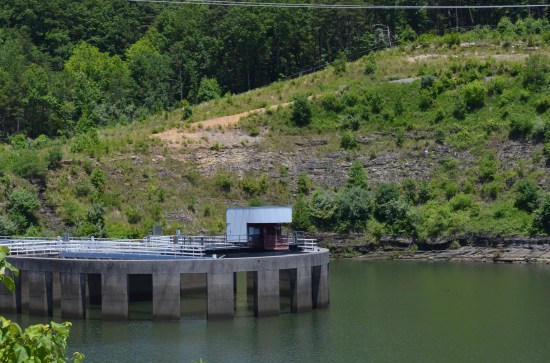
The slotted design of the intake structure prevents whirlpools from developing as water enters it.

From the battlefield to elected office …

We are now in Chattanooga, Tennessee which saw intense fighting between the Union and Confederate armies during the Civil War.

Controlling Chattanooga, known as the “gateway” to the Confederacy, is strategically important for the outcome of the war. Yet, in the middle of September 1863, the armies meet in the peaceful farm fields of north Georgia, along a tranquil creek called Chickamauga. The resulting two-day battle, eight miles south of Chattanooga, leaves 34,000 Americans as casualties.

Day two of the battle. Fighting begins when Confederates attack Union fortifications on the battlefield’s northern end. Through mis-communication, a gap is created in the Union front line and the Confederates pour through.

The Union brigade of Colonel John Wilder witness the disaster. Soldiers of Wilder’s mounted infantry, known as the “Lightning Brigade,” ride to the battlefield on horse-back, dismount and fight as infantry. Their Spencer repeating rifles, paid for by the soldiers themselves, fire three times faster than muzzle-loading weapons commonly used. Wilder’s men counter attack on foot, driving the Confederate brigade backwards.

Soon Wilder realizes that his brigade is isolated and withdraws to higher ground which he defends against repeated Confederate assaults. Wilder then falls back to the northwest to guard the retreating columns and wagon trains of the Union army.

fullsizeoutput_3657

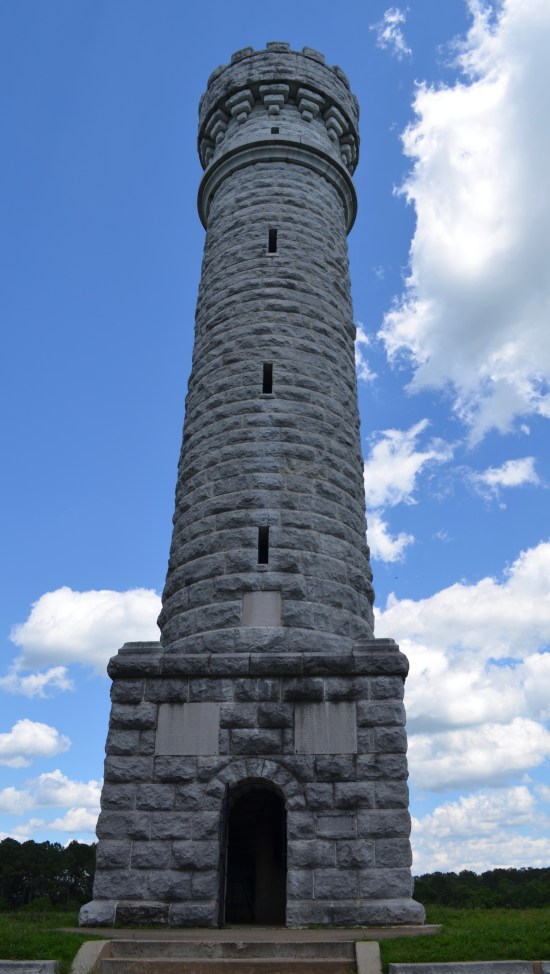
Survivors of Wilder’s Brigade raise funds for the tower, pictured above, in the Chickamauga and Chattanooga National Military Park, and name it for their commander. Wilder returns to the area after the end of the Civil War and is elected Mayor Chattanooga in 1871.

Stone Mountain Park, Georgia

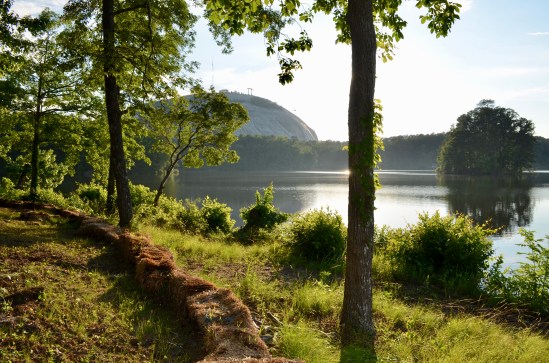
Nestled among 3,200 acres of natural beauty within Stone Mountain park was our campsite. To date, it is the most beautiful site we have stayed at and it was such a shame that it rained and stormed almost the entire time we were there!

If you like the outdoors, and the weather plays along, it would be sheer joy. There is a walk-up trail to the top of Stone Mountain ascending nearly 800 feet (240 m) in elevation and, if the skies are clear, I believe the panoramic views are spectacular.

There is a 5-mile (8 km) loop around the mountain base with a mile section going up and over the west side of the mountain; a scenic ¾ mile (1.2 km) loop trail takes visitors through a mature oak-hickory forest community which is excellent for viewing shade-loving plants; and, a Songbird Habitat Trail that is ideal for bird watching.

There is a very large lake perfect for all kinds of water sports and nighttime riverboat cruises; and, biking trails galore. When it briefly stopped raining on Sunday afternoon, the park was full of walkers, runners and cyclists – they even have two bicycle lanes, one for those peddling at a regular speed, the other for those racing!

fullsizeoutput_3650

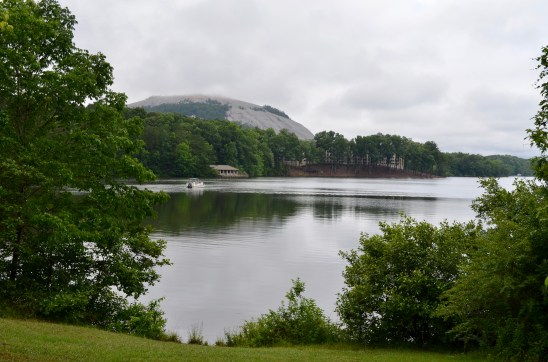
See the building hidden behind the trees on the left hand side? On the opposite side of the lake was our campground.

fullsizeoutput_3653

Personally, I think the Stone Mountain memorial has been ruined by over-commercialization. One attraction, the skyride to the top of the mountain in a cable car, simply ruins the mountain’s aesthetics. I’m probably being a bah humbug as I didn’t get to do it!


Food for thought …

Mike and I took a drive out to Gainesville in Northern Georgia today to check out a retirement community for those aged 55 and over!

I have to admit that it was absolutely nothing like what I was expecting! With nearly 500 homes in the development, Cresswind at Lake Lanier is a very impressive complex.

First off, we toured the model homes, each with a different floor plan and varying in size from the smallest at 1,400 square feet to the largest at 5,300 square feet – a little larger than our current home.

But what really impressed us was the club house which all residents have access too. At a whopping 36,000 square feet spread over three floors it was amazing. There was a very good sized, well-equipped gym, a very large indoor pool and sauna, a billiards room, games room, party room, bar and on and on it went.

We stopped and chatted to four ladies and they all waxed lyrical about the facilities, the 100+ social clubs that exist, the concerts and entertainment that are arranged and the active, social and friendly lifestyles they all live.

DSC_0135

The outdoor swimming pool and tennis courts in the background.

DSC_0120

In our favourite model home there was a fully finished basement. In addition to the seating area, card table, sofa, pool table and large bar/kitchenette area, there was also a very large bedroom with en suite bathroom, a media room, guest toilet, a small storage room and access to the outside.

I’d like to teach the world to sing …

Mike and I spent a fun day at the World of Coca-Cola museum in Atlanta, Georgia, the city where the company is head-quartered and where there is now an interactive museum with lots of free tastings of the suite of Coke products.

After Dr. John Pemberton invented Coca-Cola in 1886, the formula was kept a close secret, only shared with a small group and not written down. In 1891, Asa Candler became the sole proprietor of Coca-Cola after purchasing the rights to the business.

In 1919, Ernest Woodruff and a group of investors purchased the company from Candler and his family. To finance the purchase Woodruff arranged a loan and as collateral he had Candler’s son commit the formula to paper. The piece of paper containing the formula was placed in a vault in the Guaranty Bank in New York until the loan was repaid in 1925. At this point, Woodruff reclaimed the secret formula and returned it to Atlanta and placed it in the Trust Company Bank, now SunTrust, where it remained until it was moved to the Coca-Cola museum in 2011.

Today, the Coca-Cola Company is the world’s largest beverage company with more than 500 sparkling and still brands. It is estimated that consumers in over 200 countries enjoy the company’s drinks at a rate of 1.7 billion servings a day!

TS+NxJDPTaWHcjf8gb8fJQ

The blogger meeting the Coca-Cola Polar Bear!

bI9z9bMMTzOp80NrZ%k8Xg

The polar bear first debuted in a print advertisement in France in 1922 and then appeared periodically for the next 70 years. The modern-day polar bear made its debut in 1993 and has since appeared in numerous television and print advertisements.

On the side of the mountain …

In 1958 the state of Georgia purchased Stone Mountain and its surrounding land from private owners. A Stone Mountain Memorial Association was created and a competition organized to elicit designs to memorialize the southern leaders of the Civil War in a sculpture on the side of the mountain.

Walker Hancock from Massachusetts won the competition and decided to complete the mountain carving originally designed by Augustus Lukeman in 1925 which had been abandoned when the mountain’s owners refused to renew the lease for the project.

Work resumed in 1964 using a new technique utilizing thermo-jet torches which enabled the carvers to remove tonnes of stone every day. For eight years the carvers toiled on the design which would depict Confederate President Jefferson Davis and Generals Robert E. Lee and Thomas J. “Stonewall” Jackson.

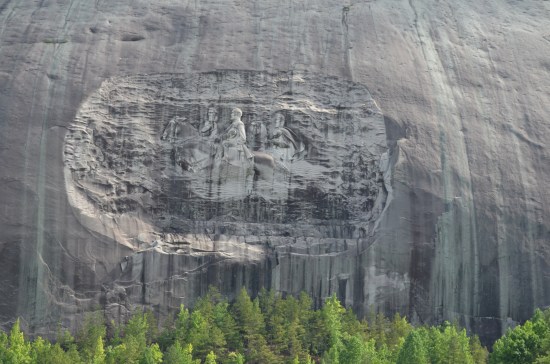
Before you look at the photos, let me set the scene as to the scale of the project that was undertaken. The carving measures 90 feet by 190 feet and covers three acres. It is carved 400 feet above the ground and is recessed 42 feet into the mountain.

The carving

The carving is actually much larger than it appears from. Workers could easily stand on a horse’s ear or inside a horse’s mouth to escape a sudden rain shower. A dedication ceremony for the Confederate Memorial Carving was held on May 9, 1970. Finishing touches to the masterpiece were completed in 1972.

DSC_0114

The figures were completed with the detail of a fine painting. Eyebrows, fingers, buckles and even strands of hair were fine-carved with a small thermo-jet torch. 


An Independent Partner

Apologies for a second blog on the Carter Presidential Centre but Mike and I are now in Stone Mountain, Georgia (about 20 miles from Atlanta) and we are being pummeled by a very slow-moving storm. It has barely stopped raining, heavily, since Thursday accompanied by thunderstorms and lightening which are wreaking havoc with Miss Poppy’s beauty sleep (and ours too).

We are in the most beautiful campground we have ever stayed in but the weather has prevented us venturing out to explore the famous Stone Mountain and its carving which has, thus far, been hiding in cloud cover. Finger’s crossed the rain will stop soon and I can get out and take a photo or two.

Back to the blog ….

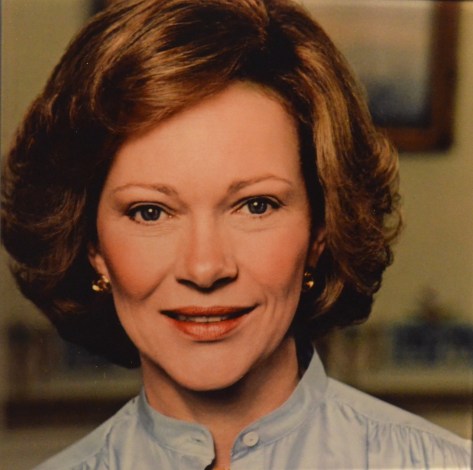
Unlike any other first lady before or since, Rosalynn Carter, wife of President Jimmy Carter, regularly attended cabinet meetings to stay current on the nation’s business. She remained her husband’s closest advisor on subjects from domestic politics to international diplomacy, and accepted tasks from the president to help him govern.

She managed the social and ceremonial business of the White House and brought a full agenda of her own to her position of first lady.

After helping her husband become Governor of Georgia in 1970, Mrs. Carter decided to focus her attention on the field of mental health when she was the state’s First Lady. It was a commitment that she continues today.

fullsizeoutput_34e4

In 1988, the Mental Illness Foundation honoured Rosalynn Carter with the Dorothea Dix Award for her decades of work on behalf of people with mental illness. Dix was a pioneer in lobbying for humane mental health treatment.