We are now in Chattanooga, Tennessee which saw intense fighting between the Union and Confederate armies during the Civil War.
Controlling Chattanooga, known as the “gateway” to the Confederacy, is strategically important for the outcome of the war. Yet, in the middle of September 1863, the armies meet in the peaceful farm fields of north Georgia, along a tranquil creek called Chickamauga. The resulting two-day battle, eight miles south of Chattanooga, leaves 34,000 Americans as casualties.
Day two of the battle. Fighting begins when Confederates attack Union fortifications on the battlefield’s northern end. Through mis-communication, a gap is created in the Union front line and the Confederates pour through.
The Union brigade of Colonel John Wilder witness the disaster. Soldiers of Wilder’s mounted infantry, known as the “Lightning Brigade,” ride to the battlefield on horse-back, dismount and fight as infantry. Their Spencer repeating rifles, paid for by the soldiers themselves, fire three times faster than muzzle-loading weapons commonly used. Wilder’s men counter attack on foot, driving the Confederate brigade backwards.
Soon Wilder realizes that his brigade is isolated and withdraws to higher ground which he defends against repeated Confederate assaults. Wilder then falls back to the northwest to guard the retreating columns and wagon trains of the Union army.
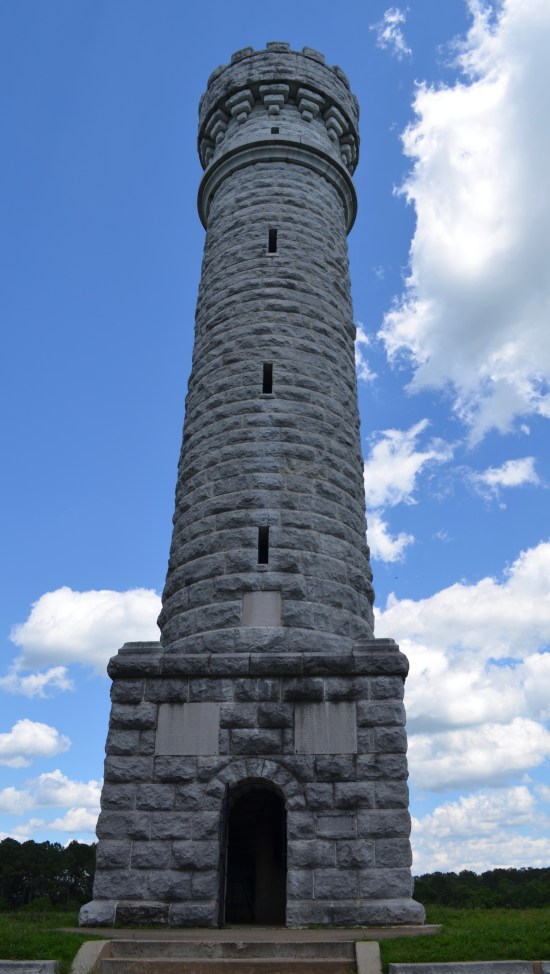
Survivors of Wilder’s Brigade raise funds for the tower, pictured above, in the Chickamauga and Chattanooga National Military Park, and name it for their commander. Wilder returns to the area after the end of the Civil War and is elected Mayor Chattanooga in 1871.
 The Blogging Brit