Travelers’ Shrine

In 1993, four people became inspired to build a chapel for travelers of the road and spirit. All four individuals were Catholic, but only two were previously acquainted: a priest in his early years; a woman, wife and mother; and, two architectural partners!

The Holy Family Shrine sits on a 23-acre site overlooking the Platte River Valley in Gretna, Nebraska serving as a beacon on top of the hill. Once on the site, you are drawn to a path cut into the earth exposing a natural limestone entry.

The chapel represents the shroud of Christ as it fell to the tomb after the resurrection. Constructed of Western Red Cedar, the upper web of the trusses interlace like waving wheat in a field. Similarly, the trusses that support the cedar roof deck 49 feet above the floor of the ridge and 32 feet at the eaves. The arching members of the trusses are cut out of 850 feet single boards

fullsizeoutput_28e7

The chapel sits on limestone that appears to be eroded on an exposed piece of ledge stone. It is breathtakingly beautiful.


fullsizeoutput_28ea

Integrated into the design are complimentary accessories reinforcing the mission of the Shrine. The etched glass figure of the Holy Family hovers like a spirit over the chapel. The 16 by eight foot single piece of glass may be the largest in the U.S.

fullsizeoutput_28ee

The pews and Shrine’s furnishings were custom designed to articulate the details of the sanctuary. The light fixtures are an abstract presentation of the crucifixion. The tiered metal sconces represent the ribs of Christ.

Blackbird!

The SR-71 “Blackbird” was a long-range, strategic reconnaissance aircraft operated by the U.S. Air Force between 1964 and 1998. It was capable of flying at Mach 3 – three times the speed of sound, or around 2,300 miles per hour.

Designed for a two-man crew, they sat in tandem cockpits, with the pilot in the front and the reconnaissance systems officer operating the surveillance systems, equipment and directing navigation from a rear cockpit. The aircrafts were painted a dark blue, almost black, to increase the emission of internal heat and act as camouflage against the night sky. The dark colour led to the aircraft’s nickname of “Blackbird.”

While the SR-71 carried radar countermeasures to evade interception efforts, its greatest protection was a combination of high altitude and very high-speed. If a surface-to-air missile launch was detected, the standard evasive action was simply to accelerate and outfly the missile!

When flying at 80,000 feet, crews needed to wear protective, pressurized suits to ensure they received the right amount of oxygen. When wearing a pressurized suit, eating and drinking takes on a whole new form: water bottles had long straws which crew members guided into an opening in the helmet by looking in a mirror; food was contained in sealed units similar to toothpaste tubes which delivered food to the crew member’s mouth through the helmet opening.

fullsizeoutput_28d8

We were able to see an SR-71 up close and personal at the Strategic Air Command & Aerospace Museum in Ashland, Nebraska, just down the road from where we are staying.


Wizard, Oracle, Sage!

Warren Buffett is an American business magnate, investor and philanthropist who has served as the chairman and chief executive officer of Berkshire Hathaway since 1970. He is considered one of the most successful investors in the world and, at the time of writing, is the third wealthiest person in America, with a net worth of $84 billion.

Buffett was born in Omaha and developed an interest in business and investing early on in his life, attending the Wharton School of the University of Pennsylvania in 1947. He transferred to the University of Nebraska and attended the Columbia Business School where he molded an investment philosophy around the concept of value investing. He also attended the New York Institute of Finance to focus his economics background and soon after began various business partnerships.

He created the Buffett Partnership which acquired a textile manufacturing firm called Berkshire Hathaway and assumed its name to create a diversified holding company.

Buffett is a notable philanthropist, having pledged to give away 99 percent of his fortune to philanthropic causes, primarily via the Bill and Melinda Gates Foundation (Gates is the co-founder of Microsoft). Several years ago, Mike and I were walking through Seattle airport when we spied Buffett chatting to Bill and Melinda Gates with whom he is great friends. I am hoping that by some unlikely chance we will see Mr. Buffett while we are here in his home town, as I am a huge admirer of him and have wanted to meet him since I was about 20 having read his biography!

th

Buffett is frequently referred to in the media as the Wizard, Oracle or Sage of Omaha! He is noted for his frugality despite his immense wealth.

Rhinos in Nebraska!

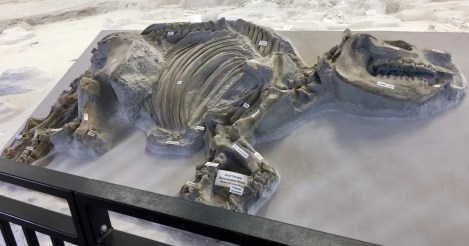
In 1971, a visiting paleontologist happened to find the skull of a complete baby rhino protruding from the side of a gully in Royal, Nebraska. The skull lay near the bottom of a newly exposed bed of sparking grey ash and turned out to be the first of more than 100 rhino skeletons excavated by the University of Nebraska State Museum crews at what became known as the Ashfall Fossil Beds where we visited today.

It is extremely rare for whole herds of animals to die and be buried so quickly that their carcasses remain largely intact, as happened at Ashfall. In the ash bed, some rhinos were literally buried in their tracks, with their last footprints clearly visible.

Paleontologists continue to study and excavate the site, and have determined that a large herd of Barrel-bodied Rhinos, together with Crowned crane and giant tortoises were at a watering hole when a sudden fall of volcanic ash sweeping across the plains like a grey blizzard, devastated the landscape. Confused and choking, the animals began to die. Scientists have shown that the ash that killed and eventually buried the animals, blew eastward from a huge volcanic eruption in what is now southwestern Idaho.

If a time machine were to transport you back 12 million years, you would find Nebraska covered with sub-tropical grasses and patches of jungle. Prior to the catastrophic ash fall, discoveries at Ashfall give a detailed picture of an area inhabited by a rich variety of life reminiscent of modern East African savannas.

fullsizeoutput_28b3

The skeleton of a a Barrel-bodied rhino.

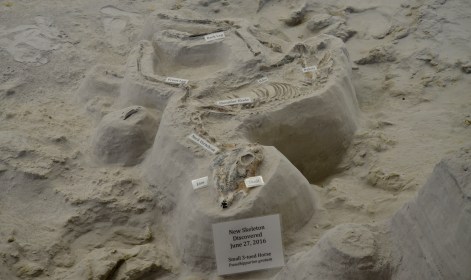
fullsizeoutput_28b7

The skeleton of a 3-toed Horse that was discovered last year.


Carhenge!

The artist of this unique car sculpture, Jim Reinders, experimented with unusual and interesting artistic creations throughout his life!

During a seven-year stint working in England, Reinders had the opportunity of studying the design and purpose of Stonehenge in Salisbury. Reinders returned to the U.S. with a grand idea of creating his own take on the English monument in his hometown of Alliance, Nebraska but it was the passing of his father that drove an idea to a reality.

Carhenge was built as a memorial to Reinders’ father. While relatives gathered for the funeral in 1982, discussion turned to a memorial and the idea of an “American Stonehenge” was born! With no giant slabs of stone to be found in the Alliance, Reinders decided on a new medium for his sculpture – cars!

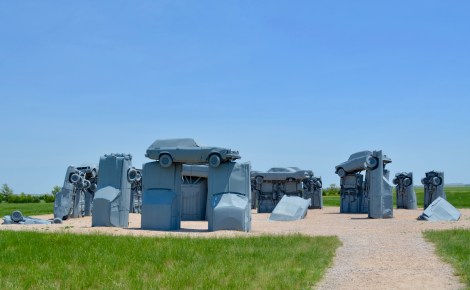
The family agreed to gather in five years and build the memorial. The clan, some 35 in number, gathered in June 1987 and went to work. Thirty-nine cars were placed to assume the same proportions of Stonehenge with the circle measuring approximately 96 feet (29 metres) in diameter. Some cars are held upright in pits five feet deep, boot end down, while other cars are placed to form the arches and welded in place. All are covered with grey spray paint.

fullsizeoutput_28a7

Cars are similar in shape and size to the stones of Stonehenge!

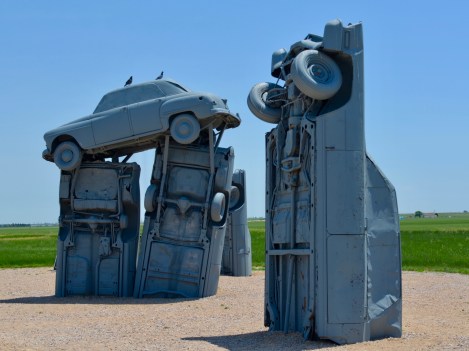
fullsizeoutput_28af

The original 25 cars were erected during a Reinders family reunion.

fullsizeoutput_28aa

Carhenge was dedicated on the Summer Soltice in 1987, reducing the time of the original Stonehenge construction by 9,999 years and 51 weeks!


Aces and Eights!

His contemporaries called him Wild Bill, and the newspapers made him a legend in his own lifetime!

James Butler Hickok was born in 1837 in Troy Grove, Illinois and spent his formative years helping out on the family farm. Most of his adult years were spent in the West, where he was employed as a detective, a scout for the U.S. Army and a Marshal in Kansas.

Part of the Hickok legend was built on his ability to handle a pistol with either hand, becoming one of the first so-called “fast guns.” Although there are mixed opinions of his marksmanship, everyone agreed that when he shot at a man, Hickok was in a class by himself.

Hickok’s life of adventure ended on August 2, 1876, during a game of poker in the South Dakota town of Deadwood at the Number 10 Saloon. He was shot from behind by Jack McCall, who was later hanged for the crime.


fullsizeoutput_28a5

Aces and eights is the poker hand held by Bill Hickok while playing five-card stud when he was murdered, thereafter known as a dead man’s hand. 

fullsizeoutput_2899

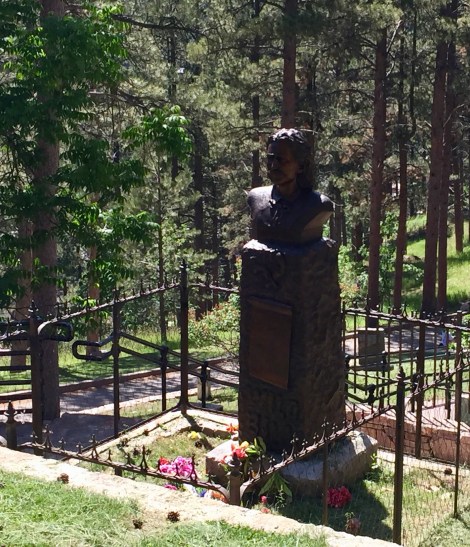
Wild Bill Hickok is buried at the Mount Moriah Cemetery in Deadwood, South Dakota.

fullsizeoutput_28a0

Martha “Calamity Jane” Canary gained regional and national notoriety through the newspaper articles, novels and an autobiography. Through these exaggerated publications, Calamity Jane was portrayed as an expert scout, crack shot and western heroine. Alcoholism is a possible explanation of Calamity Jane’s fanciful yarns among them a love affair with Wild Bill Hickok. Her dying wish was that she was buried next to him.

Wind Cave

The Wind Cave area in South Dakota has been protected since 1903, when it became a national park. It is famed among geologists and spelunkers (known as potholers in the UK) as the world’s fifth longest cave system, and known for its formations.

Regarded as sacred by American Indians, the cave was not found by settlers until 1881, when brothers Jesse and Tom Bingham heard a loud whistling noise. The sound led them to a small hole in the ground, the cave’s only natural opening. A wind was said to blow with such force out of the hole that it knocked Jesse’s hat off. That wind, which gave the cave its name, is created by differences between atmospheric pressure in the cave and the outside.

It was left to later adventurers like Alvin McDonald to follow the wind and discover the cave’s extensive network of passageways containing rare formations and other, delicate, irreplaceable features.

Young Alvin and others who explored the cave before 1900 were fascinated by what they found: chocolate-coloured crystals, formations resembling faces or animals. Reports of these discoveries drew a stream of curious visitors to the cave. Local entrepreneurs, blasted open passages and guided tourists through the cave for a fee. Today, the cave’s fragile and complex geological system is protected.
fullsizeoutput_2876

 The grate-like structure called “boxwork” which you see on the ceilings throughout the cave. It was stunningly beautiful and so delicate.

th

A geological formation known as “popcorn” is found in many parts of the cave.

th

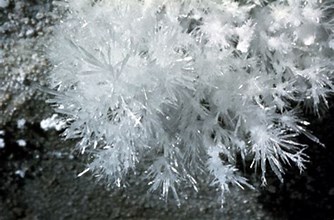
A very delicate formation known as “frostwork.”

Magnificent Home Where Buffalo Roam!

Custer State Park in South Dakota is defined by towering pines, gentle flowing creeks and massive granite outcrops that are, at every twist and turn of the Needles Highway! The diversity of the landscape is amazing, and the opportunity to view the park’s critters from the road they call “Wildlife Loop” is fantastic.

What’s more impressive is that everyone is after the same thing and is totally understanding of one’s need to suddenly stop the car, hop out and take a photograph of some adorable member of the wildlife pack who is just living its life in full view of the millions of visitors who travel this road every year.

Covering over 70,000 acres, this glorious park offers a real diversity of landscapes and inhabitants for everyone to enjoy. They put on quite a display, and I was able to capture some of their moments to share with you.

fullsizeoutput_286a

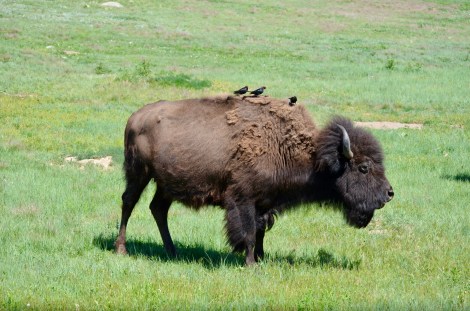
Bison-Uber! A Bison gives a lift to three birds, destination unknown!

fullsizeoutput_2869

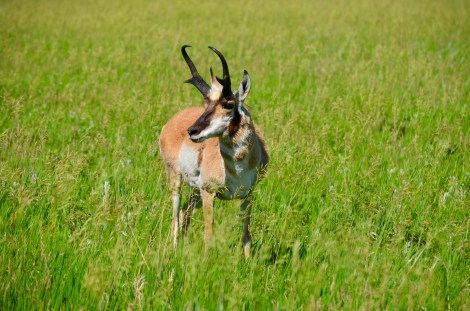
A Male Pronghorn. Pronghorns are commonly referred to as antelope due to their similar appearance and life on the open grassland. The name pronghorn comes from the buck’s large pronged horns which are shed each year. Pronghorns are the fastest land animal in North America and can run at 60 miles per hour for great distances.

Burros! A burro is a small donkey who is not native to the Black Hills of South Dakota. They are descendants from a herd that once hauled visitors around the park – they now roam freely in the park!

Badlands National Park

Extreme temperatures, lack of water and the exposed rugged terrain led to this land earning its name as “land bad.” In the early 1900s, French-Canadian fur trappers called it “bad lands to travel through.” The name was immortalized in January 1939, when President Franklin Roosevelt made Badlands a National Park.

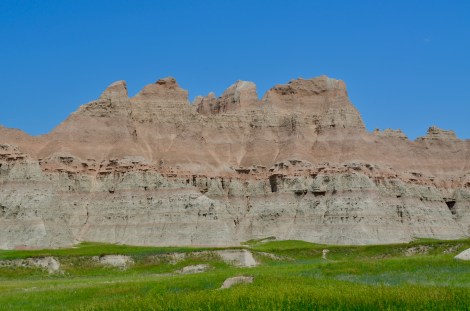
Today, the term badlands has a more geological definition. Badlands form when soft sedimentary rock is extensively eroded in a dry climate. The park’s typical scenery of sharp peaks, gullies and ridges is a premier example of badlands topography.

fullsizeoutput_282b

The park protects over 240,000 acres of sharply eroded buttes, pinnacles and spires blended with the largest undisturbed mixed grass prairie in the U.S.

fullsizeoutput_2837

About 65 million years ago, this whole area was covered by a sea. When the sea drained away a jungle sprang up. For a long time, tree roots broke up the shale and chemicals from decaying plants produced a yellow soil. About 37 million years ago sediment from the west washed over the jungle. The jungle rebounded, converting the new sediment into a red soil. Buried by later sediments, both yellow and red soils were fossilized.

fullsizeoutput_2828

A mountain goat kindly poses for her photograph!

Mount Rushmore

In 1923, a proposal of a mountain carving in South Dakota’s Black Hills to attract tourists is met with skepticism and criticism. Yet, two years later, federal and state legislation authorizes a carving and Gutzon Borglum, a famed American sculptor, is approached to undertake the project.

Borglum immediately drops what he’s doing and heads to South Dakota. He selects Mount Rushmore as the site because of its size, orientation to morning and midday light, and the abundance of fine-grained granite.

To appeal to a national audience, Borglum proposes carving 60-foot faces of four U.S. presidents to commemorate the founding, growth, preservation and development of the United States. They symbolize the principles of liberty and freedom on which the nation was founded.

It was thought the project could be completed in five years for $500,000. Work began in 1927 and fourteen years and one million dollars later, carving ended with the death of its visionary sculptor Borglum and the onset of World War II.

The men who worked alongside Borglum were mainly drawn from the local area. Many were miners, lumber men or ranchers. Over the fourteen-year period of the carving almost 400 workers, men and women, laboured at the site.

Workers started at 7.30 a.m. but before they could begin, they had to climb a tortuous stairway of over 700 steps to the top of the mountain. There, far above the rocky chasm, they were strapped into swing seats and lowered over the face of the mountain while managing heavy drilling and blasting equipment.

DSC_0017

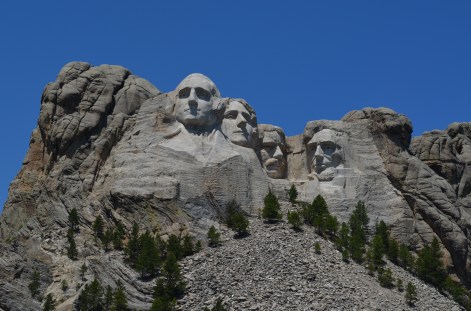
From Left: George Washington (served 1789 – 1797), Thomas Jefferson (served 1801 – 1809), Theodore Roosevelt (served 1801 – 1809), and Abraham Lincoln (served 1861 – 1865).

IMG_1762

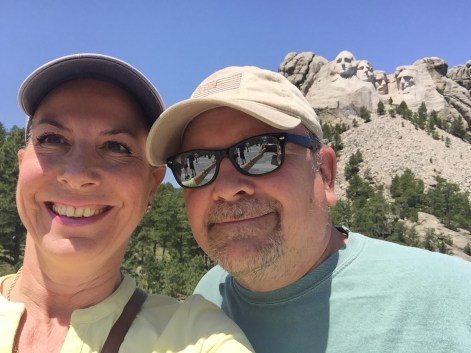
Mike and I at the monument.

George Washington

Washington was the first figure to be completed in 1930. As Washington’s face is in higher relief than the others, it remains the most prominent.