Tulsa, Oklahoma and Art Deco came of age together. The young city was experiencing unprecedented growth and prosperity in the Roaring Twenties, just as the Art Deco movement came into vogue. Flush with oil money, prominent Tulsans started building skyscrapers that would spur one of the pre-eminent Art Deco collections in the U.S.
There are two major types of Art Deco, streamline and zigzag. Streamline uses simple curved geometry along with aerodynamic shapes, and zig-zag uses angular designs such as triangles and rectangles and highly stylized floral elements composed of simple geometry. As Tulsa boomed and the Art Deco aesthetic evolved through the thirties and into World War II, examples of streamline and zigzag buildings popped up all over town.
Art Deco is notable for creating designs using very basic geometry. The designs can be extremely simple, or when repeated and overlapped, quite intricate. Art Deco also happens to be my most favourite period in design history. I love it for the clean lines, simplicity of design and balance.

Art Deco began as a style that exemplified luxury and new notions of modernity and urban sophistication. Tulsa, where we visited yesterday, was rich and saw itself as a progressive modern city. An Art Deco heritage was born, and we took time out to visit the Art Deco museum which, although very small, was glorious.
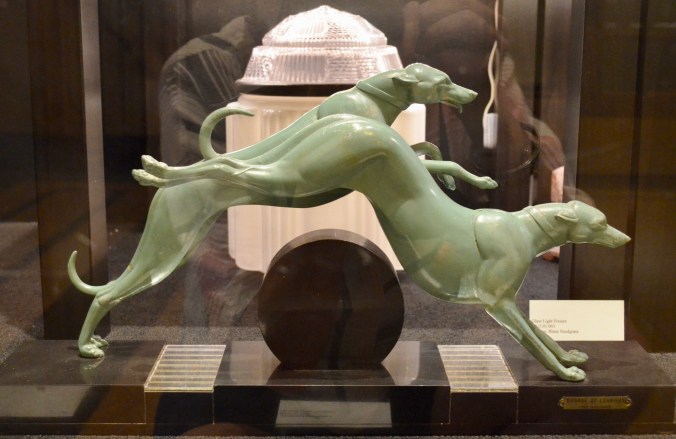
Apologies for the quality of the photograph. Greyhounds are common Art Deco symbols. Although Art Deco often portrayed ideas of modern and urban life, the depiction of animals often evoked a sense of grace, swiftness and speed.
 The Blogging Brit