We are staying near Tulsa in Oklahoma which changed from a small frontier town in 1901 with a population of around 1,300, to a boomtown with the discovery of oil.
Four years later, the Glenn Pool oil field was discovered. The strike created such a large supply of crude oil that it forced Tulsans to develop storage tanks for the excess oil and gas and then pipelines. It also laid the foundation for Tulsa to become a leader in many businesses related to oil and gas and being the physical centre of the developing American petroleum industry.
A second surge of oil discoveries tool place between 1915 and 1930, firmly establishing Tulsa as “Oil Capital of the World.” Thousands of workers arrived from Pennsylvania, Ohio and New York heading to the “black gold” oil strikes. By 1930 the population had soared to over 140,000 with Tulsa’s airport becoming the busiest in the world, surpassing London and Paris. Wealthy oilmen such as J. Paul Getty built stately mansions and beautiful, modern company headquarters.
Following the downturn of the oil industry in 1982-84, the title “Oil Capital of the World” was relinquished to Houston, Texas. City leaders worked to diversify the region away from a largely petroleum-based economy, bringing in blue-collar factory jobs, internet and telecommunications companies and enhancing an already important aviation industry. During this time, customer-service and reservation call centres became an important part of the local economy that was bolstered by an abundant supply of natural gas.
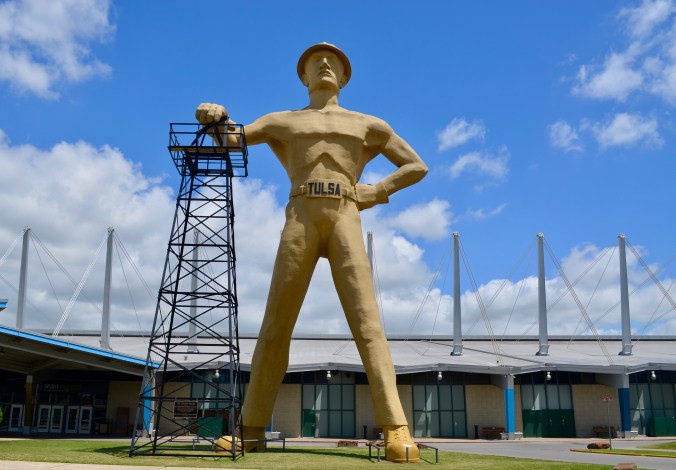
The Golden Driller – built for the International Petroleum Exposition of 1966.
 The Blogging Brit