Extreme temperatures, lack of water and the exposed rugged terrain led to this land earning its name as “land bad.” In the early 1900s, French-Canadian fur trappers called it “bad lands to travel through.” The name was immortalized in January 1939, when President Franklin Roosevelt made Badlands a National Park.
Today, the term badlands has a more geological definition. Badlands form when soft sedimentary rock is extensively eroded in a dry climate. The park’s typical scenery of sharp peaks, gullies and ridges is a premier example of badlands topography.
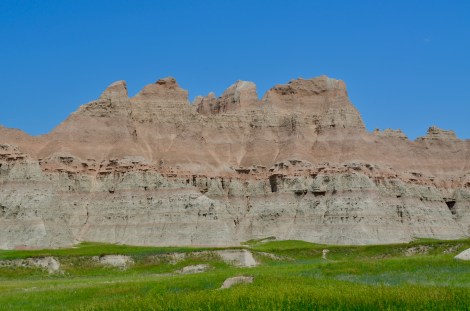
The park protects over 240,000 acres of sharply eroded buttes, pinnacles and spires blended with the largest undisturbed mixed grass prairie in the U.S.

About 65 million years ago, this whole area was covered by a sea. When the sea drained away a jungle sprang up. For a long time, tree roots broke up the shale and chemicals from decaying plants produced a yellow soil. About 37 million years ago sediment from the west washed over the jungle. The jungle rebounded, converting the new sediment into a red soil. Buried by later sediments, both yellow and red soils were fossilized.

A mountain goat kindly poses for her photograph!
 The Blogging Brit