At dawn on June 25, 1876 two scouts working for Lt. Col. George Armstrong Custer, who commands the 7th Cavalry, see evidence of a Northern Plains Indian encampment they are searching for in the valley of the Little Bighorn River, Montana.
Convinced that they will be discovered, Custer divides his regiment into three under the command of Major Marcus Reno and Captain Frederick Benteen in order to strike the camp from separate directions before its occupants can scatter.
Custer, with some 210 men, heads to the northwest in pursuit of mounted warriors, probably underestimating the size and fighting power of the Lakota and Cheyenne forces. Custer and his men are surrounded and overwhelmed in fierce fighting
In the battle, the 7th Cavalry lose the five companies under Custer, about 210 men. Of the other companies of the regiment, under Reno and Benteen, 53 men were killed and 52 wounded. The Northern Plains Indians lose around 100 warriors.
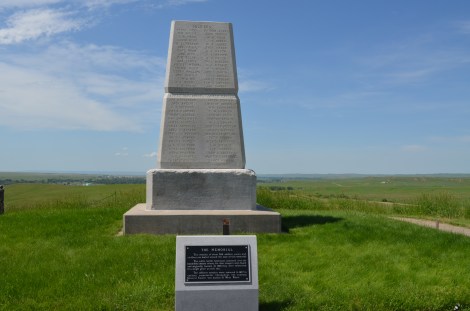
The remains of some 220 soldiers, scouts and civilians are buried around the base of the memorial at the Little Bighorn Battlefield National Monument which we visited today. General Custer is buried at West Point Cemetery in New York.

In the Spring of 1876, the U.S. Army enlisted 23 Crow Tribe scouts to help them find the Northern Plains Indians. When the Battle of the Little Bighorn came together, Curley, named for his wavy hair, was able to escape the fate of Custer and his command, as he was on the outside of the charging circle of warriors.

A memorial to honour Native American participation in the Battle of the Little Bighorn.
 The Blogging Brit