Yellowstone National Park in Wyoming covers more than two million acres of wild land and open spaces where animals roam, and biological, geological and hydrothermal processes each play a part in shaping a fascinating and constantly changing landscape. It is an incredible and wonderous place to visit.
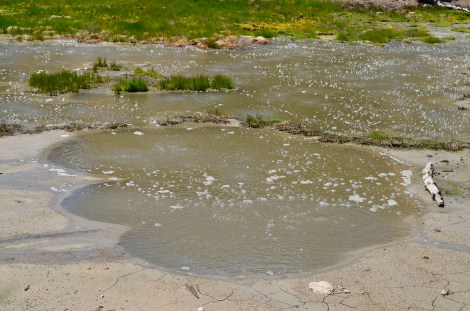
Mud pots are acidic features with limited water supply. Hydrogen sulfide, which rises deep from within the earth, is used by some micro-organisms as an energy source. They help convert the smelly gas to sulfuric acid which breaks down rock into clay. Various gases escape through the clay and cause it to bubble and plop!

An unknown park visitor named this feature Dragon’s Mouth Spring around 1912, perhaps due to the water that frequently surges from the cave like the lashing of a dragon’s tongue. The rumbling sounds are caused by steam and other gasses exploding through the water causing it to crash against the walls of the hidden caverns.
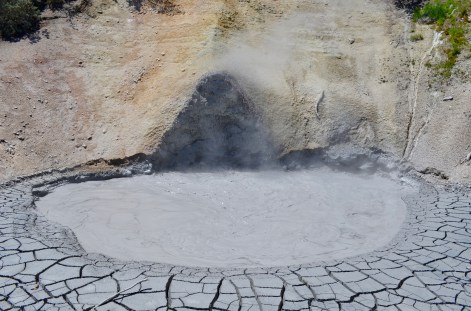
For many decades, visitors have been intrigued by Mud Volcano’s powerful odour and yellow sulphur that is most common in late summer. The smell comes from hydrogen sulfide gas rising from Yellowstone’s magma chambers causes the rotten-egg smell. Micro-organisms use the gas as a source of energy turn the gas into sulfuric acid which breaks down the rock and soil into mud. When iron mixes with sulphur to form iron sulfide, grey and black swirls sometimes appear in the mud.
 The Blogging Brit