In late 1940, news of a series of spectacular successes by German glider troops reached military commanders in Washington, D.C. and Great Britain. The news was a wake-up call in both countries for an all-out effort to develop an effective glider force.
The U.S. combat glider programme was an integral part of the airborne strategy that led the Allies to victory in World War II. In every major Allied Airborne operation, combat gliders successfully delivered infantry, heavy weapons, ammunition, construction equipment, fuel and medical supplies by landing on rough fields behind enemy lines, often at night.
Between October 1942 and January 1945, the U.S. Army Air Forces trained nearly 6,000 men who volunteered to be glider pilots. Eighty percent of these men trained five miles north of Lubbock in Texas at the South Plains Army Air Field, opposite the RV park where we are staying!
On June 5th, 1944, on the eve of the Normandy invasion, airborne forces are dropped behind enemy lines by glider and parachute to protect the Allies’ flanks and to capture key exits from the beach head. By August, over 9,000 American and British troops had been delivered to Southern France by glider and parachute.
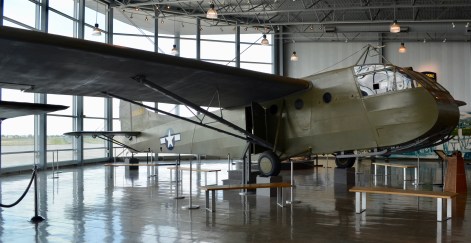
The American CG-4A Glider featured a tubular metal fuselage frame with a wood support structure covered by a fabric skin. The wing structure was constructed entirely of wood and fabric.
The ride into battle in a glider is a one-way trip as once the tow rope is released, there is no turning back!
 The Blogging Brit