Calypso Cascades

The southeast corner of Rocky Mountain National Park boasts one of the loveliest portions in the park known as Wild Basin. The trails in this area access a wide variety of landscapes including gurgling mountain streams and fast-flowing falls, cascades and an alpine lake.

In hiking terms, the 1.8-mile trail to Calypso Cascades is categorized as easy! Those writing these descriptions don’t seem to take into account that the starting elevation is over 8,500 feet above sea level and that the hike is upwards!

The trail follows the course of North St. Vrain Creek as it flows out of the rugged high country and snowfields in the wild corner of Rocky Mountain National Park. After about 0.4 mile the trail splits – one side leads to five different backcountry camping sites which visitors can reserve.

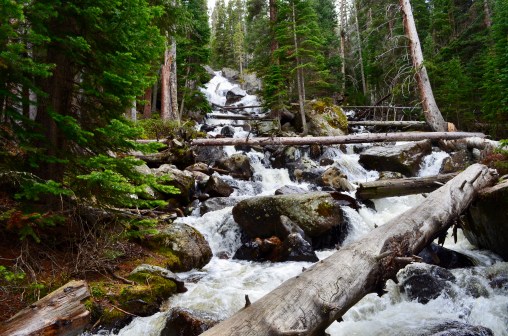
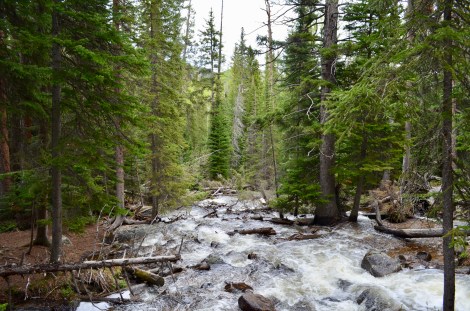
The left-hand trail leads south towards Calypso Cascades along the Finch Lake Trail system. After crossing a large log bridge spanning North St. Vrain Creek, the trail follows Cony Creek to the site of Calypso Cascades. The waters of Cony Creek tumble over boulders and fallen trees in a moss-covered landscape. What makes Calypso Cascades unique are the Calypso Orchids, also known as Pink Lady Slippers, that, sadly, were not yet in bloom at the time of my hike.
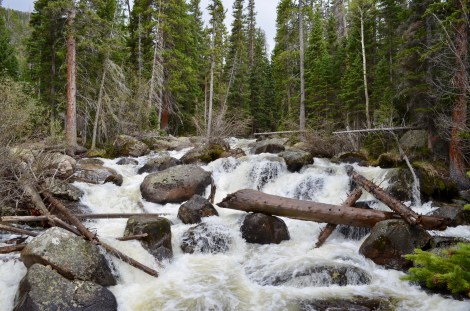
fullsizeoutput_2784

En route to Calypso Cascades.

fullsizeoutput_277b

The photo opportunities were certainly worth the 1.8 mile hike to the Calypso Cascades!
fullsizeoutput_278d

So much easier going down hill!

Lily Lake

Lily Lake lies on the eastern edge of Rocky Mountain National Park just off Colorado Highway 7, that runs parallel with the Roosevelt National Forest.

The beautiful 17-acre lake, was originally only small but it was dammed and enlarged in 1915. It is a very popular stop as there is no fee to visit it!

There are two trails to follow. The first, Lily Lake trail, is a level, gravel trail that circles the lake and is suitable for hikers of all ages and abilities or just to sit, have a picnic and enjoy the views.

The second short loop trail, Lily Ridge, which is the one I chose, climbs above the lake and offers great views of the water below and the spectacular scenic landscape of the Rocky Mountain National park which stretches in all directions.

Fishermen also cast their lines into the lake in search of Cutthroat trout, although the shallow lake is sometimes weedy. Fishing is strictly allowed on a catch-and-release basis.

fullsizeoutput_2776

My view of the lake from the Lily Ridge hiking trail.

fullsizeoutput_2774

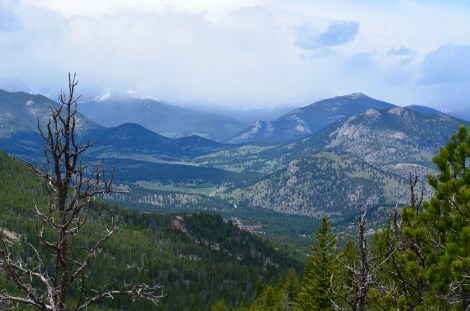
Before starting the descent back down to ground level, this was the breathtaking view of Rocky Mountain National Park stretching to the horizon. On a really clear day I can only imagine how photographic the view would be!

fullsizeoutput_2777

The view of my hike – the Lily Ridge trail.

Welcome to Spring!

Spring in Estes Park, Colorado can be different from what you might expect! While a warm, sunny day can create the illusion that summer has arrived, the next day can turn cold and bring a heavy snowfall, as we found out today!

We set out to pay our first visit to the Rocky Mountain National Park three miles from where we are staying. The park covers some 415 square miles of U.S. government-owned land with an additional 400 square miles of U.S. Forest Service wilderness adjoining the park boundaries.

We ascend the park’s Trail Ridge Road in search of the Alpine Visitor Centre sitting at an elevation of nearly 12,000 feet. As we climb the mountain, the clouds descend and blur our view (and photo opportunities), and the landscape changes dramatically. As we continue upwards, the tree-line ends and the extremely thin soil, strong ultraviolet light, drying winds and bitter cold define life on the tundra.

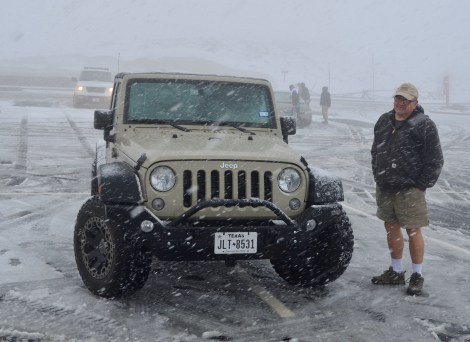
Our day was turned upside down as a snow storm suddenly arrives and the Park Rangers have us stay in the car park of the Alpine Visitor Centre as they call-in the snow ploughs to open the road and enable us to descend down the mountain!

fullsizeoutput_275f

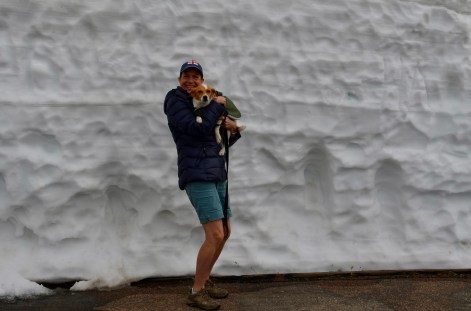
Me and Poppy in front of a wall of snow at over 11,400 feet elevation!

fullsizeoutput_2769

A view from the Alpine Visitor Centre – you can see where the tree-line ends due to the harsh winters and the altitude.

fullsizeoutput_276a

Waiting on the snow ploughs!

fullsizeoutput_276d

Pretty as a Christmas Card – I took this photo out of the car window on the way down the mountain!

Room 217!

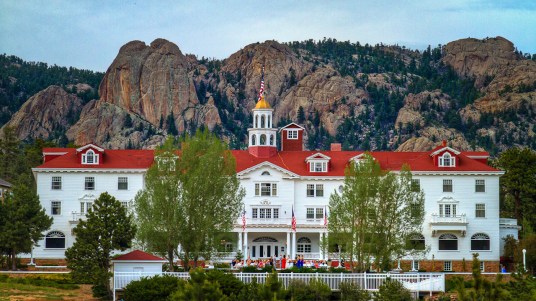
On October 30th, 1974, horror writer Stephen King and his wife Tabitha were driving through Estes Park, Colorado as night approached when they came across The Stanley Hotel. They decided to book a room and on checking in, discovered that they were the only guests in the hotel as it was about to close for the winter season.

King and his wife ate dinner in an empty dining room listening to canned orchestral music. Except for the table the King’s occupied, all the dining chairs were sitting on top of the tables.

That night, according to King, he dreamt that his three-year old son was running through the long corridors of The Stanley Hotel, looking back over his shoulder, eyes wide open, screaming and being chased by a fire-hose! King reportedly woke up with a tremendous jerk, sweating all over. He got up, lit a cigarette and sat in a chair looking out of the window at the Rocky Mountains. By the time the cigarette was smoked, he had the bones of “The Shining” outlined in his mind.

The Shining was published in 1977 and became the third great success of King’s career after Carrie and Salem’s Lot. Room 217 of the Overlook Hotel, the fictional hotel in King’s book, features prominently in the novel, having been the room where King and his wife spent the night at The Stanley Hotel.  Room 217 remains the hotel’s most requested room!

The Stanley Hotel

The Stanley Hotel in Estes Park, Colorado is just down the road from where we are staying.

Moose!

We are still in Colorado but have moved to the popular summer resort of Estes Park which sits at the eastern entrance of the Rocky Mountain National Park at an elevation of over 7,500 feet.

Moose are the largest member of the deer family. The subspecies of moose found in Colorado is the Shiras subspecies which are smaller than that of the northern latitudes, particularly in regard to antler size

Mature individuals of the Shiras subspecies can weigh as much as 800 to 900 pounds. Typically their coat colour is black, although individuals with lighter coloured coats can appear tawny. Bull moose after often recognized by their large, palm-shaped antlers which they shed every year usually between the middle of December and the end of January. The new antler growth occurs during spring and the majority of the summer.

Mature cows typically breed for the first time when they are two years old. The healthiest cows are capable of having twins, however, in Colorado, Shiras moose more commonly have a single calf.

Moose are large and easily observed species. Under many circumstances the flight response of moose is less than that of other wild and free-ranging animals. When coupled with the unique and large antler characteristics of bulls, moose are often recognized for their value as a watchable wildlife species. That said, the docile nature of moose should not be taken for granted as they can quickly become aggressive when stressed by people or dogs.

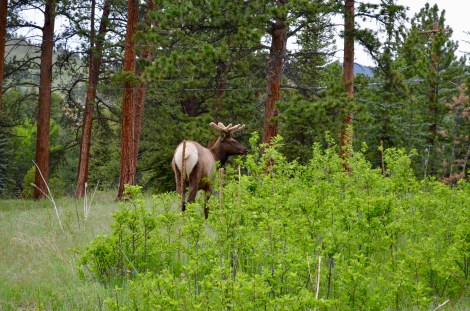
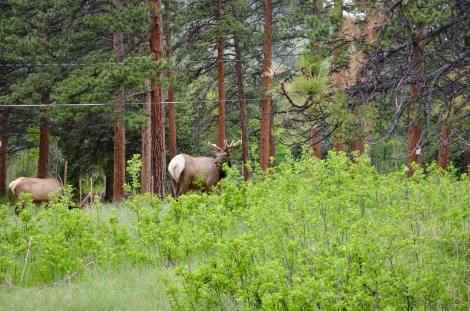
fullsizeoutput_274f

Taking a drive around Estes Park we came across two moose enjoying an afternoon snack!

fullsizeoutput_2750

The Old Fossil!

… Naughty! You think that I’m going to blog about Mike, HA! I couldn’t resist!

We visited the Florissant Fossil Beds National Monument today in Florissant, some 35 miles outside Colorado Springs where we are staying.

Here, beneath pine-covered hills and grassy meadows lies one the world’s richest fossil deposits. Step back in time 34 million years and you would be standing in the midst of a warm temperate forest, at the edge of a lake. Redwood trees tower overhead. Thousands of insects flit and buzz. Prehistoric creatures roam in the distance, grazing on the lush vegetation.

A massive volcanic area existed 15 miles to the southwest. The volcanos erupt regularly and the eruptions mix ash, water and possibly snow to create massive mudflows called lahars. They can move 150 mph down the slopes and carry car-sized boulders. A lahar entombed ancient redwood trees in up to 15 feet of mud and volcanic debris. Eventually the parts of the trees encased in mud became petrified.

Redwood trees soaring some 250 feet into the air, now only grow in a thin belt on the California and Oregon coasts but exist here in Colorado as fossil stumps.

fullsizeoutput_274a

The Big Stump: a petrified giant Sequoia (Redwood) stump. This stump is one of the largest fossilized trees in the world and measures over 12 feet in diameter!

fullsizeoutput_274c

How many fossils can you see? 

fullsizeoutput_274e

Today’s park landscape features mountain meadows and rolling hills forested with ponderosa pine, spruce, fir and aspen. These trees stand in stark contrast to petrified giant sequoia stumps from the ancient ecosystem these fossil beds preserve. 

Hollywood Heartthrob in Uniform

Today, Mike and I enjoyed a magnificent tour of the National Museum of World War II Aviation here in Colorado Springs, CO. It was not necessarily the content of the museum that made the tour so fascinating, but the stories our tour guide shared with us, two in particular I want to pass on. Here’s the first!

On March 22, 1941, executives from the Hollywood film studio MGM threw a farewell party for their departing star, actor Jimmy Stewart. The following day he was inducted into the U.S. Army Air Corps as an enlisted man and stationed at Moffett Field, California. His salary dropped from $12,000 a week to $21 a month!

A crowd of girls waited just outside the base’s gates, eager to get a glimpse of their idol. In got so bad that his commanding officer put a sign up requesting civilians leave Stewart alone until after he finished his training! In his nine months on the base, Stewart took extensive additional courses with the idea of obtaining a commission.

In January, 1942, Stewart received his commission and because he had logged over 400 hours as a civilian, he was allowed to take basic flight training and received his pilot wings. A month later, appearing in uniform at the Academy Awards, he presented Best Actor Oscar to Gary Cooper for Sergeant York.

Over the next nine months he instructed on different aircraft including the B-17 bombers and flew bombardiers in the training school in Albuquerque, New Mexico. In the autumn of 1943, Stewart went to England as Commanding Officer of the 703d Bomb Squadron. He began flying combat missions and in March 1944 was appointed Operations Officer of the 453rd Bomb Group.

Stewart ended the war with 20 combat missions. He remained in the U.S. Air Force Reserve and was promoted to Brigadier General in July 1959.

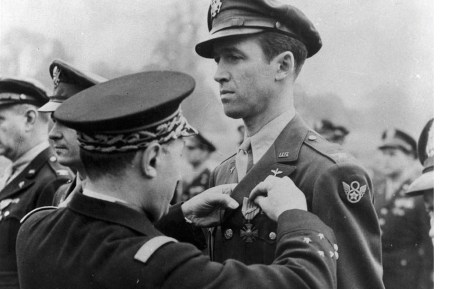
Jimmy Stewart

Lt. Gen. Martial Valin, chief of staff, French air force, awards the Croix de Guerre with Palm to Colonel Stewart for exceptional services in the liberation of France. 


Do you remember?

… the 21stnight of September?

Am I showing my age, or are you by knowing that that’s the opening line to the 1990 hit song released by Earth Wind & Fire? Sorry, it will probably be in your head all day!

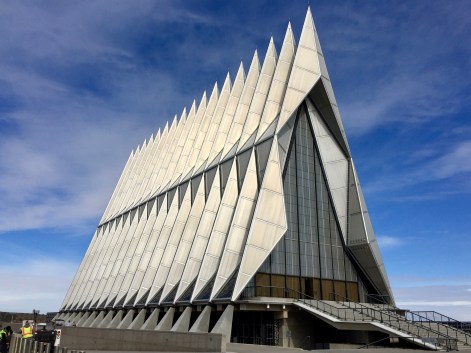
We are now in Colorado Springs where we were at the end of October last year. Magnificent places to visit such as the Air Force Chapel Academy, the Garden of the Gods and Pikes Peak that you have already experienced.

At the time of writing, Colorado is our number one state for a potential future retirement home location. We love the state for its magnificent scenery — the mountains, the parks and the outdoor lifestyle – there is just so much to see and do. That said, it’s not the cheapest place to live as there is a state income tax and property is not exactly inexpensive especially in the beautiful ski resorts such as Aspen where celebrities abound and the starting price for a home is $7 million and upwards!

We particularly like this part of the state for its weather. What’s really high on our hit list is days of sunshine. On average, the city of Colorado Springs has over 240 days of sunshine a year and this past winter it has had very little snow, some six inches, and because of the bright days the snow that falls overnight has generally melted by the middle of the morning.

fullsizeoutput_1129

Remember! The stunning Air Force Academy Chapel! 

Silent Wings

In late 1940, news of a series of spectacular successes by German glider troops reached military commanders in Washington, D.C. and Great Britain. The news was a wake-up call in both countries for an all-out effort to develop an effective glider force.

The U.S. combat glider programme was an integral part of the airborne strategy that led the Allies to victory in World War II. In every major Allied Airborne operation, combat gliders successfully delivered infantry, heavy weapons, ammunition, construction equipment, fuel and medical supplies by landing on rough fields behind enemy lines, often at night.

Between October 1942 and January 1945, the U.S. Army Air Forces trained nearly 6,000 men who volunteered to be glider pilots. Eighty percent of these men trained five miles north of Lubbock in Texas at the South Plains Army Air Field, opposite the RV park where we are staying!

On June 5th, 1944, on the eve of the Normandy invasion, airborne forces are dropped behind enemy lines by glider and parachute to protect the Allies’ flanks and to capture key exits from the beach head. By August, over 9,000 American and British troops had been delivered to Southern France by glider and parachute.

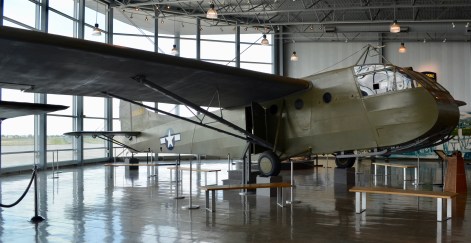
fullsizeoutput_2743

The American CG-4A Glider featured a tubular metal fuselage frame with a wood support structure covered by a fabric skin. The wing structure was constructed entirely of wood and fabric. 

The ride into battle in a glider is a one-way trip as once the tow rope is released, there is no turning back!


Gobi-coloured Toad!

This is not some unusual wild animal that we have sighted in Lubbock, Texas where we are now staying, but rather a motor homer’s slang for the towable vehicle that you hope stays behind you as you head off down the road! Other than Toads, they can also be called Dinghies and let’s not get into a great British debate on how you state that your Dinghy has a Dinghy on its roof!

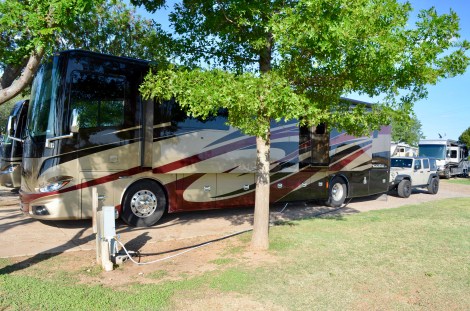
On this road trip, we are pulling a new Toad in the form of a 2017 Jeep Wrangler, colour Gobi which, in reality, is Mushroom-coloured and co-ordinates much better with the exterior paint scheme of the motor home!

The new Jeep has five doors, versus three of our last Jeep, the doors lock automatically whereas on the old Jeep they were manual. This Jeep has a solid roof and sides where the last one was soft top and sides providing a much nicer ride for everyone inside, including Miss Poppy-dog who hated the last Jeep as it was so noisy as the soft sides flapped about while driving.

Mike has already begun to customize the new Jeep, as is the popular thing to do here in the U.S. Thus far he has installed new, bigger tyres, an aluminium bumper, steps on the side of the car and camouflage seat covers!

fullsizeoutput_273e

The new Toad!

fullsizeoutput_273f

Co-ordinating colours! I will provide a better photo at another site when I am not competing with trees and can get a better angle.