We are now in St. George, Utah where we visited the Dinosaur Discovery museum which was amazing!
Cast your mind back to the earliest Jurassic Period, about 198 million years ago, when southwestern Utah was home to the large, freshwater Lake Dixie. The lake hosted a vibrant ecosystem including dinosaurs and mammal ancestors who roamed along the lake shore amid a variety of plants.
A dinosaur walking along the shores of the lake made natural mold footprints in the soft mud and silt. The sheer weight of the animal deformed not only the top layer of sediment but also soft layers beneath.
After the footprints were made, the sediment dried out, making the upper layers firm enough to resist relatively gentle weathering forces and protecting the underlying layers below.
Rising water levels deposited sand in and over the footprints, burying them and forming natural casts. Over the next 200 million years, the sediments were compacted and cemented together, becoming shale, mudstone, siltstone and sandstone.
When separated from the softer mudstone, siltstone and shale, the natural casts in sandstone appear to be “inverted” footprints. They are actual, naturally formed replicas of dinosaur feet made entirely from sediment!

The first dinosaur tracks were discovered by Dr. Sheldon Johnson in February 2000. He went on to create the museum building it on the location of his initial discovery which was once the shoreline of Lake Dixie.
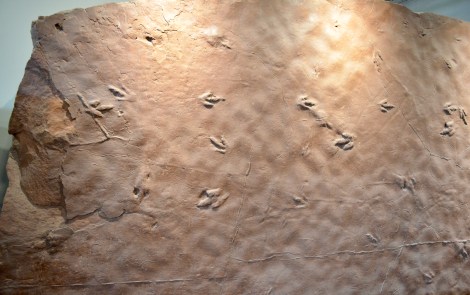
The specimen above is the largest single block of dinosaur tracks ever collected. By measuring the length of each track in a trackway and the length of one stride, paleontologists can calculate how fast the dinosaur was moving when it made the tracks.
 The Blogging Brit